
Summary Highlights
- What is substation project design: engineering work that designs the MV and LV electrical infrastructure suitable for the energy needs of the facility
- What does substation project design do? It provides safe energy distribution, correct equipment selection, sustainable operation and facility structure in compliance with the legislation.
- How to prepare a substation project: it is created with load analysis, transformer power calculation, single line diagram, short circuit analysis, protection coordination and layout plan.
- Main project topics: MV switchgear, power transformer, LV panel, cable cross-section, grounding system, compensation, measurement and monitoring infrastructure
- Areas of use: industrial facilities, OIZ enterprises, energy production facilities, large commercial buildings and projects with high power needs
Content
Substation project design is a comprehensive engineering work carried out to ensure that a facility can use electrical energy safely, at the correct capacity and in a manner suitable for operation. Briefly, the answer to the question of what is substation project design is; It is the design of power transformer, MV cubicle, LV panel, cable, grounding, protection and measurement systems that enable energy conversion from medium voltage to low voltage. This work does not only mean preparing drawings, but also establishing the energy infrastructure of the facility technically correctly.
The substation project is of critical importance, especially in industrial facilities, OIZ enterprises, energy production facilities, infrastructure projects and large commercial buildings with high power needs. Because in these facilities, power outage, lack of capacity or wrong equipment selection can directly turn into production loss and safety risk. Therefore, the substation design should be prepared to respond not only to today's needs but also to the future growth plan of the facility.
The substation project design process usually starts with load analysis. The machines, engines, panels, compensation system, lighting, auxiliary facilities and special process loads that will operate in the facility are examined. There is a distinction between installed power and real operating power. Concurrency, backup needs, and future loads are taken into account. It is not correct to calculate transformer power without this analysis.
Transformer power selection is one of the most sensitive decisions of the project. A transformer chosen too small may cause constant load, voltage drop, heating and operating problems. Choosing a transformer that is larger than necessary may mean unnecessary investment costs and low-efficiency operation. Therefore, when calculating transformer power, not only the total installed power but also the load character, motor starts, process continuity and future capacity increase should be evaluated.
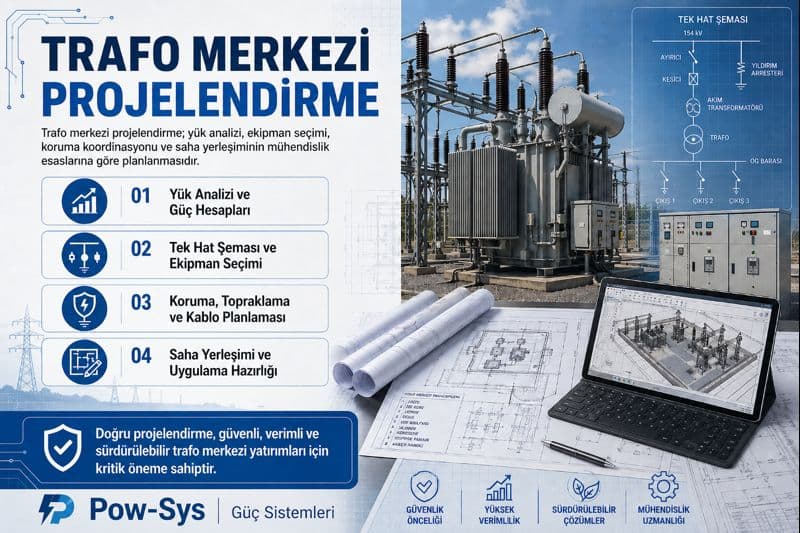
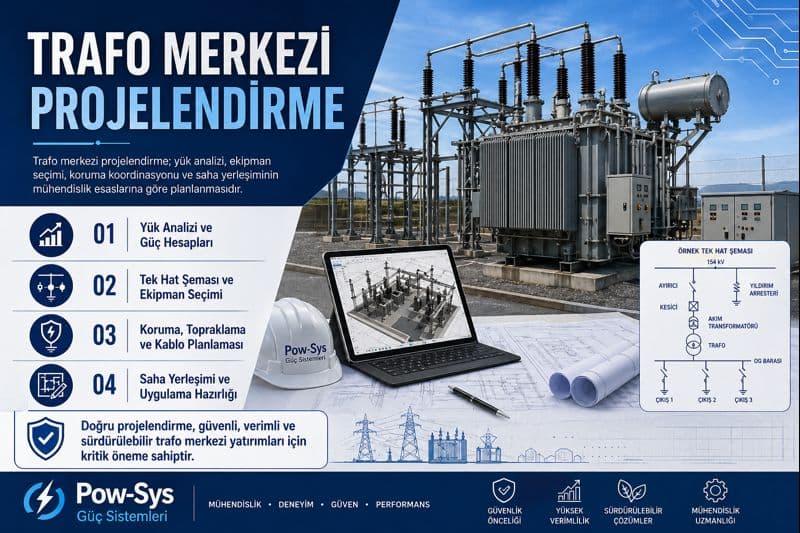
The substation single line scheme forms the main technical backbone of the project. MV input structure, measurement cell, protection cell, transformer connection, LV main distribution panel, compensation panel, generator or backup feeding system are shown on this diagram. The single line diagram reveals how the system is fed, which equipment protects which section, and how the energy flow will be managed in case of failure.
MV cubicle selection requires special attention in substation project planning. The switchgear structure to be used should be determined according to the facility's voltage level, short circuit current, operating mode, maintenance expectation and distribution company conditions. Different MV switchgear solutions such as RMU, metal enclosed or metal clad do not give the same results for every facility. Therefore, when choosing an MV cubicle, both technical values and ease of field operation should be considered together.
LV panel project design is also an important part of the substation design. Main switch, busbar system, output switches, measuring devices, energy analyzer, compensation connection, generator transfer structure and sub-distribution outputs must be planned correctly. The short circuit resistance, current carrying capacity, ventilation, maintenance access and expansion possibilities of the LV panel should be clarified at the project stage. Wrong LV panel selection can cause serious problems in the operation, even if the transformer is selected correctly.
Short circuit analysis is one of the most important calculations that determine the safety side of the substation project. Fault currents at different points are calculated by taking into account network short circuit power, transformer impedance, cable lengths, busbar structure and motor contributions. These values enable the correct selection of breakers, switches, busbars, cables and protection equipment. Without short circuit calculation, it cannot be known whether the equipment is really sufficient or not.
Protection coordination is a critical part of the substation project design process in terms of operational continuity. MV protection relay, LV main switch, sub-distribution switches, fuses and the generator protection system, if any, must work in harmony with each other. In case of a malfunction, the aim is to turn on only the faulty section and keep the healthy sections energized. For this, relay settings, switch curves and short circuit levels are evaluated together.
The choice of cable cross-section is not determined only by the current carrying capacity. Voltage drop calculation, short circuit resistance, laying type, ambient temperature, cable route, parallel cable use and harmonic effects should also be taken into account. MV cables, transformer output cables, LV main distribution cables and subpanel feeds should be evaluated separately. Choosing the wrong cable cross-section may cause heating, energy loss and safety risks.
The grounding system is directly related to personnel safety in the substation project. Protection grounding, operating grounding, neutral grounding, equipotential connections, cable shield grounding and panel body connections must be designed together. Touch and step voltages that may occur in the event of a fault should be taken into account, and grounding resistance targets should be determined according to field conditions. A poorly designed grounding system can make even the best quality equipment risky.
The substation layout plan ensures that the project is feasible on site. Transformer room, MV cubicle area, LV panel layout, cable ducts, ventilation openings, maintenance passages, maneuvering distances and fire safety should be planned together. Electrically correctly selected equipment must be installed and operated safely on site. Therefore, layout planning is not only a matter of architecture but also of operational safety.
Ventilation and heat management should not be neglected in substation project design. Power transformer, LV panel and compensation system produce heat during operation. If this heat is not removed correctly, equipment life will be shortened, the possibility of malfunction increases and operating safety will weaken. Natural ventilation, forced ventilation, transformer room openings and ambient temperature should be evaluated together at the project stage.
Compensation and power quality issues should also be included in the substation project. The reactive power needs of the facility, harmonic generating loads, driver and UPS density, compensation panel location and reactor compensation requirement should be examined. A standard compensation system may not be the right solution for every facility. In businesses with high harmonic levels, wrong compensation selection may cause capacitor failure, resonance and unnecessary trips.
Measurement and monitoring infrastructure has become increasingly important in modern substations. Meters, energy analyzers, protection relays, communication modules and remote monitoring systems should be considered at the project stage. Operational quality increases when consumption, demand, power factor, harmonic level and fault records can be monitored. Therefore, substation project design includes not only energy distribution but also data collection and energy management logic.
Applicability and approval processes should also be taken into consideration during the project design process. Distribution company connection conditions, voltage level of the facility, measurement system, protection scheme, site security and compliance with the legislation should be evaluated together. A project that looks good on paper but does not comply with site conditions or approval processes can cause serious problems when put into operation. Therefore, the substation project must be both technical and feasible.
In summary, transformer center project design; It is an engineering study that starts from load analysis, including transformer power calculation, MV cubicle selection, LV panel project design, single line diagram, short circuit analysis, protection coordination, cable cross-section, grounding, compensation, measurement system, ventilation and layout plan. A correctly prepared substation project ensures that the facility uses safe, continuous and efficient energy. An incomplete or faulty project may create capacity inadequacy, risk of malfunction, security problems and operational losses.
Frequently Asked Questions
What is substation project design?
Substation project design is the design of MV cubicles, power transformers, LV panels, cables, protection, grounding and measurement systems in accordance with the energy needs of a facility.
What does the substation project do?
It ensures that the facility uses energy safely, continuously and at the correct capacity. It also forms the basis for correct equipment selection and operational safety.
How to prepare a substation project?
Load analysis is performed, transformer power is determined, single line diagram is prepared, short circuit and voltage drop calculations are made, equipment is selected and a layout plan is created.
Why is transformer power calculation important?
Wrong transformer power selection may cause overload, inefficient operation, unnecessary investment costs or capacity insufficiency in the future.
Why is substation single line diagram necessary?
It is the main technical document showing the system's supply structure, protection scheme, equipment relationships and energy flow.
Why is short circuit analysis done?
It is done to determine whether equipment such as breakers, switches, busbars, cables and panels can withstand possible fault currents.
Why is conservation coordination important?
It is important to ensure that in case of failure, only the faulty section is turned on and the healthy sections remain energized.
Why is the grounding system considered critical to the project?
Correct grounding design is necessary for safe transfer of fault currents to ground, personnel safety and equipment protection.
What should be considered in substation placement?
Maintenance access, maneuvering space, cable routing, ventilation, fire safety, equipment dimensions and safe working distances must be taken into account.
In which facilities is substation project design required?
It is required in industrial facilities, OIZ enterprises, energy production facilities, large commercial buildings, infrastructure projects and all facilities with high power needs.