
Summary Highlights
- The importance of energy analyzer maintenance: maintaining accurate measurement, safe operation, energy management and power quality monitoring
- Basic maintenance steps: visual inspection, terminal and connection inspection, general inspection inside the panel and screen/cover inspection
- Main checks to be made: CT/VT circuits, ratio and polarity accuracy, communication connections and device settings
- Advanced monitoring methods: thermal camera, comparative measurement, event logs and alarm history evaluation
- Recording and trend tracking: consumption deviations, harmonic data, communication interruptions, temperature findings and maintenance reports
Content
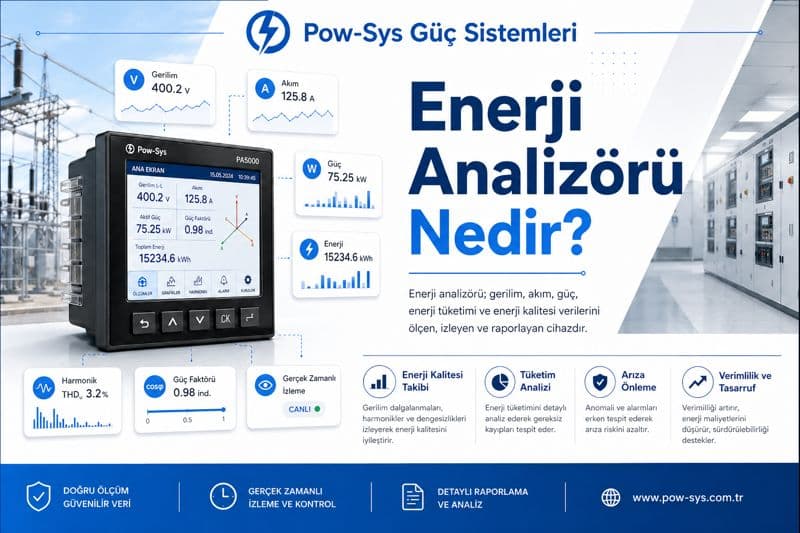
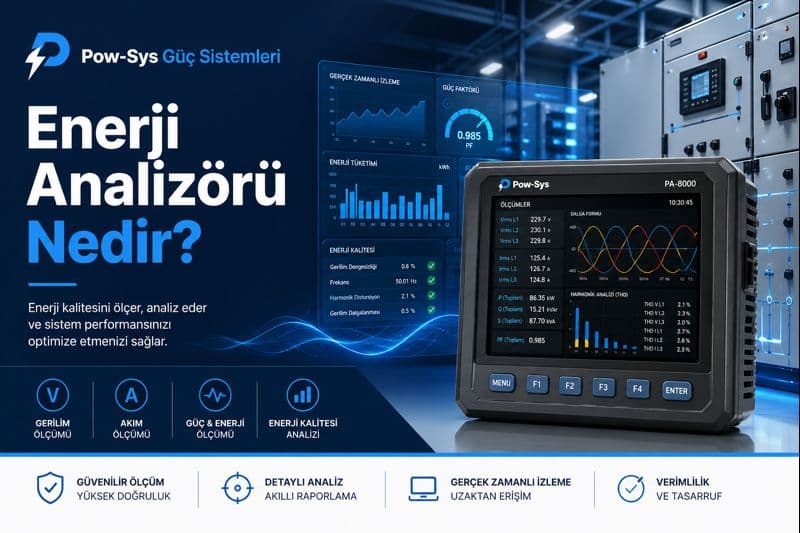
Energy analyzers are multifunctional devices that monitor in detail data such as voltage, current, power, energy, demand and, in most models, harmonics in the electrical system. For this reason, the tests and maintenance that need to be done on energy analyzers are not just about checking whether the device's screen is on. The main purpose is to ensure that the device makes accurate measurements, the measurement chain to which it is connected operates without errors, the data is recorded reliably, and the communication infrastructure remains healthy. Because an incorrectly functioning energy analyzer may misrepresent the energy behavior of the facility and lead to wrong technical decisions.
The first step in maintenance is always safety. Before working on the energy analyzer, the panel where the device is located and the measurement circuits to which it is connected must be made safe. In directly connected analyzers, voltage terminals should be handled carefully, and in CT/VT connected structures, the measurement transformer chain should be managed with the correct procedure. Especially in systems operating with CT secondary, the rule of not leaving an open circuit is of great importance. Because dangerous voltages may occur in current transformers left open circuit.
Visual inspection is the basis of maintenance. The energy analyzer body should be examined for cracks, screen damage, moisture marks, impacts, color changes, terminal cover deterioration and mounting looseness. If there is dust, condensation, excessive heat, loose wiring harness or mechanical strain in the panel where the device is located, these should also be recorded. The energy analyzer is a silent device most of the time; Therefore, the first signs of malfunction are often noticed during visual inspection.
Terminal and connection checks are one of the most important topics in energy analyzer maintenance. Voltage terminals, current inputs, auxiliary supply terminals, digital input-output connections and communication ports should be checked for tightness. A loose terminal can lead to both measurement error and heating due to contact resistance. Terminal loosening is more common, especially in environments with vibration and high temperature changes. Therefore, connection torques must be included in the maintenance plan.
CT and VT circuits form the basis of energy analyzer accuracy. No matter how high quality the device is, if the CT ratio is incorrectly defined, the polarity is reversed, or the phase mismatch is incorrect, the results will be inaccurate. Therefore, CT/VT ratios, phase sequence, polarity direction and analyzer parameter settings should be verified together during maintenance. Especially in facilities where energy management is carried out, this error is often mistaken for a device malfunction, but the problem is in the measurement chain.
Screen and user interface controls are also important in energy analyzers. There should be no segment loss, key malfunction, date-time shift, menu access problem or inconsistency in alarm symbols on the screen. Since many analyzers keep consumption and event history in memory, the device's logging structure must also be working. Even if the measurement is accurate, if the data cannot be displayed or the date-time is incorrect, the analysis infrastructure is weakened.
In communication-enabled energy analyzers, communication infrastructure should be evaluated separately. Address settings, baud rate, parity, cable shielding and connection integrity should be checked in RS485, Ethernet or other communication ports used. In structures where RS485 is used, it is very important that the shielding is done properly and the communication settings are compatible with other devices. Otherwise, even if the measurement data is generated on the device, it cannot be reliably transferred to the central system.
Measurement accuracy control in energy analyzers is handled at different levels depending on the intended use. In devices used only for on-site energy monitoring, comparative measurement, comparison with the reference device and parameter consistency control may often be sufficient. However, in energy sharing, critical reporting or near-legal applications, accuracy verification requires a more serious approach. Here, instead of internal device repair or random setting change, controlled verification logic should be taken as basis.
On many modern analyzers, manufacturer calibration is performed ex-factory, and routine field recalibration may not be necessary as long as environmental conditions are suitable. This does not eliminate the need for maintenance; it simply changes the focus of care. So maintenance shifts more to verifying connections, parameters, communications and environmental conditions. Therefore, one of the most critical tasks in energy analyzer maintenance is to regularly check whether the data measured by the device is compatible with the real system in the field.
Event logs and alarm history are also part of the maintenance. Energy analyzers can often record events such as voltage drop, overvoltage, phase loss, imbalance, demand peak or harmonic alarm. Regular review of these logs shows not only whether the device is working or not, but also what has happened in the system recently. Event records provide very valuable information, especially in facilities that seemingly operate smoothly but occasionally create process problems.
In analyzers that measure harmonics, THD and harmonic data quality should be evaluated separately. If the device is used for harmonic monitoring, CT/VT configuration, sampling logic and measurement parameters must be selected correctly. An incorrectly adjusted system may give misleading results as if there is a harmonic problem or not. Therefore, the purpose for which the energy analyzer is used determines the maintenance approach.
Thermal camera inspection is very efficient for energy analyzers. When device terminals, auxiliary supply connections, RS485 converter or communication module surroundings, CT/VT secondary ends and in-panel fuse points are thermally checked, looseness and abnormal heating can be observed early. Even though the measuring device itself has low power consumption, hot spots on the terminals it is connected to are a serious risk for both measurement and safety.
Environmental conditions directly affect the life of the energy analyzer. Dust, humidity, high temperature, UV effect, condensation and poor ventilation inside the panel can reduce device reliability over time. For this reason, it should be checked that the device operates in the appropriate protection class, in the appropriate panel and within appropriate temperature limits. Environmental impacts require more attention, especially in production areas and heavy industrial environments.
It is very important to keep records at the end of maintenance. Device type, serial number, software version, communication address, CT/VT settings, display and event status, comparative measurement results and thermal findings should be archived regularly. Because energy analyzer problems often occur not suddenly, but as data deviation or communication instability. If trend monitoring is done, disruptions in the measurement chain can be noticed earlier. In summary, the tests and maintenance that should be done on energy analyzers are; It consists of visual inspection, terminal and connection control, CT/VT chain verification, communication and display checks, evaluation of event records, comparative accuracy verification when necessary and thermal inspections. If energy analyzers, sub-panel monitoring structure, power quality monitoring and central data collection infrastructure will be evaluated together in your facility. LV/MV/HV project design and consultancy Within this scope, the correct measurement architecture can be planned more accurately.
Frequently Asked Questions
Why is maintenance necessary for energy analyzers?
Because accurate measurement, secure connection, accurate communication and reliable data recording can only be maintained by regular control. Incorrect CT connection or loose terminal can produce erroneous data even if the device is intact.
What checks are made in energy analyzers?
Visual control, terminal and connection inspection, CT/VT circuits, screen and event recordings, communication connections, parameter settings, comparative measurement and thermal inspection can be performed.
Why shouldn't the CT secondary be left open?
Because dangerous voltages may occur in the CT secondary left open circuit. Therefore, CT circuits should be handled very carefully during analyzer maintenance.:contentReference[oaicite:1]{index=1}
Do energy analyzers require routine calibration?
Not always. Many modern devices come calibrated by the manufacturer and routine recalibration may not be necessary if environmental conditions are maintained. However, accuracy verification is still important depending on the intended use.:contentReference[oaicite:2]{index=2}
Why is the communication link part of the maintenance?
Because the value of the energy analyzer is not only measuring, but also being able to transfer data reliably to the central system. Problems on the RS485 or Ethernet side may lead to data loss.:contentReference[oaicite:3]{index=3}
What to pay attention to in RS485 shielding?
Shielded cable should be used and shield grounding should generally be done from one end. Additionally, the address and communication settings must be compatible with other devices.:contentReference[oaicite:4]{index=4}
What data is checked on the energy analyzer for maintenance?
Voltage, current, power, energy, demand, power factor, harmonic and THD data, if any, as well as event records and alarm history are evaluated together.
What is the use of a thermal camera in energy analyzer maintenance?
It helps detect looseness or increased contact resistance in terminal, auxiliary supply and CT/VT secondary connections at an early stage.
Is the energy analyzer and meter maintenance approach the same?
It's not exactly the same. Since communication, event recording, harmonics and data integrity are as critical as measurement in the energy analyzer, the maintenance approach is broader.
Why is it important to keep records in energy analyzer maintenance?
Because data deviations, communication breaks and setting changes develop over time. If regular records are kept, the tendency for the device and the measurement chain to deteriorate can be monitored more easily.