

Summary Highlights
- Importance of MV Switchgear Maintenance: Ensuring Safe, Selective, and Uninterrupted Operation of Medium Voltage Switchgear
- Basic maintenance steps: visual inspection, cleaning, mechanical switching operation control, disconnector and earthing switches verification
- The main tests to be performed are: insulation resistance measurement, contact transition resistance, circuit breaker on-off test, relay secondary injection test and trip circuit control
- Site safety controls: interlock system, door interlocks, ground connections, wiring heads, busbar connections, and in-cell alarm signals
- Logging and trend tracking: comparison of test results, thermal findings, on-off times, relay records and maintenance reports
Content
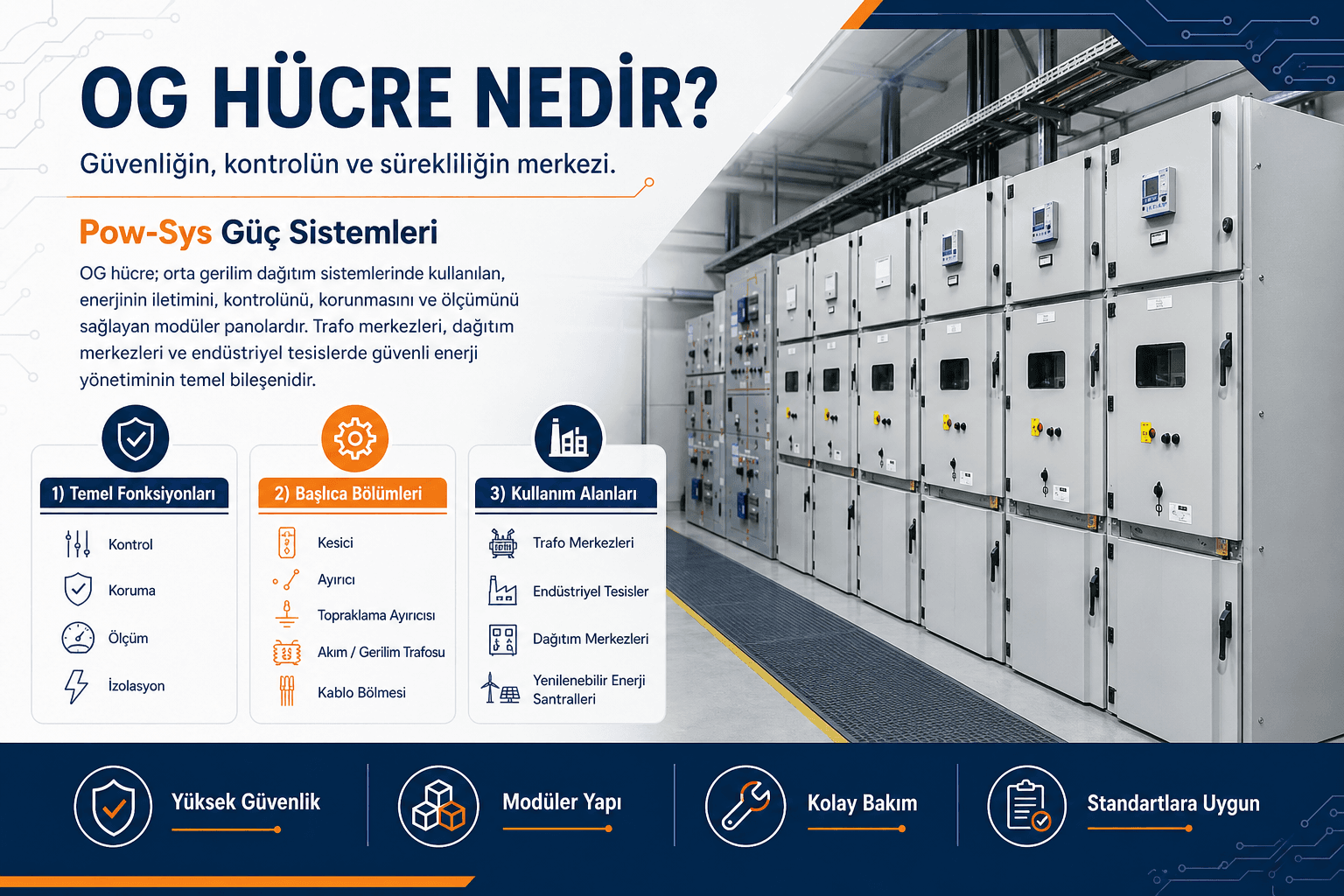
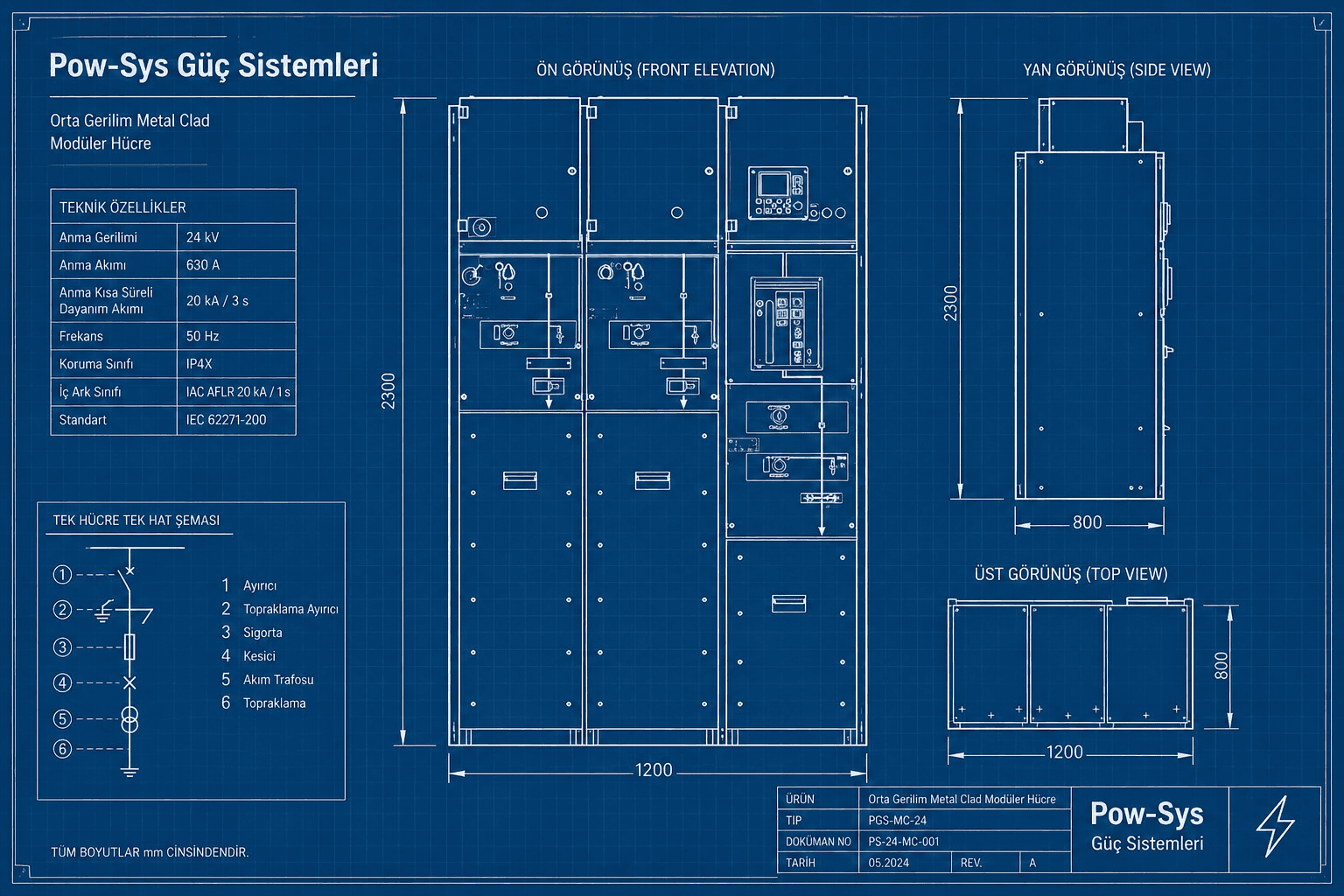
MV switchgear are critical switchgear equipment used for the safe switching, protection, measurement and distribution of medium voltage electrical energy. For this reason, the required tests and maintenance in MV switchgear are not just about opening the cell lid and looking at it with the eye. The main purpose is to verify that circuit breaker, disconnector, earthing switches, busbar system, wiring heads, current transformers, voltage transformers, protection relays, and auxiliary circuits are working together safely. Because a small connection looseness, insulation weakness or mechanical failure in MV switchgear can turn into serious interruption and safety risk over time.
The first step in maintenance is always safety. Before working on the MV switchgear, the cell should be de-energized, the relevant supply points should be safely separated, the absence of voltage should be verified with the appropriate method and the necessary grounding processes should be carried out. Any intervention at a medium voltage level must be carried out with the correct switching sequence and locking procedure. A disconnector or earthing switches switching operation performed in the wrong order during cell maintenance can pose a serious personnel and equipment risk.
Visual inspection MV the foundation of cell maintenance. The cell body, covers, locks, observation windows, busbar compartment, cable compartment, circuit breaker compartment, relay compartment and terminal connections should be carefully inspected. Symptoms such as rust, corrosion, moisture marks, dust accumulation, burning smell, tarnishing, loose parts, cracked insulators, deformed cable termination, or loosened connection should be taken seriously. A significant part of MV switchgear failures give their first signs in visual control.
Intracellular cleaning should be done regularly. Dust, moisture, metal shavings, insect residue, or foreign matter can weaken insulation safety. In particular, the cable termination perimeter, insulator surfaces, terminal areas, and busbar joints should be kept clean and dry. Appropriate insulating material and the correct method should be used during cleaning, and the equipment should not be damaged by random chemical or pressurized applications. An unclean MV switchgear may increase the risk of superficial leakage and partial discharge.
Mechanical switching operation control is one of the most important parts of maintenance. Circuit breaker, disconnector, load disconnector and earthing switches must work correctly in on-off positions. If there is mechanism hardening, spring winding problem, mechanical snagging, incomplete switching operation, position indicator mismatch or unusual sound, detailed examination is required. MV if the mechanical part of the cell is not healthy, even if the electrical protection system works correctly, the expected opening or closing may not occur in the event of a malfunction.
The Interlock system must be tested. MV switchgear have a locking arrangement that ensures safe switching operation between circuit breaker, disconnector, earthing switches and door locks. The purpose of this system is to prevent accidental access to the energized section and incorrect switching operation. During maintenance, door interlocks, earthing switches locks, circuit breaker location conditions and mechanical-electrical interlocks should be verified. A cell whose interlock system is disabled or malfunctions cannot be considered safe.
Circuit-breaker cubicle tests should be performed separately on cells. Of the circuit breaker opening and closing times, spring winding mechanism, motor supply, tripping coil, closing coil, auxiliary contacts and mechanical operation electricity meter should be checked. Timing measurement can be made with appropriate test devices. If there is an abnormal deviation in the on-off time, time difference between phases or difference in coil current, the mechanical or electrical condition of the circuit breaker should be evaluated in detail.
Contact transition resistance measurement is an important test for circuit breaker and some mainstream routes. An increase in contact resistance at the main contacts or connection points can cause heating under load and cause catastrophic failure in the future. The contact transition resistance should be low and balanced between phases. A significantly higher value in one phase than the others may indicate a loose connection, contaminated contact, wear or mechanical contact problem. This test helps catch thermal failures before they even occur.
Insulation resistance measurement is one of the basic tests frequently used in MV switchgear maintenance. Phase-to-phase and phase-to-ground isolation status can be checked in the busbar, cable, circuit breaker and other insulated parts of the cell. A low insulation value can warn of moisture, contamination, superficial leakage, damaged insulator, or cable termination problem. However, insulation measurement alone may not be sufficient for a final decision; The results should be evaluated together with past values, environmental conditions and visual findings.
Cable terminations require special attention. MV cable receptacles should be inspected for surface cracks, traces, tarnishing, signs of oil or moisture, screen connection failure, loose connection, and improper installation. Faulty cable termination can lead to partial discharge, heating, and insulation failure over time. Phase openings, cable supports, screen grounds and header stress control zones should be carefully checked in the cable compartment. A significant proportion of MV switchgear failures can start from the cable connection area.
Busbar connections and insulators should be examined in detail during maintenance. If there is loosening of the busbar bolts, cracks, contamination, surface marks or discoloration of the insulators, this could be a pre-failure symptom. Busbar compartment should be free of foreign matter, connection points should be checked for tightness and torque checked if necessary. Since the busbar system is the main energy pathway of MV switchgear, the problem that will occur here can affect the entire cell group.
The current transformer and voltage transformer circuits should also be checked. CT ratio, polarity, secondary connection continuity, short-circuiting terminals, grounding point, and protection-measure core separation must be verified. On the VT side, fuses, secondary connections, phase sequence, connection arrangement if there is an open triangular circuit and measurement-protection feeds should be examined. An error in the CT or VT circuit can cause the protection relay to measure incorrectly and cause incorrect trip or non-trip.
Protection relay tests are an indispensable part of MV switchgear maintenance. Overcurrent, ground fault, directional protection, voltage or other related functions should be verified by secondary injection testing. The relay's pickup values, time curve, binary inputs, trip outputs and alarm contacts should be checked. It is not enough to see a value on the relay screen. It should be tested that the relay commands to open circuit breaker from the correct output in the actual fault scenario.
The trip circuit and control circuit should be tested separately. Circuit breaker opening coil, closing coil, spring winding motor, control switch, local-remote selection, auxiliary relays, DC supply and fuses should be checked. Even if the protection relay is working correctly, the circuit breaker may not turn on if the trip circuit is faulty. For this reason, protection relay test and trip circuit test should be performed together in MV switchgear maintenance. True safety is ensured by the circuit breaker of the relay's decision.
Thermal camera control is a very valuable maintenance method in MV switchgear. Thermal inspection under load can monitor cable terminations, busbar connections, circuit breaker connections, fuse holders, disconnector contact areas, and panel connection points. A significant temperature difference between phases may indicate an increase in loose connection or contact resistance. Thermal control is a powerful method to catch heating problems at an early stage, especially those that are not noticeable to the naked eye.
Partial discharge control becomes crucial, especially in critical MV switchgear and aged systems. If there are signs of partial discharge on insulator surfaces, cable heads, busbar compartments, and intracellular insulation systems, this may develop into insulation puncture in the future. Partial discharge is not always visible; Sometimes it is noticed by sound, smell, surface trace or special measurement methods. Therefore, cell isolation health MV in critical facilities can also be evaluated with more advanced diagnostic methods.
The fuse and disconnector mechanism in fused and load-disconnector cubicles should be examined separately. Fuse holders, fuse holders, strike pin mechanism, load disconnector contacts, and mechanical connections should be checked. If a fuse is replaced, the correct type, correct rating and correct installation must be verified. Wrong fuse selection or incorrect placement can cause serious problems in transformer protection.
In RMU and gas-insulated cells, additional controls should be performed according to the cell type. The gas pressure gauge, alarm contacts, mechanical gauges, switching operation arm mechanism, cable compartment, grounding pattern, and leak indication should be examined. Random intervention should not be made in gas-insulated systems, and manufacturer procedures should be followed. A problem that seems simple from the outside in this type of cell may indicate a more critical situation in the internal structure.
At the end of the maintenance, all results should be recorded. Insulation values, contact transition resistances, circuit breaker on-off times, relay test results, thermal camera findings, cable termination observations, mechanical switching operation status and settings should be reported. If compared with older measurements, the tendency to deteriorate is noticed earlier. MV the healthiest approach to cell maintenance is not a one-time check, but regular recording and trend monitoring.
In summary, the required tests and maintenance in MV switchgear. It consists of safe operation preparation, visual inspection, cleaning, mechanical switching operation test, interlock verification, circuit breaker timing test, contact transition resistance measurement, insulation resistance measurement, cable termination and busbar control, CT-VT circuit control, protection relay secondary injection test, trip circuit verification, thermal camera inspection and partial discharge evaluation when necessary. If these processes are carried out regularly, it is possible for MV switchgear to operate safely, reduce the risk of failure, and maintain the energy continuity of the facility.
Frequently Asked Questions
Why is maintenance necessary in MV switchgear?
Because MV switchgear are critical equipment for switching, protecting, and dissipating medium-voltage energy. Without regular maintenance, insulation weakness, mechanical failure, improper tripping or serious switchgear failures may occur.
What tests are performed on MV switchgear?
Visual inspection, mechanical switching operation test, interlock control, insulation resistance measurement, contact transition resistance, circuit breaker timing test, relay secondary injection test, trip circuit test and thermal camera control can be performed.
Why is isolation testing done on MV switchgear?
It is done to evaluate the phase-to-phase and phase-to-ground insulation status of busbar, cable, circuit breaker, and insulating elements inside the cell.
Why is circuit breaker test important?
Of the circuit breaker must open it in the right time in case of failure. The on-off times, coils, auxiliary contacts and mechanical mechanism must therefore be checked.
What does the contact transition resistance test indicate?
Indicates if there is an increase in contact resistance at the main contacts or connection points. High values can mean heating and the risk of future breakdowns.
Why is an interlock check done?
Circuit breaker is done to prevent disconnector, earthing switches, and door locks from operating in the wrong order. This control is critical for personnel safety.
Why do cable terminations require special control?
Because moisture, cracks, blackening, loose connection or screen ground fault in the cable leads can cause partial discharge and insulation failure.
Is protection relay test included in MV switchgear maintenance?
Yes. The pickup, time, trip output, binary inputs and alarm contacts of the relay should be verified by secondary injection test.
What does thermal camera control do?
It helps to detect early loose connection under load, contact resistance increase, and abnormal heating differences between phases.
Why is record-keeping important in MV switchgear maintenance?
Because insulation values, circuit breaker times, contact resistances and thermal findings can change over time. If regular records are kept, the tendency to deteriorate is noticed before the failure occurs.