
Summary Highlights
- What a power quality analyzer is: a multifunctional device that monitors basic measurements and power quality data in an electrical system
- What a power quality analyzer does: makes consumption, load behavior, power factor, demand and power quality problems visible
- How a power quality analyzer works: processes voltage and current information to produce power, energy, harmonic and event data
- The difference between a power quality analyzer and a meter: it provides more detailed measurement, analysis, alarm and communication capability instead of only consumption recording
- Power quality analyzer selection: measurement needs, harmonic monitoring, communication, panel integration and CT/VT compatibility
Article Details
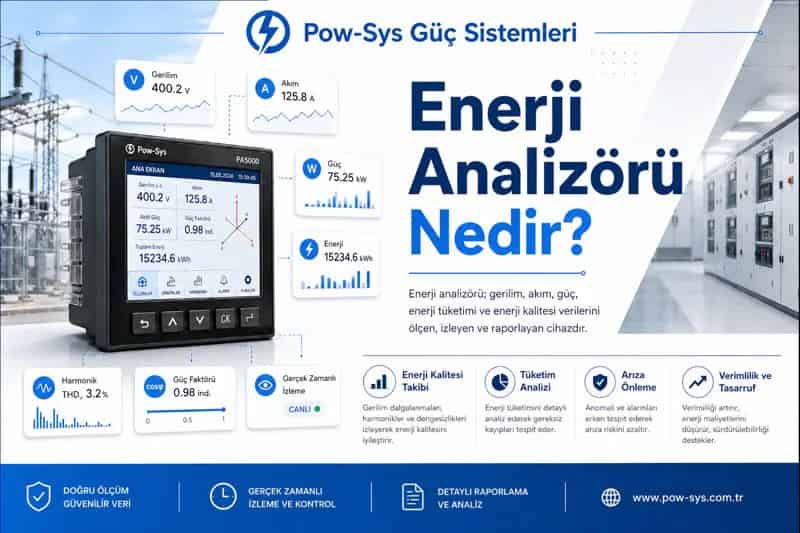
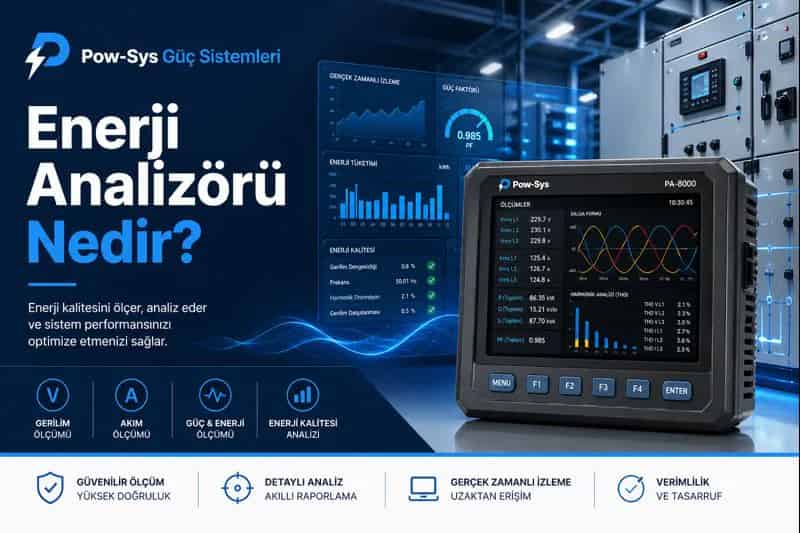
A power quality analyzer is a measuring device that monitors the basic quantities in an electrical system, and in many applications power quality data, in detail. In short, the answer to the question of what a power quality analyzer is: it is multifunctional electrical monitoring equipment that shows not only energy consumption but also how the system behaves. These devices are widely used in industrial facilities, commercial buildings, power distribution panels, generator outputs, power factor correction systems and critical load points.
The answer to what a power quality analyzer does is not limited to showing how many kWh have been consumed. These devices can monitor basic quantities such as voltage, current, active power, reactive power, apparent power, energy, frequency, power factor and demand. More advanced models can also provide information about harmonics, total harmonic distortion or THD, event records, load profile, unbalance, short-duration deviations and different alarm conditions. For this reason, a power quality analyzer is an important tool that combines consumption monitoring and power quality assessment at the same point.
One of the greatest benefits of a power quality analyzer is that it makes what is really happening in the facility visible. A plant may have high consumption, but the real problem may be low power factor, harmonic load, unbalanced phase current or a sudden demand increase. When only meter data is reviewed, these details are often not visible. A power quality analyzer makes the measurement more detailed and helps identify at which point a technical problem or inefficiency exists.
To explain simply how a power quality analyzer works, the device continuously collects voltage and current information belonging to the system and calculates electrical quantities from this data. In directly connected systems, this measurement can be made through the device's own inputs. In higher-current or medium-voltage applications, information received through current transformers and voltage transformers is used. The device processes this data and creates instantaneous values, averages, energy records and, in some models, event records.
A power quality analyzer and an electricity meter are not the same thing. A meter mainly focuses on recording energy consumption and, when necessary, billing or sub-consumption tracking. A power quality analyzer goes beyond this. While showing consumption, it can also reveal system behavior, load profile, quality disturbances and electrical unbalance at the same time. Therefore, a power quality analyzer is not only a measuring device but also a diagnostic and monitoring tool.
The parameters measured by a power quality analyzer may vary depending on the model. Basic-level devices often provide quantities such as voltage, current, power, energy and power factor. More advanced devices may also support harmonic order, THD levels, event records, waveform capture features, demand behavior and long-term data archiving. Therefore, every power quality analyzer does not have the same capability, and when selecting a device it must be known which data is truly required.
One important application area of power quality analyzers is energy management. A power quality analyzer provides very strong data for seeing at which hours the facility draws more load, in which panels excessive consumption occurs, which section has a weak cos phi value or where demand peaks take place. This allows investment decisions, power factor correction improvements, load shifting plans or equipment capacity assessments to be made more accurately.
Power quality analyzers also play an important role on the power quality side. In facilities with harmonics, a high density of drives and UPS systems or sensitive loads, knowing only total energy consumption is not enough. Voltage distortions, current harmonics, THD increase, unbalance and sudden events can affect equipment life and process safety. A power quality analyzer makes these problems visible at an early stage and supports maintenance and improvement decisions.
Power quality analyzers are often evaluated together with their communication capability. Thanks to Modbus, RS485, Ethernet or similar communication infrastructures, measurement data can be transferred to SCADA, BMS, EMS or energy monitoring software. In this way, the device is no longer only a display on the panel and becomes part of the central monitoring infrastructure. This provides a major advantage especially in facilities with many sub-panels or multiple buildings.
Demand monitoring is also one of the important application areas of a power quality analyzer. Demand data is very valuable for monitoring the average power level drawn in defined intervals, seeing peak load moments and making decisions in terms of contracted power or internal load management. In large commercial buildings and industrial facilities, this data can be used not only for reporting but also for operational planning.
The concepts of power quality analyzer and power quality meter can sometimes come close to each other. Some power quality analyzers monitor only basic electrical quantities, while some advanced models offer features close to the power quality meter or power quality analyser class directly. Therefore, when choosing a device, it is necessary to look not only at the name but at which parameters it actually measures and which events it can record.
When selecting a power quality analyzer, the measurement level, phase structure, whether it will be connected directly or through CT/VT, harmonic requirements, communication needs, data recording, alarm features and panel compatibility should be evaluated together. A highly advanced device may be unnecessary where simple consumption tracking is needed. Conversely, a device that performs only basic measurements may be insufficient in a facility with harmonic and quality problems. The correct device should be selected according to the real need.
There are also points that require attention on the installation side. If phase sequence, CT direction, ratio definitions, voltage connections and communication parameters are not set correctly, the device may appear to measure while the data is actually wrong. Therefore, the value of a power quality analyzer depends not only on device quality but also on correct commissioning and correct parameterization.
In summary, a power quality analyzer is a multifunctional measuring device that makes consumption, load behavior and, in many cases, power quality parameters in an electrical system visible in detail. It provides broader data than a meter, supports energy management studies, helps monitor demand and power factor and may provide the ability to monitor quality problems such as harmonics. If energy monitoring infrastructure, sub-panel tracking, power factor correction behavior and power quality assessment will be handled together in your facility, the correct device and correct measurement architecture can be planned within the scope of LV/MV/HV project design and consultancy.
Related Blog Posts
Related Services
Frequently Asked Questions
What is a power quality analyzer?
A power quality analyzer is a multifunctional measuring device that monitors the basic quantities of an electrical system, and in many applications power quality data, in detail. It shows not only how much energy is consumed but also how the system actually behaves, covering quantities such as voltage, current, power, energy, power factor and demand, with many models adding harmonics and event information. These devices are widely used in industrial facilities, commercial buildings, power distribution panels, generator outputs, power factor correction systems and critical load points. Because it combines consumption monitoring and power quality assessment at the same measurement point, a power quality analyzer works as both a monitoring instrument and a diagnostic tool, making inefficiencies and technical problems visible that a simple consumption record would never reveal.
What does a power quality analyzer do?
A power quality analyzer makes consumption, load behavior, power factor, demand level and, in many applications, power quality problems visible at the point where it is installed. A plant may have high consumption, but the real problem may be low power factor, harmonic load, unbalanced phase currents or a sudden demand increase; when only meter data is reviewed, these details usually stay hidden. The analyzer monitors voltage, current, active, reactive and apparent power, energy, frequency, power factor and demand, and advanced models add harmonics, THD, event records, load profile and unbalance information. By turning this data into instantaneous values, averages and records, the device helps identify at which point a technical problem or inefficiency exists, which makes both energy management and technical diagnosis considerably easier.
Which values does a power quality analyzer measure?
The measured values depend on the model, but a clear hierarchy exists. Basic-level devices typically provide voltage, current, active power, reactive power, apparent power, energy, frequency, power factor and demand. More advanced devices add power quality oriented capabilities: harmonic orders, total harmonic distortion or THD levels, event records, waveform capture features, demand behavior analysis, unbalance information and long-term data archiving. Because of this variation, not every power quality analyzer has the same capability, and two devices with similar names can differ significantly in what they actually record. When selecting a device, it must therefore be known which data is truly required in the facility, and the datasheet should be checked for the specific parameters and event-recording functions rather than relying on the product name alone.
Are a power quality analyzer and an electricity meter the same thing?
No, a power quality analyzer and an electricity meter are not the same thing, even though both measure electrical energy. A meter mainly focuses on recording energy consumption and, when necessary, billing or sub-consumption tracking; its core output is how many kWh have passed. A power quality analyzer goes well beyond this: while showing consumption, it can also reveal system behavior, load profile, quality disturbances and electrical unbalance at the same time. It monitors quantities such as power factor, demand, frequency and, in advanced models, harmonics and event records. For this reason the analyzer is not only a measuring device but also a diagnostic and monitoring tool. In practice the two complement each other: the meter answers the billing question, while the analyzer answers the question of what is really happening in the installation.
Does a power quality analyzer measure harmonics?
Many advanced power quality analyzers can measure harmonics and THD, but not every model provides harmonic analysis at the same level, so this capability must be checked separately when selecting a device. Harmonic monitoring matters particularly in facilities with a high density of drives and UPS systems or with sensitive loads, where voltage distortions, current harmonics, THD increase, unbalance and sudden events can affect equipment life and process safety. In such environments, knowing only the total energy consumption is not enough. Devices that support harmonic order measurement, THD levels, event records and waveform capture make these problems visible at an early stage and support maintenance and improvement decisions. If harmonics are a known or suspected issue in the facility, the required harmonic capability should be a primary selection criterion rather than an afterthought.
Why is demand measurement important?
Demand measurement is important because it shows the average power level drawn in defined time intervals, which is exactly the information needed to see peak load moments and plan load management. Demand data is very valuable for monitoring when the facility draws more load, evaluating the contracted power situation and making decisions about internal load management. In large commercial buildings and industrial facilities, this data can be used not only for reporting but also for operational planning: load shifting plans, equipment capacity assessments and investment decisions all become more accurate when the true demand profile is known. A power quality analyzer that records demand behavior therefore turns a simple electrical measurement into a management tool, helping the operator understand at which hours peaks occur and how the load pattern can be optimized.
Where are power quality analyzers used?
Power quality analyzers are widely used in industrial facilities, commercial buildings, power distribution panels, generator outputs, power factor correction systems and critical load points. Typical installation locations include main panels and sub-panels, where they make the consumption and behavior of individual sections visible. They are also central to energy monitoring infrastructures: thanks to communication interfaces, data from many analyzers distributed across sub-panels or multiple buildings can be collected in SCADA, BMS, EMS or energy monitoring software. In facilities with power factor correction systems, the analyzer helps monitor cos phi behavior; at generator outputs it verifies source performance; and at critical load points it watches for quality disturbances. Wherever detailed knowledge of consumption, load profile or power quality is needed, an analyzer is the standard measurement solution.
Does a power quality analyzer support communication?
Yes, many power quality analyzer models offer communication capability, and this feature is often decisive in how useful the device becomes. Thanks to Modbus, RS485, Ethernet or similar communication infrastructures, measurement data can be transferred to SCADA, BMS, EMS or energy monitoring software. With communication in place, the analyzer is no longer only a display on the panel: it becomes part of the central monitoring infrastructure of the facility. This provides a major advantage especially in plants with many sub-panels or campuses with multiple buildings, where visiting each panel to read values would be impractical. When planning an installation, the communication parameters must also be configured correctly during commissioning, because a device that measures correctly but communicates wrongly still fails to feed reliable data into the monitoring system.
What should be considered when selecting a power quality analyzer?
When selecting a power quality analyzer, the measurement level, phase structure, connection method, harmonic requirements, communication needs, data recording, alarm features and panel compatibility should be evaluated together. Whether the device will be connected directly or through current transformers and voltage transformers is a basic decision, since higher-current and medium-voltage applications require CT/VT measurement. The capability level should match the real need: a highly advanced device may be unnecessary where simple consumption tracking is enough, while a device that performs only basic measurements may be insufficient in a facility with harmonic and quality problems. Installation quality matters as well, because incorrect phase sequence, CT direction, ratio definitions, voltage connections or communication parameters can make a device appear to measure while the data is actually wrong. Correct selection therefore always starts from the actual measurement requirement.
Why is a power quality analyzer important for energy management?
A power quality analyzer is important for energy management because it shows not only total consumption but also what type of electrical behavior occurs at which point in the facility. It provides strong data for seeing at which hours the facility draws more load, in which panels excessive consumption occurs, which section has a weak cos phi value and where demand peaks take place. With this visibility, investment decisions, power factor correction improvements, load shifting plans and equipment capacity assessments can be made more accurately. The analyzer also exposes losses, unbalance, low power factor and harmonic problems that would stay invisible in meter data alone. In short, it converts the electrical installation from a black box into a measurable system, which is the foundation of any serious energy management effort.