
Summary Highlights
- What an electricity meter is: the definition of a basic device that measures consumption or flow of electrical energy
- What a meter does: recording and monitoring energy consumption, providing billing and operational follow-up
- How a meter works: evaluating voltage and current information to measure energy, power and, in some types, demand
- Meter types: mechanical, electronic, smart, single-phase, three-phase, active-reactive and sub-meter applications
- Meter selection and use: measurement purpose, phase structure, communication need, accuracy and panel/facility compatibility
Article Details
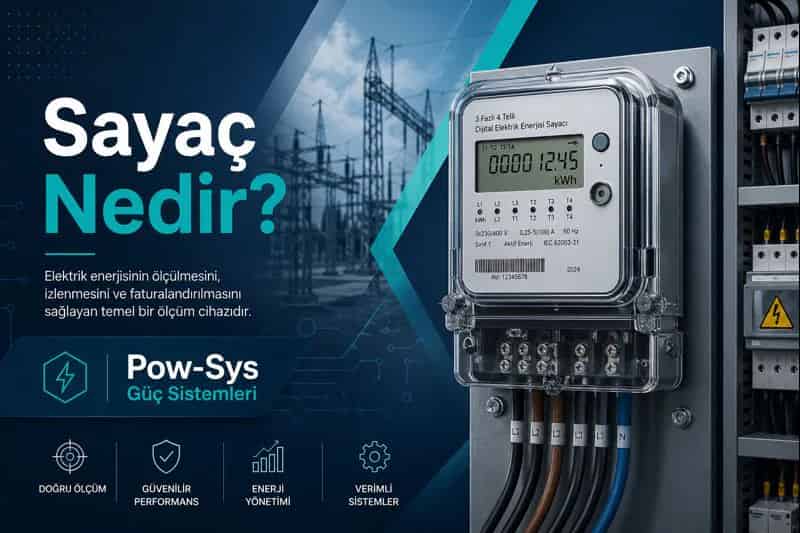
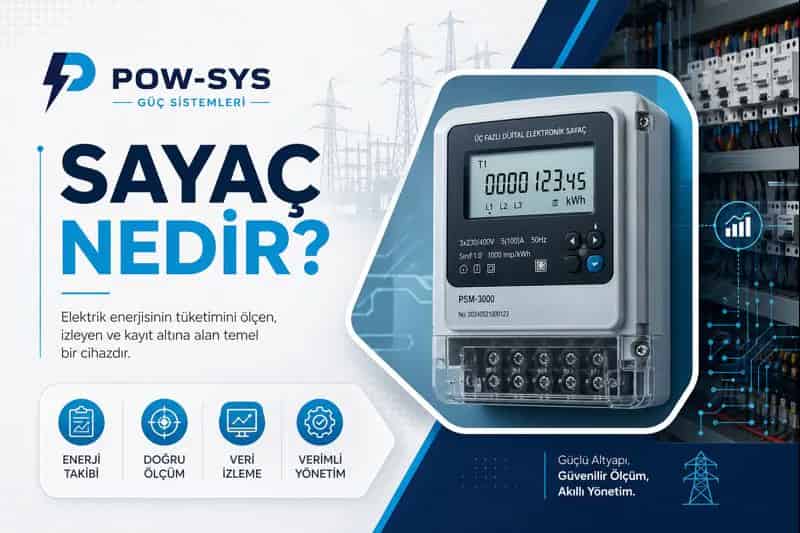
An electricity meter is a device that measures how much electrical energy is used or how much energy flow occurs in a system. In short, the answer to what a meter is: it is measurement equipment that records consumed or transferred electrical energy. In daily use, when a meter is mentioned, the consumption meter used by the electricity distribution company often comes to mind. However, meters used in industrial facilities, commercial buildings and energy infrastructure can monitor much more measurement information than total consumption only.
The most basic answer to what a meter does is measurement. However, this measurement is not limited to showing monthly consumption. Meters enable energy use to be monitored, billing infrastructure to be established, in-facility energy management to be performed and, in some applications, power quality and load behavior to be evaluated. Therefore, the meter is important equipment used both for official consumption tracking and technical analysis.
The most common measurement unit in electrical energy is kilowatt-hour, or kWh. A meter measures and records active energy drawn over a certain time. Modern meters, however, are often not limited to active energy only. Many electronic and smart meters can also monitor additional parameters such as reactive energy, apparent energy, instantaneous power, current, voltage, frequency, power factor and demand. For this reason, the concept of a meter now has a much broader meaning than the classic rotating-disc meter.
To explain simply how a meter works, the device calculates energy by using voltage and current information in the circuit and accumulates this over time. In classic electromechanical meters, this was done with a rotating disc under the effect of a magnetic field and a mechanical counter mechanism. In modern electronic meters, measurement is performed digitally, data is stored in memory and often transferred to external systems through a display or communication port.
Meter types are basically separated according to technology and purpose of use. Traditional electromechanical meters are classic solutions that were widely used for many years. Electronic meters provide more accurate measurement, more parameters and more advanced data processing. Smart meters additionally stand out with functions such as remote reading, load profile recording, multi-time measurement and, in some cases, remote service operations. Therefore, when selecting a meter, asking only whether it measures is not sufficient.
The distinction between single-phase and three-phase meters is also important. Single-phase meters are often used in residential and small-load applications, while three-phase meters are preferred in industrial facilities, commercial buildings and systems drawing larger power. Three-phase meters can evaluate the total energy behavior of the system more accurately and provide phase-to-phase measurement data. This is a major advantage especially in facilities where operational analysis is performed.
Meters can also be evaluated in different classes according to the quantity they measure. The most basic group is active energy meters. In addition, meters measuring reactive energy or multifunctional solutions measuring active and reactive energy together are also available. In industrial facilities, reactive energy monitoring may be especially important, because seeing not only active consumption but also reactive energy behavior can become critical for energy management.
Meters that measure demand are also important especially in industrial and commercial facilities. Demand means monitoring the average power level drawn during a defined time interval. This information may be useful in understanding the facility's load behavior, peak consumption points and operation planning. Therefore, in facilities using large power, the meter becomes not only a device showing total consumption but also an analysis tool that monitors load characteristics.
Smart meters have become increasingly widespread today. These meters not only measure energy use but can also store the data, transfer it to a center through communication infrastructure and create load profiles. In some structures, applying different tariffs according to time periods, remote reading and remote service operations may also be part of this infrastructure. Therefore, smart meter technology has transformed the classic meter logic into a data-oriented structure.
A meter and an analyzer are not the same thing, although some modern devices may offer functions close to each other. A meter mainly focuses on energy recording and consumption measurement. A power quality analyzer often provides broader power quality and harmonic evaluation capabilities. Still, because some multifunctional meters can measure active, reactive and apparent energy together with instantaneous power and various additional quantities, this distinction may sometimes become closer in field applications.
Sub-meter applications are also very common today. In addition to the main distribution meter, sub-meters may be used to see consumption separately for specific sections of the facility, tenant areas, machine groups or sub-panels. This approach makes energy management more detailed and makes visible which section consumes how much energy. It provides great benefit especially for cost allocation and internal consumption analysis.
When selecting a meter, only current value or brand should not be evaluated. Whether the system to be measured is single-phase or three-phase, whether only active energy or also reactive energy and demand monitoring are required, communication needs, panel mounting structure, accuracy class and official metering requirements must be considered together. Not every meter is suitable for every application. A residential meter and an industrial multifunction meter do not meet the same expectations.
In electrical installations, meters are important not only for seeing the bill but also for making correct decisions. Solid meter data is needed to see load increase, monitor consumption behavior at specific hours, indirectly evaluate power factor correction performance or carry out energy efficiency studies. Therefore, the meter is one of the silent but most important information sources of the energy infrastructure.
In summary, a meter is a basic measurement device that measures and records electrical energy and makes visible how much energy a facility uses or transfers. It may be mechanical, electronic or smart; it may be selected for single-phase or three-phase systems; it may offer additional measurements such as active, reactive and, in some types, demand. A correctly selected meter provides great value not only for billing but also for energy management and technical monitoring. If meter selection, sub-meter structure, energy monitoring need and panel integration need to be evaluated together in your facility, LV/MV/HV project design and consultancy can help plan the energy infrastructure more accurately.
Related Blog Posts
Related Services
Frequently Asked Questions
What is an electricity meter?
An electricity meter is a device that measures how much electrical energy is used or how much energy flow occurs in a system. It is measurement equipment that records consumed or transferred electrical energy. In daily use, the consumption meter used by the electricity distribution company is what usually comes to mind, but meters used in industrial facilities, commercial buildings and energy infrastructure can monitor much more than total consumption only. Depending on the type, a meter may record active energy in kilowatt-hours and also monitor parameters such as reactive energy, apparent energy, instantaneous power, current, voltage, frequency, power factor and demand. It may be mechanical, electronic or smart, and single-phase or three-phase, which is why the modern concept of a meter is much broader than the classic rotating-disc device.
What does a meter do?
The most basic duty of a meter is measurement, but this is not limited to showing monthly consumption. Meters enable energy use to be monitored, billing infrastructure to be established, in-facility energy management to be performed and, in some applications, power quality and load behavior to be evaluated. They are therefore important both for official consumption tracking and for technical analysis. In electrical installations, solid meter data is needed to see load increase, monitor consumption behavior at specific hours, indirectly evaluate power factor correction performance or carry out energy efficiency studies. In facilities using large power, the meter becomes not only a device showing total consumption but also an analysis tool that monitors load characteristics. That is why the meter is described as one of the silent but most important information sources of the energy infrastructure.
How does a meter work?
A meter calculates energy by using the voltage and current information in the circuit and accumulates this over time. In classic electromechanical meters, this was done with a rotating disc under the effect of a magnetic field and a mechanical counter mechanism. In modern electronic meters, the measurement is performed digitally, the data is stored in memory and it is often transferred to external systems through a display or communication port. The most common measurement unit is the kilowatt-hour, or kWh, which expresses the active energy drawn over a certain time. Many electronic and smart meters are not limited to active energy: they can also monitor reactive energy, apparent energy, instantaneous power, current, voltage, frequency, power factor and demand, which makes the modern meter a much more capable device than the classic rotating-disc design.
Which quantities can a meter measure?
The most basic group is active energy meters, which measure and record the active energy drawn over time in kilowatt-hours. Beyond that, depending on the meter type, reactive energy, apparent energy, instantaneous power, current, voltage, frequency, power factor and demand can also be measured. Meters measuring reactive energy, or multifunctional solutions measuring active and reactive energy together, are available, and in industrial facilities reactive energy monitoring may be especially important, because seeing reactive behavior alongside active consumption can be critical for energy management. Demand measurement, meaning the average power level drawn during a defined time interval, is valuable in industrial and commercial facilities for understanding load behavior, peak consumption points and operation planning. Smart meters add further capabilities such as load profile recording and multi-time measurement on top of these quantities.
What is the difference between a mechanical meter and an electronic meter?
A mechanical, electromechanical meter is based on the classic rotating-disc structure: the disc rotates under the effect of a magnetic field and a mechanical counter mechanism accumulates the energy value. Electronic meters perform the measurement digitally, store the data in memory and often transfer it to external systems through a display or communication port. In practical terms, electronic meters provide more accurate measurement, more parameters and more advanced data processing: many can monitor reactive energy, apparent energy, instantaneous power, current, voltage, frequency, power factor and demand in addition to active energy. Traditional electromechanical meters were widely used for many years and remain classic solutions, but the electronic approach is what enabled today's smart meters, which add remote reading, load profile recording and multi-time measurement on top of the digital measurement core.
What is a smart meter?
A smart meter is an electronic meter type that offers advanced functions in addition to energy measurement. Smart meters not only measure energy use but can also store the data, transfer it to a center through communication infrastructure and create load profiles. In some structures, applying different tariffs according to time periods, remote reading and remote service operations may also be part of this infrastructure. Functions highlighted in smart metering include remote reading, load profile recording, multi-time measurement and, in some cases, remote service operations. This technology has transformed the classic meter logic into a data-oriented structure: instead of a device that only accumulates a consumption figure, the smart meter becomes part of an energy management and monitoring system, which is why it has become increasingly widespread in modern installations.
What is the difference between a single-phase meter and a three-phase meter?
Single-phase meters are often used in residential and small-load applications, while three-phase meters are preferred in industrial facilities, commercial buildings and systems drawing larger power. The difference is not only the number of phases served: three-phase meters can evaluate the total energy behavior of the system more accurately and provide phase-to-phase measurement data, which is a major advantage in facilities where operational analysis is performed. Choosing between them is one of the first steps of meter selection, together with deciding whether only active energy or also reactive energy and demand monitoring are required, what the communication needs are, how the meter will be mounted in the panel, and which accuracy class and official metering requirements apply. A residential meter and an industrial multifunction meter do not meet the same expectations.
What does a demand meter do?
A demand meter monitors the average power level drawn during a defined time interval. This information is especially important in industrial and commercial facilities, because it helps in understanding the facility's load behavior, its peak consumption points and its operation planning. With demand data, the meter becomes not only a device showing total consumption but also an analysis tool that monitors load characteristics. In facilities using large power, this matters for making correct decisions: solid meter data is needed to see load increase, monitor consumption behavior at specific hours and carry out energy efficiency studies. Demand measurement is typically offered alongside other quantities in modern electronic and multifunctional meters, which can also record active energy, reactive energy, apparent energy, instantaneous power, current, voltage, frequency and power factor.
What is a sub-meter?
A sub-meter is a meter used in addition to the main distribution meter to see consumption separately for specific sections of a facility, tenant areas, machine groups or sub-panels. Sub-meter applications are very common today because they make energy management more detailed and make visible which section consumes how much energy. This is particularly useful for cost allocation and internal consumption analysis: instead of a single total figure at the main meter, the facility gains a breakdown of where the energy actually goes. Sub-meters therefore support in-facility energy management, one of the core duties of metering beyond billing. When planning a sub-meter structure, the same selection logic applies as for any meter: phase structure, measured quantities, communication needs, panel mounting, accuracy class and compatibility with the facility must be considered together.
Are a meter and an analyzer the same thing?
Not exactly, although some modern devices offer functions close to each other. A meter mainly focuses on energy recording and consumption measurement: it accumulates the energy drawn over time and supports billing and consumption tracking. A power quality analyzer often provides broader power quality and harmonic evaluation capabilities, going deeper into the technical behavior of the network. The boundary can partly become closer in field applications, because some multifunctional meters can measure active, reactive and apparent energy together with instantaneous power and various additional quantities. Even so, the starting point differs: the meter is the official and operational record keeper of energy use, while the analyzer is primarily an evaluation tool. In many facilities the two are used side by side, with meter data feeding billing and energy management and analyzer data supporting deeper technical analysis.
What does kWh mean on an electricity meter?
Kilowatt-hour, abbreviated kWh, is the most common measurement unit in electrical energy and the quantity a classic meter records. A meter measures and accumulates the active energy drawn over a certain time, and the kWh figure expresses exactly that: how much electrical energy has been consumed or transferred. This is the value that consumption tracking and billing infrastructure are built on. Modern meters, however, are often not limited to active energy in kWh. Many electronic and smart meters also monitor additional parameters such as reactive energy, apparent energy, instantaneous power, current, voltage, frequency, power factor and demand. So while the kWh reading remains the core of what a meter shows, the concept of a meter now has a much broader meaning than the classic rotating-disc device that only accumulated a single consumption figure.