
Summary Highlights
- What is a meter: its definition as the basic device that measures the consumption or flow of electrical energy
- What does the meter do: recording and monitoring energy consumption, providing billing and business tracking
- How the meter works: the logic of measuring energy, power and some types of demand by evaluating voltage and current information.
- Meter types: mechanical, electronic, smart, single phase, three phase, active-reactive and sub meter applications
- Meter selection and use: measurement purpose, phase structure, communication need, sensitivity and panel/facility compatibility
Content
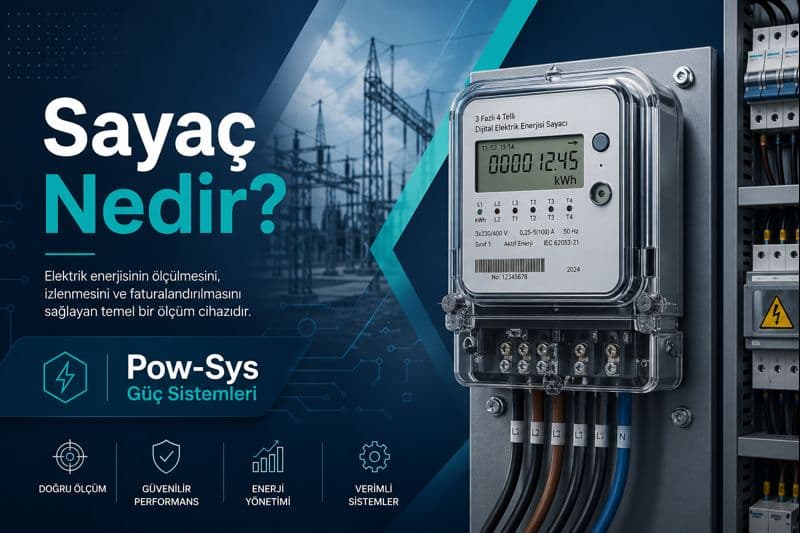
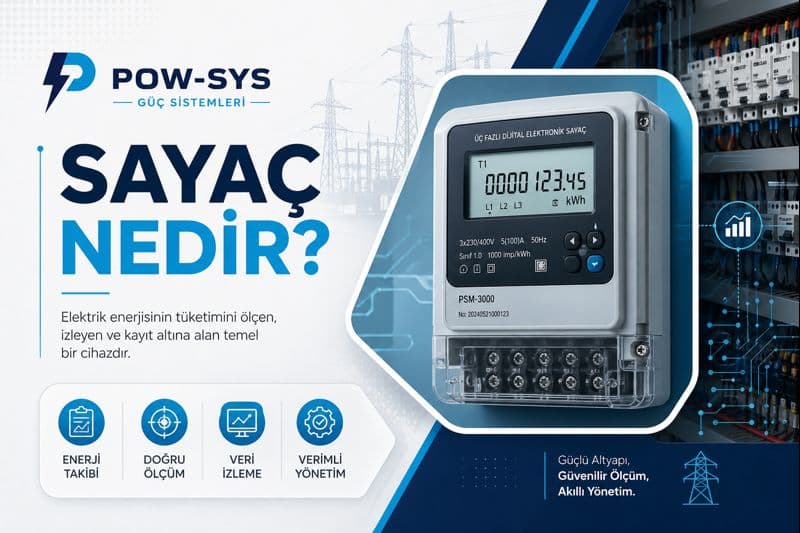
A meter is a device that measures how much electrical energy is used or how much energy flows in the system. Briefly, the answer to the question of what a meter is; It is a measuring equipment that records the consumed or transferred electrical energy. When the meter is mentioned in daily use, the consumption meter used by the electricity distribution company usually comes to mind. However, meters used in industrial facilities, commercial buildings and energy infrastructures can monitor not only total consumption but also much more measurement information.
The most basic answer to the question of what a meter is for is measurement. But this measurement is not just about showing monthly consumption. Meters enable monitoring of energy use, establishment of billing infrastructure, on-site energy management and, in some applications, evaluation of power quality and load behavior. Therefore, the meter is an important equipment used for both official consumption tracking and technical analysis.
The most common unit of measurement in electrical energy is kilowatt-hour, or kWh. A meter measures and records the active energy drawn over a specific period of time. But modern meters are often not limited only to active energy. Many electronic and smart meters; It can also monitor additional parameters such as reactive energy, visible energy, instantaneous power, current, voltage, frequency, power factor and demand. Therefore, the concept of counter now has a much broader meaning than just the classical counter with a rotating disk.
To explain the question of how the meter works simply, the device calculates the amount of energy using the voltage and current information in the circuit and accumulates it over time. In classical electromechanical meters, this work was done by a disk rotating under the influence of a magnetic field and a mechanical counter mechanism. In modern electronic meters, measurement is performed digitally, data is recorded in memory and often transferred to external systems on the screen or via the communication port.
Meter types are basically divided according to their technology and purpose of use. Traditional electromechanical meters are classic solutions that have been widely used for many years. Electronic meters, on the other hand, offer more precise measurement, more parameters and more advanced data processing. Akıllı sayaçlar ise buna ek olarak uzaktan okuma, yük profili kaydı, çok zamanlı ölçüm ve bazı durumlarda uzaktan işletme gibi işlevlerle öne çıkar. Therefore, when choosing a meter, it is not enough to just ask whether it measures.
The distinction between single phase meters and three phase meters is also important. While single-phase meters are often used in residential and small load applications, three-phase meters are preferred in industrial facilities, commercial buildings and systems that draw larger power. Three-phase meters can more accurately evaluate the total energy behavior of the system and provide measurement data between phases. This provides a great advantage, especially in facilities where operational analysis is performed.
Meters can be evaluated in different classes according to the size they measure. The most basic group is active energy meters. In addition, there are meters that measure reactive energy or multifunctional solutions that perform active-reactive measurement together. Reactive energy monitoring can be especially important in industrial facilities. Because seeing not only active consumption but also reactive energy behavior can become critical in terms of energy management.
Meters that measure demand are also important, especially in industrial and commercial facilities. Demand means monitoring the average power level drawn over a certain period of time. This information can be useful in understanding the plant's load behavior, peak consumption points and operational planning. For this reason, in facilities using large power, the meter becomes not only a device that shows the total consumption, but also an analysis tool that monitors the load character.
Smart meters have become increasingly common today. These meters can not only measure energy use but also store the data, transfer it to the center via communication infrastructure and create a load profile. In some structures, the application of different tariffs depending on the time period, remote reading and remote service operations may also be part of this infrastructure. For this reason, smart meter technology has transformed the classical meter logic into a data-oriented structure.
A meter is not the same as an analyzer, although some modern devices may offer convergent functionality. The meter mainly focuses on energy recording and consumption measurement. The energy analyzer often offers broader power quality and harmonic evaluation capabilities. However, in field application this distinction can sometimes become closer, as some multifunction meters can measure active, reactive, visible energy, as well as instantaneous power and various additional quantities.
Sub-meter applications are also very common today. In addition to the main distribution meter, sub-meters can be used to separately see the consumption of specific sections, tenant areas, machine groups or sub-panels within the facility. This approach makes energy management more detailed and makes it visible which section consumes how much energy. It provides great benefit especially for cost distribution and internal consumption analysis.
When choosing a meter, only the current value or brand should not be evaluated. Whether the system to be measured is single phase or three phase, whether only active energy or reactive energy and demand monitoring is required, communication need, panel mounting structure, accuracy class and official measurement requirements should be considered together. Because not every meter is suitable for every application. Residential meters and industrial multi-function meters do not meet the same expectations.
Meters in electrical facilities are important not only for seeing bills but also for making the right decisions. Solid meter data is needed to see the load increase, monitor consumption behavior at certain hours, indirectly evaluate compensation performance or conduct energy efficiency studies. Therefore, the meter is one of the silent but most important information sources of the energy infrastructure.
In summary, the meter; It is a basic measuring device that measures and records electrical energy and makes visible how much energy the facility uses or transfers. It may be mechanical, electronic or intelligent in nature; Can be selected for single phase or three phase systems; It can provide additional measurements such as active, reactive and some types of demand. A correctly selected meter provides great value not only for billing but also for energy management and technical monitoring. If meter selection, sub-meter structure, energy monitoring need and panel integration will be evaluated together in your facility. LV/MV/HV project design and consultancy Technical planning of the energy infrastructure can be done more efficiently.
Frequently Asked Questions
What is a counter?
A meter is a device that measures and records the consumption or flow of electrical energy.
What does the meter do?
It is used to monitor electricity consumption, establish billing infrastructure, track energy usage and, in some applications, evaluate additional information such as power and demand.
How does the meter work?
It calculates the amount of energy using the voltage and current information in the circuit and accumulates it over time. In modern meters, this process is done electronically.
What quantities can the meter measure?
Depending on the meter type, quantities such as active energy, reactive energy, apparent energy, instantaneous power, power factor and demand can be measured.:contentReference[oaicite:1]{index=1}
What is the difference between mechanical meter and electronic meter?
Mechanical meters are based on the classical rotating disk structure. Electronic meters, on the other hand, make measurements digitally and generally offer more advanced data processing with more parameters.
What is a smart meter?
Smart meter is a type of electronic meter that offers advanced functions such as remote reading, load profile recording and measurement by time period, in addition to energy and demand measurement.:contentReference[oaicite:2]{index=2}
What is the difference between a single phase meter and a three phase meter?
Single-phase meters are used in smaller and single-phase systems, and three-phase meters are used in three-phase systems in industrial and commercial buildings.
What does a meter that measures demand do?
It monitors the average power level drawn over a specific time period. This helps understand the load behavior of the plant and peak consumption moments.:contentReference[oaicite:3]{index=3}
What is sub counter?
It is a meter used to separately see the consumption of certain sections or sub-panels within the facility, other than the main meter. Also called sub-meter.
Are a meter and analyzer the same thing?
It's not exactly the same. The meter mainly focuses on energy measurement. The analyzer often offers broader power quality and detailed measurement functions. However, in some multi-function meters, this limit may be partially approached.