
Summary Highlights
- What is an energy analyzer: multifunctional device that monitors basic measurement and power quality data in the electrical system
- What does the energy analyzer do: make visible consumption, load behavior, power factor, demand and power quality problems
- How an energy analyzer works: produces power, energy, harmonic and incident data by processing voltage and current information
- The difference between an energy analyzer and a meter: it offers more detailed measurement, analysis, alarm and communication capabilities instead of just consumption recording.
- Energy analyzer selection: measurement need, harmonic monitoring, communication, panel integration and CT/VT compatibility
Content
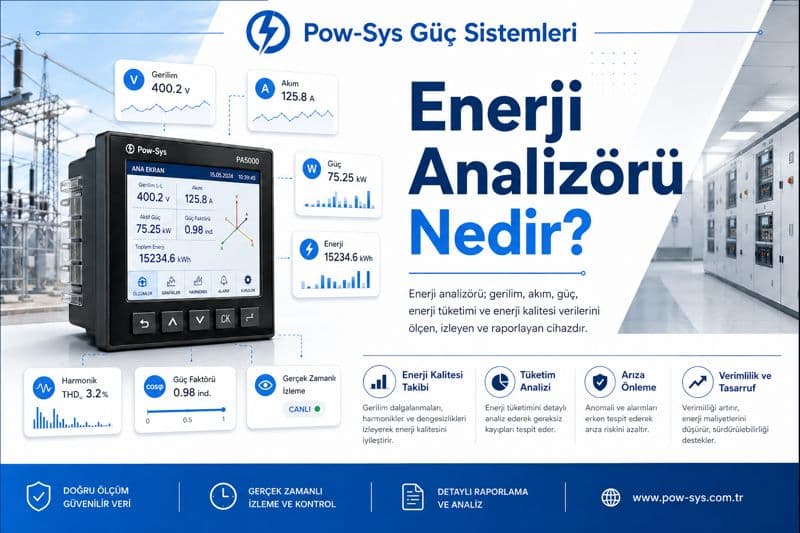
An energy analyzer is a measuring device that monitors basic quantities in the electrical system and, in most applications, power quality data in detail. Briefly, the answer to the question of what is an energy analyzer is; It is a multifunctional electrical monitoring equipment that shows not only energy consumption but also how the system behaves. These devices are widely used in industrial facilities, commercial buildings, energy distribution panels, generator outputs, compensation systems and critical load points.
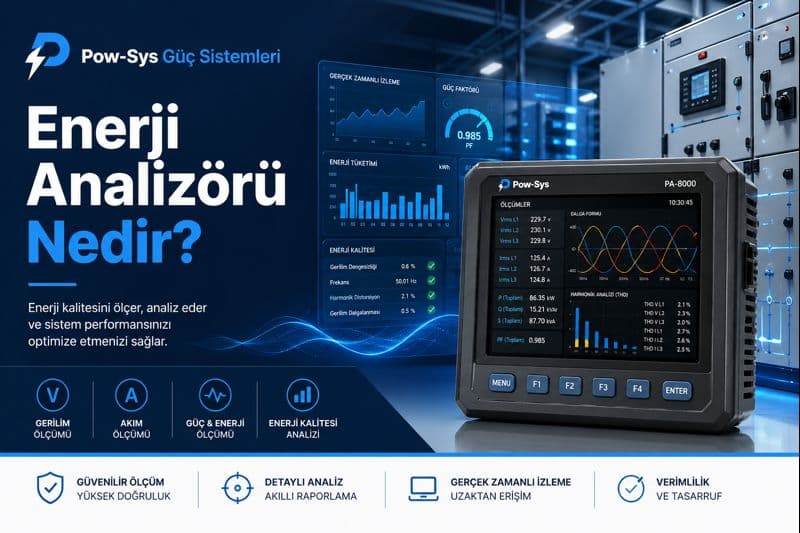
The answer to the question of what an energy analyzer is for is not just about showing how many kWh is consumed. These devices can monitor basic quantities such as voltage, current, active power, reactive power, apparent power, energy, frequency, power factor and demand. More advanced models can also provide information about harmonics, total harmonic distortion (THD), event records, load profile, imbalance, short-term deviations and different alarm conditions. Therefore, the energy analyzer is an important tool that combines consumption monitoring and power quality evaluation at the same point.
One of the biggest benefits of an energy analyzer is that it provides visibility into what is actually happening in the facility. There may be high consumption in a business, but the real problem may be low power factor, harmonic load, unbalanced phase current or sudden demand increase. These details are often invisible when looking at meter data alone. The energy analyzer helps to understand at what point there is a technical problem or inefficiency by making the measurement more detailed.
To explain the question of how an energy analyzer works simply, the device constantly collects voltage and current information about the system and calculates electrical quantities from them. In directly connected systems, this measurement can be made via the device's own inputs. In higher current or medium voltage applications, information coming from the current transformer and voltage transformer is used. The device processes this data and creates instantaneous values, averages, energy records and, in some models, event records.
An energy analyzer and a meter are not the same thing. The meter focuses more on recording energy consumption and, when necessary, billing or tracking sub-consumption. The energy analyzer goes beyond this. While it shows consumption, it can also reveal system behavior, load profile, quality degradations and electrical imbalances. That's why the energy analyzer is not only a measuring device, but also a diagnostic and monitoring tool.
The parameters measured by an energy analyzer may vary depending on the model. Basic level devices often present quantities such as voltage, current, power, energy and power factor. More advanced devices can also support harmonic order, THD levels, event recording, waveform capture features, demand behavior and long-term data archive. Therefore, not every energy analyzer has the same capabilities and when choosing, it should be known which data is actually required.
One of the important areas of use of energy analyzers is energy management. The energy analyzer provides very powerful data to see at which hours the facility draws more load, in which panels excessive consumption occurs, in which section the cosφ value is weak or where demand peaks occur. In this way, investment decisions, compensation improvements, load shifting plans or equipment capacity evaluation can be made more accurately.
Energy analyzers also play an important role on the power quality side. In facilities with harmonics, high driver and UPS density, or sensitive loads, just knowing the total energy consumption is not enough. Voltage disturbances, current harmonics, THD increase, instability and sudden events can affect equipment life and process safety. The energy analyzer supports maintenance and improvement decisions by making these problems visible at an early stage.
Energy analyzers are often evaluated with their communication ability. Thanks to Modbus, RS485, Ethernet or similar communication infrastructures, measurement data can be transferred to SCADA, BMS, EMS or energy monitoring software. Thus, the device ceases to be just a screen on the dashboard and becomes part of the central monitoring infrastructure. This provides a great advantage, especially in facilities with many sub-panels or multi-building structures.
Demand tracking is also one of the important areas of use of the energy analyzer. Demand data is very valuable for monitoring the average consumed power level in certain periods, seeing peak load moments and making decisions in terms of contract power or internal load management. In large commercial buildings and industrial facilities, this data can be used not only for reporting but also for business planning.
The concepts of energy analyzer and energy quality analyzer sometimes come close to each other. While some energy analyzers only monitor basic electrical quantities, some advanced models offer features that approach the power quality meter or power quality analyzer class directly. Therefore, when choosing a device, it is necessary to look at what parameters it actually measures and what events it can record, rather than its name.
When choosing an energy analyzer, measurement level, phase structure, whether it will be connected directly or via CT/VT, harmonic need, communication request, data recording, alarm features and panel compatibility should be evaluated together. Where simple consumption monitoring is required, an overly sophisticated device may be unnecessary. On the other hand, in a facility with harmonic and quality problems, a device that only makes basic measurements may be inadequate. The right device should be selected based on the actual need.
There are also points to consider on the installation side. If the phase sequence, CT direction, ratio definitions, voltage connections and communication parameters are not set up correctly, the data may be incorrect even if the device appears to be making measurements. Therefore, the value of the energy analyzer depends not only on the device quality, but also on correct commissioning and correct parameterization.
In summary, energy analyzer; It is a multifunctional measuring device that makes the consumption in the electrical system, load behavior and, in many cases, power quality parameters visible in detail. It provides broader data than the meter, supports energy management studies, helps monitor demand and power factor, and can provide the opportunity to monitor quality problems such as harmonics. If energy monitoring infrastructure, sub-panel monitoring, compensation behavior and power quality evaluation will be handled together in your facility. LV/MV/HV project design and consultancy Within this scope, the right device and the right measurement architecture can be planned.
Frequently Asked Questions
What is an energy analyzer?
Energy analyzer is a measuring device that monitors voltage, current, power, energy and in many models harmonic and power quality data in the electrical system in detail.
What does an energy analyzer do?
It makes consumption, load behavior, power factor, demand level and, in some applications, power quality problems visible. This makes energy management and technical diagnostics easier.
What values does the energy analyzer measure?
Depending on the model, it can measure quantities such as voltage, current, active-reactive-apparent power, energy, frequency, power factor, demand and harmonics and THD in many devices.:contentReference[oaicite:1]{index=1}
Are an energy analyzer and a meter the same thing?
No. The meter focuses more on recording energy consumption. The energy analyzer can also provide more detailed data such as load behavior, power factor, demand and power quality.
Does the energy analyzer measure harmonics?
Many advanced models can measure harmonics and THD, but not every model offers the same level of harmonic analysis. This feature should also be checked when choosing a device.:contentReference[oaicite:2]{index=2}
Why is demand measurement important?
Demand shows the average power level over a certain period of time. This data is important to see peak loads and plan the facility's load management.:contentReference[oaicite:3]{index=3}
Where is the energy analyzer used?
It is widely used in main panels, sub-panels, industrial facilities, commercial buildings, generator outputs, compensation systems and energy monitoring infrastructures.
Does the energy analyzer support communication?
Many models offer RS485, Ethernet or similar communication options. In this way, data can be transferred to SCADA, BMS or energy monitoring software.:contentReference[oaicite:4]{index=4}
What to consider when choosing an energy analyzer?
The parameters to be measured, phase structure, CT/VT need, harmonic monitoring, communication, data recording and panel compatibility should be evaluated together.
Why is an energy analyzer important for energy management?
Because it shows not only the total consumption, but also what kind of electrical behavior occurs at which point. This helps to see loss, imbalance, low power factor or harmonic problems more clearly.:contentReference[oaicite:5]{index=5}