
Summary Highlights
- What an MV XLPE cable is: the basic definition of an insulated power cable used in medium-voltage power transmission
- What an MV XLPE cable does: carrying, distributing and connecting energy between equipment safely and controllably
- MV XLPE cable structure: conductor, semiconductive screens, XLPE insulation, metallic screen and outer sheath layers
- Advantages of XLPE insulation: electrical withstand, thermal performance, reliable operation and the reason for widespread use
- MV XLPE cable selection: voltage level, screen structure, conductor cross-section, installation environment and outer sheath properties
Article Details
An MV XLPE cable is a power cable used to carry electrical energy safely at medium-voltage level. MV means medium voltage, and XLPE means cross-linked polyethylene insulation. In short, the answer to what an MV XLPE cable is: it is a power cable used in medium-voltage energy systems, providing high electrical withstand and containing XLPE insulation in its structure. These cables are widely used in transformer substations, distribution networks, industrial facilities and energy infrastructure.
The basic answer to what an MV XLPE cable does is that it transmits energy from one point to another safely and controllably. However, this duty is not limited to carrying current. The cable also supports control of the electric field, management of earth fault behavior, preservation of mechanical strength and provision of outer protection suitable for the installation environment. Therefore, MV cable selection is important not only for cross-section calculation but also for system safety and operating performance.
XLPE means cross-linked polyethylene. This material is used in the main insulation layer of the cable. Thanks to its cross-linked structure, it provides more stable insulation behavior than ordinary thermoplastic polyethylene and is widely preferred in medium-voltage applications. For this reason, when MV cable is mentioned in the field, XLPE-insulated cables usually come to the fore. In modern AC cable systems in particular, the use of XLPE construction is very widespread.
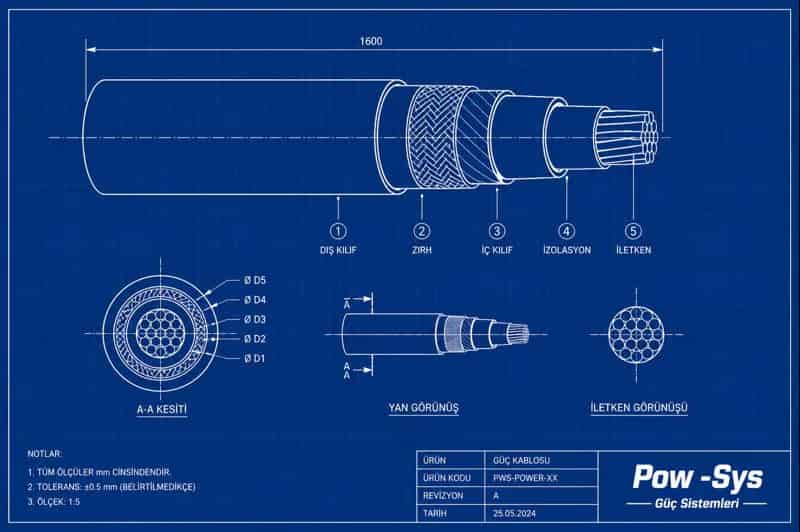
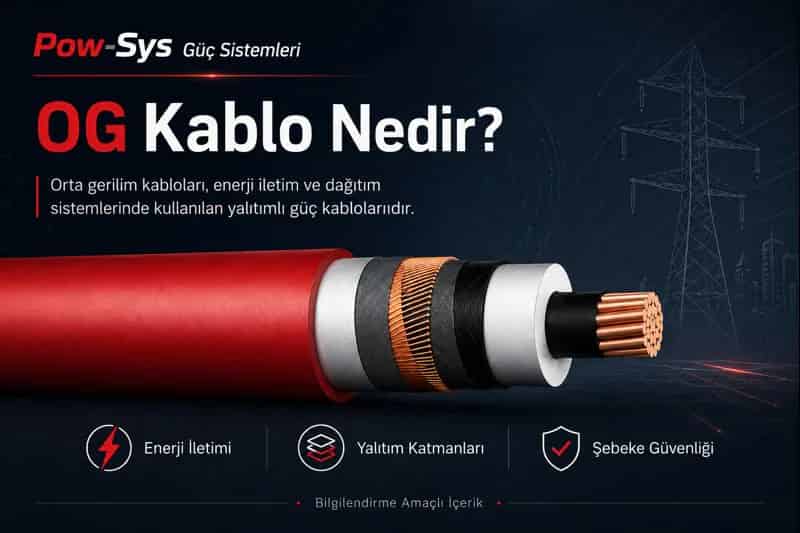
The structure of an MV XLPE cable has a layered arrangement. At the innermost part there is the energy-carrying conductor. Above it is the conductor screen used to distribute the electric field smoothly. The main insulation layer is XLPE. Above that is the insulation screen, which also helps with field control. Further outside is the metallic screen, and above it is the outer sheath. Some cable types may also include additional water-blocking, armor or special outer sheath layers. This structure shows that a medium-voltage cable is not only a conductor but a controlled engineering product.
The semiconductive screen layers in the cable are very important. At medium-voltage level, irregular distribution of the electric field can lead to unwanted stress accumulation on the insulation. The conductor screen and insulation screen work together to make the field more controlled. This enables the XLPE insulation to operate more healthily. Therefore, it is not correct to see screen layers in MV cable construction as just an additional material; they are at the center of the cable's electrical performance.
The metallic screen is another critical part of the cable. This layer contributes to electric field control and plays a role in managing fault currents and screen currents. It is also important for cable tests, screen grounding and the system protection arrangement. Depending on the application, the metallic screen may be copper wire, copper tape or another metallic screen structure. This detail is determined according to the structure of the system in which the cable will be used.
The outer sheath protects the cable against environmental conditions. If the cable will be installed underground, in a cable duct, on a tray or in an open field environment, the performance of the outer sheath against mechanical and environmental effects becomes important. Moisture, UV, impact, chemical effects and installation method can be decisive in outer sheath selection. For this reason, two MV cables at the same voltage level may have different outer structures only because the installation environments are different.
One of the reasons MV XLPE cables are preferred is insulation performance. XLPE insulation is a solution developed to provide reliable operation at medium-voltage level, and this is the main reason for its widespread use. When properly designed, it also offers a strong structure in terms of thermal withstand, electrical stability and long-term operating performance. Therefore, XLPE cables are seen very frequently in industrial facilities and distribution infrastructure.
An MV XLPE cable and a low-voltage cable are not the same thing. Both carry energy, but because electric field control is much more critical in medium-voltage cables, the structure is more complex. Screen layers, metallic screen arrangement, termination and joint design, test approach and installation discipline become more sensitive. Therefore, in medium-voltage cable applications, selecting the cable alone is not enough; termination, cable joint, screen grounding and field installation quality are also parts of the system.
In medium-voltage cables, cable terminations and joint points are at least as important as the cable itself. A significant part of field failures often originates not from the cable body but from incorrect joints, weak terminations or wrong screen connections. Therefore, when discussing MV XLPE cable, the cable must be considered together with all of its accessories and installation chain. Correct workmanship is as decisive here as correct material.
MV XLPE cables are widely used in transformer substations, distribution networks, organized industrial zones, in-factory MV distribution lines, wind and solar power plants, pumping stations and infrastructure projects. They provide important advantages especially where underground cable systems are preferred or where a compact and controlled solution is desired instead of overhead lines. For this reason, XLPE cables have become very common in urban distribution and industrial applications.
When selecting an MV XLPE cable, voltage level, conductor cross-section, screen structure, outer sheath material, installation environment, short-circuit withstand, water effect and compatibility with the accessories to be used must be evaluated together. The cable is not a product selected only from a catalog; it must be compatible with the protection arrangement, grounding logic and physical route of the system. An incorrectly selected or incorrectly applied cable may create early aging, failure and operational loss.
In summary, an MV XLPE cable is a special power cable used to carry energy at medium-voltage level, containing cross-linked polyethylene insulation, controlling the electric field with screen layers and protected against environmental effects by its outer sheath. It is not only a conductor, but a multilayer and system-oriented engineering solution. If MV cable selection, XLPE cable applications, cable termination and joint solutions, MV/HV field suitability and maintenance requirements need to be evaluated together in your facility, it is possible to proceed in an integrated way with HV/MV testing, maintenance and repair, LV/MV/HV project design and consultancy and HV operation responsibility services.
Related Blog Posts
Related Services
Frequently Asked Questions
What is an MV XLPE cable?
An MV XLPE cable is a power cable used to carry electrical energy safely at medium-voltage level, with cross-linked polyethylene as its main insulation layer. MV stands for medium voltage and XLPE stands for cross-linked polyethylene, the insulation material that gives the cable its high electrical withstand. These cables are widely used in transformer substations, distribution networks, industrial facilities and energy infrastructure. Structurally, an MV XLPE cable is much more than a conductor: it is a layered engineering product in which the conductor, semiconductive screens, XLPE insulation, metallic screen and outer sheath work together to control the electric field, manage earth fault behavior, preserve mechanical strength and protect against the installation environment. This system-oriented construction is what allows medium-voltage energy to be transmitted reliably over underground and in-plant cable routes.
What does XLPE mean?
XLPE means cross-linked polyethylene, the material used in the main insulation layer of the cable. Thanks to its cross-linked structure, XLPE provides more stable insulation behavior than ordinary thermoplastic polyethylene, which is why it is widely preferred in medium-voltage applications. When MV cable is mentioned in the field, XLPE-insulated cables usually come to the fore, and in modern AC cable systems in particular the use of XLPE construction is very widespread. Beyond its electrical withstand, properly designed XLPE insulation also offers strong thermal performance, electrical stability and reliable long-term operating behavior. This combination of properties is the main reason cross-linked polyethylene has become the standard insulation solution for medium-voltage power cables in transformer substations, distribution networks and industrial facilities.
What does an MV XLPE cable do?
An MV XLPE cable transmits electrical energy from one point to another safely and controllably at medium-voltage level. Its duty, however, is not limited to carrying current. The cable also supports control of the electric field through its semiconductive screen layers, contributes to the management of earth fault behavior through its metallic screen, preserves mechanical strength along the route and provides outer protection suited to the installation environment through its sheath. Because of this, MV cable selection matters not only for cross-section calculation but also for system safety and operating performance. In practice these cables connect transformer substations, distribution networks and equipment inside industrial facilities, providing a compact and controlled alternative to overhead lines wherever underground or in-plant energy distribution is preferred.
Which layers does an MV XLPE cable consist of?
An MV XLPE cable has a layered arrangement built around field control. At the innermost part is the energy-carrying conductor. Above it sits the conductor screen, a semiconductive layer used to distribute the electric field smoothly. The main insulation layer of cross-linked polyethylene comes next, followed by the insulation screen, which also helps with field control. Further out is the metallic screen, which manages fault currents and screen currents, and the outermost layer is the sheath that protects against environmental effects. Depending on the type and application, some cables also include additional water-blocking, armor or special outer sheath layers. This construction shows that a medium-voltage cable is not simply a conductor but a controlled engineering product in which every layer has a defined electrical or mechanical duty.
Why is a metallic screen used?
The metallic screen is used because it performs several critical duties at once. It contributes to electric field control, and it plays a central role in managing fault currents and screen currents when an earth fault or system disturbance occurs. It is also important for cable testing, for the screen grounding arrangement and for the overall system protection scheme, since the screen connections must match the protection and grounding logic of the installation. Depending on the application, the metallic screen may be made of copper wire, copper tape or another metallic screen structure, and this detail is determined according to the system in which the cable will operate. For these reasons, the metallic screen should be treated as a core functional layer of the cable rather than as a simple covering.
What is the difference between an MV XLPE cable and an LV cable?
The main difference is that electric field control is much more critical at medium voltage, so the MV cable structure is considerably more complex. Both cable classes carry energy, but an MV XLPE cable needs semiconductive screen layers around the insulation, a metallic screen arrangement for fault and screen currents, and carefully designed terminations and joints, none of which are as demanding in low-voltage cables. The test approach and the installation discipline are also more sensitive at medium voltage. As a result, selecting the cable alone is not enough in MV applications: termination design, cable joints, screen grounding and field installation quality are all parts of the system. A low-voltage cable can often be treated as a simple product, whereas a medium-voltage cable must be handled as an engineered system.
Where are MV XLPE cables used?
MV XLPE cables are widely used in transformer substations, distribution networks, organized industrial zones, in-factory MV distribution lines, wind and solar power plants, pumping stations and infrastructure projects. They provide important advantages especially where underground cable systems are preferred or where a compact and controlled solution is desired instead of overhead lines. This is why XLPE cables have become very common in urban distribution and industrial applications. In these environments the cable connects switchgear, transformers and feeders, and it operates together with its terminations, joints and screen grounding arrangement as one system. Wherever medium-voltage energy has to follow a defined physical route through a facility or a city, the XLPE-insulated cable is usually the standard solution encountered in the field.
Why are terminations and joints important in MV cables?
Terminations and joints are important because a significant part of medium-voltage field failures originates not from the cable body but from incorrect joints, weak terminations or wrong screen connections. The cable itself may be perfectly manufactured, yet a poorly executed accessory point can concentrate electrical stress, disturb the field control that the screen layers provide and lead to early aging or breakdown. For this reason, when discussing an MV XLPE cable, the cable must be considered together with all of its accessories and the complete installation chain. Correct workmanship is as decisive as correct material: termination design, cable joint quality and screen grounding must match the cable construction and the system arrangement, and field installation quality must be treated as part of the engineering, not as a detail.
What should be considered when selecting an MV XLPE cable?
When selecting an MV XLPE cable, voltage level, conductor cross-section, screen structure, outer sheath material, installation environment, short-circuit withstand, water effect and compatibility with the accessories to be used must all be evaluated together. The cable is not a product selected only from a catalog: it must be compatible with the protection arrangement, the grounding logic and the physical route of the system it will serve. The installation environment matters as well, because moisture, UV exposure, impact, chemical effects and the installation method can be decisive in outer sheath selection, and two cables at the same voltage level may need different outer structures for different environments. An incorrectly selected or incorrectly applied cable may create early aging, failures and operational loss, so selection should be handled as a system decision.
Why are XLPE cables widely used?
XLPE cables are widely used because cross-linked polyethylene insulation provides reliable electrical performance at medium-voltage level, and this reliability is the main reason for its widespread adoption. When properly designed, XLPE insulation offers a strong structure in terms of thermal withstand, electrical stability and long-term operating performance, which makes it well suited to continuous duty in distribution infrastructure. The cross-linked structure behaves more stably than ordinary thermoplastic polyethylene, so it has become the default choice in modern AC cable systems. XLPE cables are therefore seen very frequently in industrial facilities, urban distribution networks, power generation plants and underground cable lines, wherever a compact and controlled alternative to overhead lines is desired. Their layered construction with screen layers and a protective outer sheath completes the insulation performance with field control and environmental protection.