
Summary Highlights
- What an MV cable termination is: its basic definition as a cable accessory that safely terminates a medium-voltage cable
- What an MV cable termination does: providing insulation continuity, electrical stress control, sealing and equipment connection
- MV cable termination operating principle: stress control at the cable screen end, insulation support and surface protection
- MV cable termination types: indoor, outdoor and separable plug-in terminations, heat-shrink and cold-shrink solutions
- MV cable termination selection and application: cable type, voltage level, installation environment, equipment connection and workmanship quality
Article Details
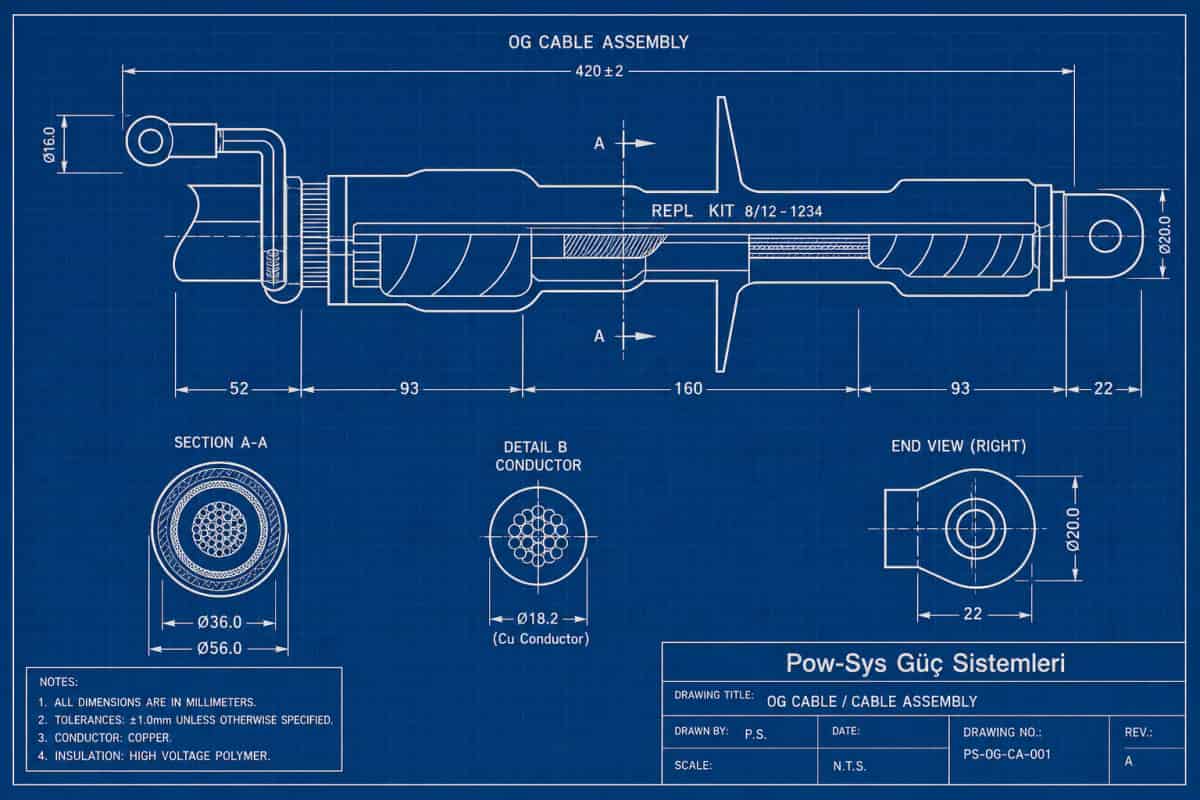
An MV cable termination is a special cable accessory used to terminate the end of a medium-voltage cable safely and controllably. In short, the answer to what an MV cable termination is: it is a termination element that connects the cable safely to switchgear, a transformer, a busbar system or an outdoor connection. This equipment does not only provide mechanical connection; it also preserves insulation integrity, controls the electric field and helps protect the cable end against external environmental effects.
The answer to what an MV cable termination does is broader than simply saying that it connects the cable. At medium-voltage level, the cable screen and insulation structure end at a defined point. If the electric field is not managed properly at this point, surface stress can increase in the termination area, tracking may develop and failure risk may arise over time. The main duty of an MV cable termination is to make this electrical stress safe by providing stress control in the cable screen termination region. Moisture sealing, mechanical protection and safe equipment connection are also within the duty area of the termination.
At the center of the MV cable termination operating principle is electric field control. In medium-voltage XLPE or similar insulated cables, the conductor screen and insulation screen continue according to a certain arrangement. When the cable end is terminated, this screen structure ends, so field intensity tends to increase especially at the screen cutback region. Stress control elements inside the termination make this transition more controlled. This reduces electrical stress at the cable end, improves surface performance and extends the service life of the termination.
For this reason, an MV cable termination is not an ordinary cable lug connection. It contains insulation support, stress control, outer surface protection, sealing and, in most designs, material structure resistant to tracking and erosion. Especially in outdoor applications, when rain, UV, pollution and humidity are considered, the termination must provide not only electrical but also environmental withstand. Therefore, MV cable termination selection should not be made only by looking at cross-section and voltage value.
MV cable terminations can generally be classified as indoor and outdoor types. Indoor MV terminations are used in switchgear rooms, inside panels or in indoor facility connections. Outdoor MV terminations are preferred in areas exposed to weather, pole-top transitions or outdoor switchyard applications. In outdoor types, shed structure, surface creepage path and environmental withstand are more prominent. In indoor types, compactness and equipment compatibility may be more important.
Another important class is separable or plug-in terminations. These types are used especially in RMU, GIS, compact MV switchgear and transformer bushing connected systems. The cable end is connected to the equipment through a socketed and fully insulated connection system instead of an open-type termination. This approach can provide important advantages in terms of field safety, compact installation and ease of maintenance. Plug-in terminations have become quite common especially in modern MV distribution structures.
MV cable termination technology appears as heat-shrink, cold-shrink or premolded silicone-based systems depending on the application. In heat-shrink systems, the material is fitted onto the cable by applying heat. In cold-shrink systems, the elastomer structure is opened over a support tube and tightly fits the cable when the support is removed. Premolded or separable solutions are preferred especially in standardized equipment connections. Which type is suitable is determined according to field conditions, equipment type and workmanship expectations.
An MV cable termination and a cable joint are not the same equipment. A termination connects the cable end to equipment or an open termination point. A cable joint is used to join two cables together. Although both are MV cable accessories, their duties are different. Confusing these two types of equipment in the field may lead to wrong material selection and serious operating errors. If the cable line will be terminated, a termination is used; if two separate cables will be connected, a cable joint is used.
Healthy operation of an MV cable termination does not depend only on material quality. Cable preparation, screen cutback dimension, proper removal of the semiconductive layer, preparation of the conductor end, lug crimping, sealing arrangement and correct placement of the stress control element directly affect the result. Therefore, an important part of MV cable termination failures is related to incorrect application and workmanship errors. Even the best material can fail with incorrect installation.
When selecting a termination, the cable voltage level, number of cores, conductor cross-section, cable type, screen structure and connected equipment must be considered. For example, the same termination is not used for a transformer connection, GIS switchgear, RMU connection or outdoor termination. The installation environment, UV exposure, pollution level and mechanical layout constraints also affect selection. For this reason, MV cable termination selection is not a task to be done randomly from an accessory catalog.
In medium-voltage cable systems, the termination area is one of the most sensitive points. The cable body is manufactured under controlled factory conditions, while the termination is usually applied in the field. This makes termination quality directly related to field discipline and installation experience. This is also the main reason why a significant part of failures are seen in termination areas. Therefore, termination installation is considered one of the most critical work items in MV cable systems.
In summary, an MV cable termination is a special cable accessory that enables a medium-voltage cable to be terminated safely, sealed and electrically controlled. It may be indoor, outdoor or separable, and it may be applied with heat-shrink, cold-shrink or premolded designs. A correctly selected and correctly installed MV cable termination is at least as important as the cable itself for cable system reliability. If MV cable termination selection, termination-cable joint applications, RMU or transformer connections and MV field suitability need to be evaluated together in your facility, HV/MV testing, maintenance and repair and LV/MV/HV project design and consultancy services can support the technical decision process.
Related Blog Posts
- What Tests and Maintenance Are Required for MV Cable Terminations?
- What Is an MV XLPE Cable? What Does It Do, How Does It Work and What Structure Does It Have?
- What Is an RMU? What Does It Do, How Does It Work and What Parts Does It Include?
- What Is Metal-Clad Switchgear? What Does It Do, How Does It Work and What Features Does It Have?
Related Services
Frequently Asked Questions
What is an MV cable termination?
An MV cable termination is a special cable accessory used to terminate the end of a medium-voltage cable safely and controllably. It is the termination element that connects the cable to switchgear, a transformer, a busbar system or an outdoor connection point. Its role goes well beyond mechanical connection: the termination preserves insulation integrity where the cable construction ends, controls the electric field in the screen termination region and helps protect the cable end against external environmental effects such as moisture. Because the cable screen and insulation structure end at a defined point, the termination must manage the electrical stress that concentrates there. A correctly selected and correctly installed MV cable termination is therefore considered at least as important as the cable itself for the reliability of a medium-voltage cable system.
What does an MV cable termination do?
An MV cable termination provides insulation continuity at the cable end, performs electrical stress control, creates moisture sealing and connects the cable safely to equipment. At medium-voltage level, the cable screen and insulation structure end at a defined point, and if the electric field is not managed properly there, surface stress can increase, tracking may develop and failure risk may grow over time. The main duty of the termination is to make this electrical stress safe by providing stress control in the cable screen termination region. Moisture sealing, mechanical protection and a safe connection to switchgear, transformers or outdoor points are also within its duty area. In outdoor applications it must additionally withstand rain, UV, pollution and humidity, so the termination provides environmental as well as electrical performance.
How does an MV cable termination work?
An MV cable termination works by controlling the electric field at the point where the cable construction ends. In medium-voltage XLPE or similar insulated cables, the conductor screen and insulation screen continue along the cable according to a defined arrangement; when the cable end is terminated, this screen structure stops, and field intensity tends to increase especially at the screen cutback region. Stress control elements inside the termination make this transition more controlled, reducing the concentrated electrical stress at the cable end and improving surface performance. Most designs also include insulation support, outer surface protection, sealing and material structures resistant to tracking and erosion. By combining these functions, the termination turns the naturally vulnerable cable end into a controlled, sealed and durable connection point, extending the service life of the installation.
What is the difference between an MV cable termination and a cable joint?
The difference lies in what each accessory connects. An MV cable termination connects the end of a cable to equipment or to an open termination point, for example switchgear, a transformer, a busbar system or a pole-top transition. A cable joint, by contrast, is used to join two separate cables together along a route. Although both are medium-voltage cable accessories and both must manage insulation and field control, their duties are different, and confusing the two in the field can lead to wrong material selection and serious operating errors. The practical rule is simple: if the cable line will be terminated at equipment or an endpoint, a termination is used; if two separate cables must be connected to continue the line, a cable joint is used.
What is the difference between indoor and outdoor MV cable terminations?
Indoor and outdoor MV cable terminations differ mainly in the environment they are designed to withstand. Indoor terminations are used in switchgear rooms, inside panels or in enclosed facility connections, where compactness and compatibility with the connected equipment tend to be the more important design factors. Outdoor terminations are preferred in areas exposed to weather, at pole-top transitions or in outdoor switchyard applications, so shed structure, surface creepage path and environmental withstand come to the fore. An outdoor termination must resist rain, UV radiation, pollution and humidity while still providing the same electrical stress control as an indoor type. Because of these differences, the installation environment is one of the first questions in termination selection, and the same product should not be assumed suitable for both situations.
What is a plug-in or separable termination?
A plug-in or separable termination is an MV cable termination type in which the cable end is connected to the equipment through a socketed and fully insulated connection system instead of an open-type termination. These terminations are used especially in RMU, GIS, compact MV switchgear and transformer bushing connected systems, where the equipment provides a standardized bushing interface. Because the connection is fully insulated and separable, this approach can provide important advantages in terms of field safety, compact installation and ease of maintenance: the cable can be disconnected and reconnected in a controlled way without rebuilding an open termination. Plug-in terminations have become quite common in modern MV distribution structures, and they are one of the main reasons compact switchgear designs can keep their small footprint while remaining safe to work on.
Why is stress control important in an MV cable termination?
Stress control is important because electric field intensity naturally increases where the screen structure of a medium-voltage cable ends. Along the cable, the conductor screen and insulation screen keep the field distributed in a controlled way; at the termination, this arrangement stops at the screen cutback region, and without countermeasures the field concentrates there. If the electric field is not managed properly at this point, surface stress increases in the termination area, tracking may develop over time and the risk of failure grows. The stress control elements inside the termination make this transition gradual and controlled, reducing electrical stress at the cable end and improving surface performance. This function is what separates a true MV cable termination from an ordinary cable lug connection, and it directly determines the service life of the termination.
What are the MV cable termination types?
MV cable terminations are classified in two main ways: by installation environment and by technology. By environment, the main types are indoor terminations for switchgear rooms and enclosed connections, outdoor terminations with shed structures and enhanced environmental withstand for weather-exposed locations, and separable plug-in terminations used with RMU, GIS, compact switchgear and transformer bushing systems. By technology, heat-shrink systems are fitted onto the cable by applying heat; cold-shrink systems use an elastomer structure that is opened over a support tube and tightly grips the cable when the support is removed; and premolded silicone-based or separable solutions are preferred in standardized equipment connections. Which combination is suitable is determined according to field conditions, the connected equipment type and the workmanship expectations of the installation.
What should be considered when selecting an MV cable termination?
When selecting an MV cable termination, the cable voltage level, number of cores, conductor cross-section, cable type, screen structure and the connected equipment must all be considered together. The same termination is not used for a transformer connection, GIS switchgear, an RMU connection or an outdoor termination, so the equipment interface largely defines the required solution. The installation environment matters as well: UV exposure, pollution level and mechanical layout constraints can change the correct choice, particularly between indoor and outdoor types. Technology preference between heat-shrink, cold-shrink and premolded or separable designs depends on field conditions and workmanship expectations. Because of all these interacting factors, MV cable termination selection is an engineering decision, not a task to be done randomly from an accessory catalog.
Why are MV cable failures often seen in the termination area?
MV cable failures concentrate in the termination area because the cable body is manufactured under controlled factory conditions, while the termination is usually applied in the field. This makes termination quality directly dependent on field discipline and installation experience. Healthy operation does not depend only on material quality: cable preparation, the screen cutback dimension, proper removal of the semiconductive layer, preparation of the conductor end, lug crimping, the sealing arrangement and correct placement of the stress control element all directly affect the result. An important part of MV cable termination failures is therefore related to incorrect application and workmanship errors, and even the best material can fail with incorrect installation. This is why termination installation is considered one of the most critical work items in medium-voltage cable systems.