
Summary Highlights
- What an RMU is: a compact, metal-enclosed Ring Main Unit structure used in medium-voltage distribution
- What an RMU does: managing supply continuity, load transfer and transformer feeder functions in a ring network
- How an RMU works: switching, isolation and protection logic through two ring lines and one transformer or feeder output
- RMU sections: load break switch, fused cubicle, circuit breaker cubicle, cable connections, earthing switch, metering and auxiliary equipment
- RMU selection and use: voltage level, current, short-circuit withstand, insulation technology, indoor/outdoor installation and automation needs
Article Details
RMU is the abbreviation for Ring Main Unit and refers to a compact switching solution used in medium-voltage distribution systems. In short, the answer to what an RMU is: it is a factory-built, metal-enclosed medium-voltage distribution unit designed for ring supply structures and combining multiple functions in a single enclosure. This structure is widely used especially in city networks, industrial facilities, compact transformer substations and distribution points.
The basic answer to what an RMU does is not only opening and closing energy. The main role of an RMU is to support supply continuity in medium-voltage networks operating in a ring structure, manage lines, isolate a section when necessary and safely feed a transformer or outgoing feeder. Therefore, an RMU is a much more comprehensive distribution solution than a conventional single switching cubicle.
In ring network logic, energy is arranged so that it can often circulate from two different directions rather than a single direction. Thus, when a fault or planned outage occurs on the line, it may be possible to feed the system from the other side. The RMU plays a critical role at this point. It enables controlled management of the energy flow through switching units that control the two ring directions and a transformer outlet or feeder cubicle. For this reason, the RMU is very valuable for distribution continuity.
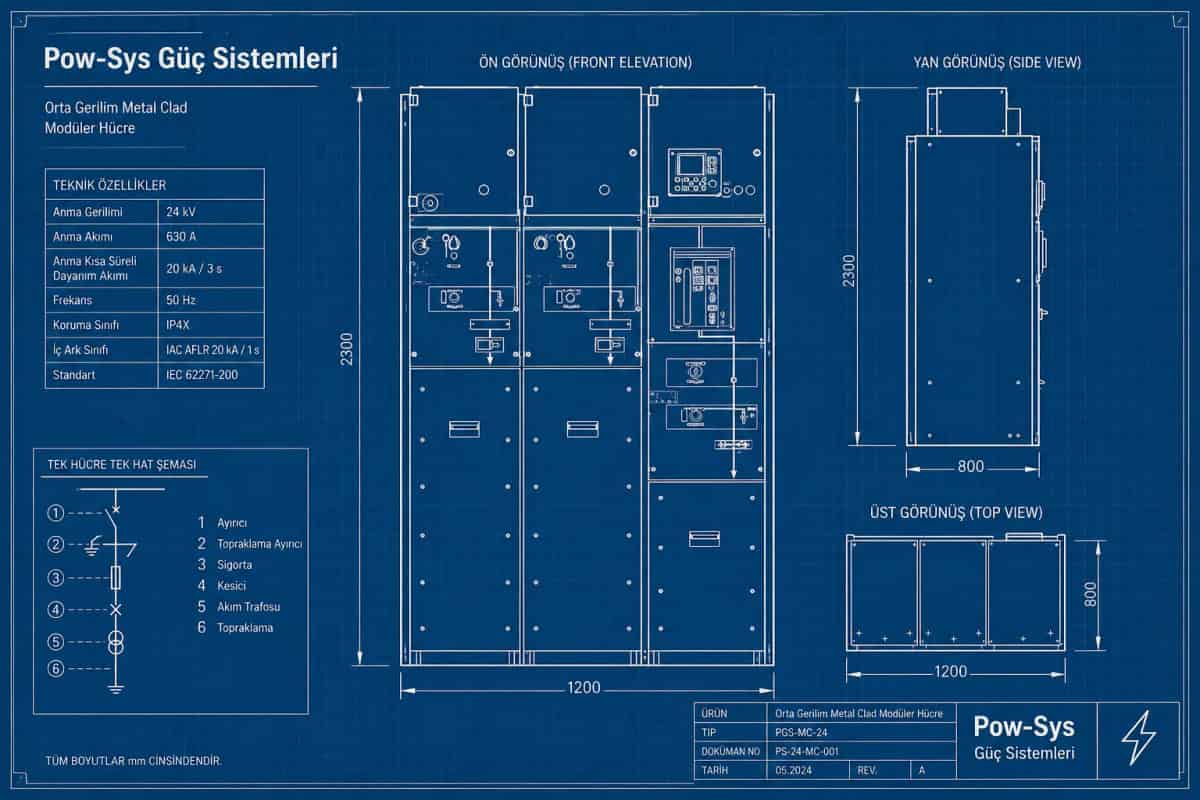
A typical RMU structure often includes two ring load break switches and one tee-off, meaning a transformer or outgoing cubicle. This outgoing cubicle may be a fused load-break switch type, a circuit-breaker type, or may include a different protection approach depending on the application. Some RMUs are compact three-cubicle structures, while others are modular designs with more functions added. However, the basic logic does not change: managing ring lines and feeding a load or transformer safely.
To explain simply how an RMU works: the medium-voltage cable from the grid enters the RMU, is directed through the relevant ring cubicles and is transferred to the transformer or another feeder branch. If a fault occurs on the line, the appropriate cubicles can be isolated, the ring structure can be rearranged and healthy sections can remain energized. This allows local intervention without de-energizing the entire line. This is one of the greatest advantages of the RMU.
Load break switches, earthing switches and protection functions inside the RMU form the basis of safe operation. In some designs, transformer protection is provided by a fuse combination, while in others a vacuum circuit breaker or similar advanced protection structure is used. Therefore, every RMU is not the same. Different RMU configurations are preferred according to the facility structure, transformer power, short-circuit level and automation requirement.
Although an RMU and a conventional MV switchgear system look similar, they are not exactly the same. An RMU is more focused on compactness, ring distribution logic and field practicality. It is prominent especially in distribution transformer feeders, compact kiosks, urban medium-voltage points and ring network applications. Conventional MV panel and switchgear lineups may be used in larger and more customized substation structures. In other words, the RMU is a more compact and practical form of MV switchgear for a specific type of application.
RMUs may have different structures for indoor and outdoor applications. Some are designed for indoor installations, while others are used inside compact kiosks or enclosures suitable for outdoor field conditions. Therefore, when selecting an RMU, not only electrical values but also installation location, environmental conditions, humidity, dust, temperature and maintenance access should be evaluated. The compact structure is advantageous, but a selection unsuitable for field conditions may create long-term problems.
Insulation technology is also an important topic in RMU selection. Gas-insulated solutions, different insulation media and new-generation SF6-free solutions may be available in the market. The main issue here is equipment reliability, maintenance approach, suitability for environmental conditions and operating expectations. From the user's perspective, the important point is not only the name of the technology but the overall performance of the system. Therefore, RMU selection should start from project needs, not from a brand brochure.
Remote monitoring and control features are also prominent in modern RMU systems. Some structures include motorized operation, fault indication, remote opening-closing, RTU integration and SCADA connection. This enables the distribution network to be managed faster, the fault location to be isolated more quickly and field intervention to be reduced. These features provide important advantages especially in city networks and facilities where outage duration is critical.
When selecting an RMU, rated voltage, rated current, short-circuit withstand, protection type, transformer power, cable entry arrangement, indoor/outdoor suitability, automation need and maintenance approach must be evaluated together. An incorrectly selected RMU may create problems not only electrically but also in terms of operating practicality. For example, an incorrect cubicle arrangement in a hard-to-access structure may make maintenance and switching processes unnecessarily difficult.
Although an RMU looks compact, it is very critical system equipment. It is one of the most important field-level nodes of medium-voltage distribution. A fault at this point may affect not only a single load but also other feeders in the ring structure. Therefore, an RMU should not be seen as only a small group of cubicles; it should be evaluated as one of the main elements of distribution reliability.
In summary, an RMU is a special switching solution used in medium-voltage ring networks to manage energy flow, increase supply continuity, protect transformer or feeder outputs safely and gather the distribution infrastructure in a compact structure. It may have load-break switch, fused or circuit-breaker types and may be selected in different structures for indoor and outdoor applications. A correctly configured RMU provides major advantages for both field safety and operational continuity. If RMU selection, MV cable connections, transformer feeder structure and field operation safety need to be evaluated together in your facility, HV/MV testing, maintenance and repair and LV/MV/HV project design and consultancy services can support the technical decision process.
Related Blog Posts
Related Services
Frequently Asked Questions
What is an RMU?
An RMU, the abbreviation for Ring Main Unit, is a factory-built, metal-enclosed medium-voltage distribution unit designed for ring supply structures and combining multiple functions in a single enclosure. It is a compact switching solution used in medium-voltage distribution systems, widely applied in city networks, industrial facilities, compact transformer substations and distribution points. A typical RMU brings together switching units that control the two ring directions and a transformer or feeder output, so it is a much more comprehensive distribution solution than a conventional single switching cubicle. Although it looks compact, an RMU is one of the most important field-level nodes of medium-voltage distribution: a fault at this point can affect not only a single load but also other feeders in the ring structure, which is why it should be treated as a main element of distribution reliability.
What does an RMU do?
The main role of an RMU is to support supply continuity in medium-voltage networks operating in a ring structure. It manages the lines, isolates a section when necessary and safely feeds a transformer or outgoing feeder, so its duty is not only opening and closing energy. In ring network logic, energy can often circulate from two different directions rather than one, and when a fault or planned outage occurs on the line, the system can be fed from the other side. The RMU plays the critical role at this point: through its ring switching units and its transformer outlet or feeder cubicle, it enables controlled management of the energy flow. This ability to rearrange supply paths and keep healthy sections energized is what makes the RMU so valuable for distribution continuity.
How does an RMU work?
An RMU works by directing the medium-voltage cable from the grid through the relevant ring cubicles and transferring the energy to the transformer or another feeder branch. It generally operates through two ring load break switches and one tee-off, meaning a transformer or outgoing cubicle, which may be a fused load-break switch type or a circuit-breaker type depending on the application. If a fault occurs on the line, the appropriate cubicles can be isolated, the ring structure can be rearranged and healthy sections can remain energized, allowing local intervention without de-energizing the entire line. This is one of the greatest advantages of the RMU. Load break switches, earthing switches and the protection functions inside the unit form the basis of this safe operating logic in the field.
Which cubicles are found inside an RMU?
A typical RMU includes two ring load break switch cubicles and one tee-off cubicle feeding a transformer or outgoing feeder. Depending on the application, this outgoing cubicle may be a fused load-break switch type, a circuit-breaker type or a design with a different protection approach. Earthing switches and auxiliary control equipment are also part of the arrangement, and in some designs transformer protection is provided by a fuse combination while others use a vacuum circuit breaker or a similar advanced protection structure. Some RMUs are compact three-cubicle structures, while others are modular designs to which more functions are added. Whatever the configuration, the basic logic does not change: managing the ring lines and feeding a load or transformer safely, with the cubicle mix chosen according to facility structure, transformer power, short-circuit level and automation needs.
Is an RMU the same as MV switchgear?
Not exactly, although the two look similar at first glance. An RMU is a compact, field-friendly medium-voltage switching solution focused on ring distribution logic and practicality: it is prominent in distribution transformer feeders, compact kiosks, urban medium-voltage points and ring network applications. Conventional MV panel and switchgear lineups, on the other hand, may be used in larger and more customized substation structures, where wider arrangements and more specialized configurations are needed. In other words, the RMU can be understood as a more compact and practical form of MV switchgear developed for a specific type of application. The choice between them depends on the facility: where compactness, ring supply management and quick field operation matter most, the RMU is usually preferred; where the substation is large and highly customized, conventional switchgear lineups come to the fore.
Where is an RMU used?
RMUs are widely used in distribution networks, compact transformer substations, urban medium-voltage points, industrial facilities and infrastructure with ring supply arrangements. They appear wherever medium-voltage energy is distributed in a ring structure and supply continuity matters: city networks are a typical example, because the ring logic allows a faulted section to be isolated while the rest of the network is fed from the other direction. In compact kiosks and distribution points, the RMU gathers the ring switching functions and the transformer feeder in a single enclosure, saving space and simplifying field operation. Modern RMU installations in city networks and outage-critical facilities also benefit from remote monitoring and control features, which shorten fault isolation time. This combination of compactness and continuity support explains why RMUs have become standard equipment in medium-voltage distribution.
Why is an RMU considered a compact solution?
An RMU is considered compact because it gathers multiple medium-voltage functions in a single factory-built, metal-enclosed unit: two ring switching cubicles, a transformer or feeder output, earthing switches and auxiliary equipment all share one enclosure. This means the unit occupies little space and provides real practicality in field applications such as compact kiosks and urban distribution points. Compactness, however, does not mean simplicity. Every RMU configuration still has to match the facility structure, transformer power, short-circuit level and automation requirement, and the unit remains a critical node of the distribution network. The compact structure is an advantage, but a selection unsuitable for field conditions, for example one that ignores humidity, dust, temperature or maintenance access, may create long-term problems. Compact design and correct engineering therefore have to go together for the RMU to deliver its benefits.
Can RMUs differ for indoor and outdoor use?
Yes, RMUs may have different structures for indoor and outdoor applications. Some units are designed for indoor installations, while others are intended for use inside compact kiosks or enclosures suitable for outdoor field conditions. Because of this, RMU selection should consider not only electrical values but also the installation location and its environment: humidity, dust, temperature and maintenance access can all affect long-term performance. Insulation technology is a related topic, since gas-insulated solutions, different insulation media and new-generation SF6-free designs are available on the market, and their suitability for the environmental conditions and the operating expectations should be assessed. The compact structure of the RMU is advantageous in both settings, but a unit chosen without regard for its actual field conditions may create problems over the years, so environment-driven selection is essential.
What should be considered when selecting an RMU?
When selecting an RMU, rated voltage, rated current, short-circuit withstand, protection type, transformer power, cable entry arrangement, indoor or outdoor suitability, automation need and maintenance approach must be evaluated together. Insulation technology also matters, since gas-insulated and SF6-free solutions differ in reliability, maintenance approach and environmental suitability; the decisive point is the overall performance of the system rather than the name of the technology, so selection should start from project needs, not from a brand brochure. An incorrectly selected RMU may create problems not only electrically but also in operating practicality: for example, an incorrect cubicle arrangement in a hard-to-access structure may make maintenance and switching processes unnecessarily difficult. Because the RMU is a critical node of the ring network, this selection deserves the same engineering care as any main substation equipment.
Is remote monitoring possible in an RMU?
Yes, remote monitoring and control features are prominent in modern RMU systems. Depending on the configuration, an RMU may include motorized operation, fault indication, remote opening and closing, RTU integration and SCADA connection. These capabilities enable the distribution network to be managed faster: the fault location can be isolated more quickly, the ring structure can be rearranged remotely and the need for physical field intervention is reduced. Such features provide important advantages especially in city networks and in facilities where outage duration is critical, because every minute of faster switching directly shortens the interruption experienced by customers or production. When automation is a requirement, it should be included in the selection criteria from the beginning, since motorization and communication options are part of the RMU configuration rather than simple accessories added later.