
Summary Highlights
- Why maintenance is important for current transformers: measurement accuracy, relay reliability and operational continuity
- Basic maintenance steps: visual inspection, cleaning, connection tightness and secondary circuit safety
- Tests to be performed: ratio test, polarity test, accuracy and burden assessment
- Advanced diagnostic tests: winding resistance, excitation-knee point, insulation and PD checks when required
- Circuit verification and recording: primary injection, secondary loop checks and periodic test reporting
Article Details
Current transformers convert the high current in the primary circuit into a safe and standard value on the secondary side so that metering systems and protection relays can operate correctly. Therefore, a small ratio error, polarity problem or secondary circuit discontinuity in a current transformer may not only produce incorrect measurements; it may also cause the protection system to trip late, trip unnecessarily or fail to operate. For this reason, the tests and maintenance required for current transformers are critical not only for keeping the equipment clean, but also for facility safety, power quality and operational continuity.
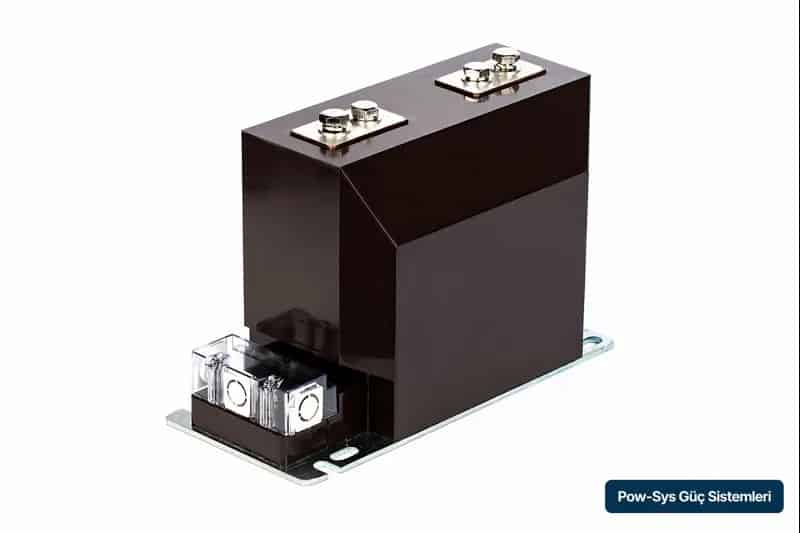
Current transformer maintenance should generally be handled under three main headings: visual and mechanical checks, electrical tests and circuit verification work. At the first stage, the resin body is checked for cracks, surface contamination, moisture traces, carbonization, overheating signs, loose connections, damaged cable lugs and terminal markings. Especially for instrument transformers operating in MV cubicles, dust, dirt and surface contamination may affect insulation performance over the long term, so maintenance should not be considered only as testing.
One of the most basic operations during periodic maintenance is cleaning. However, instead of random cleaning, a controlled approach that will not damage the equipment insulation is required. Current transformer manufacturer maintenance instructions clearly state that excessive dust and dirt accumulation should be cleaned with a soft brush. Since harsh interventions can cause unwanted damage on the resin surface or secondary cables, the method used by maintenance personnel is as important as the maintenance itself.
The most critical safety issue in current transformer maintenance is the secondary circuit. The secondary of an operating current transformer must not be left open. Unused secondary windings should be short-circuited and grounded appropriately. In addition, single-point grounding is generally required in the secondary circuit. Failure to comply with these rules may cause dangerous voltage on the secondary terminals and damage the transformer. Therefore, secondary jumpers, short-circuit blocks, test terminals and grounding connections must be checked before maintenance.
One of the first electrical tests is the current transformer ratio test. The ratio test checks whether the primary-secondary conversion complies with the nameplate value. Especially in facilities operating with ratios such as 100/5, 200/5, 300/5 or 600/1, an incorrect ratio selection or winding problem affects many results from meter readings to relay settings. Ratio verification should be reviewed not only during initial commissioning, but also after secondary circuit changes, relay replacements or cubicle revisions.
The polarity test is also one of the basic verifications that must not be neglected on current transformers. Incorrect connection of the P1-P2 and S1-S2 directions may cause serious errors especially in differential protection, directional protection and energy metering applications. Therefore, the polarity test should be evaluated together with the ratio test; if necessary, field wiring should also be included in the same verification chain. It is not enough for the device itself to be healthy; the connection logic between the CT and the relay or metering device must also be established correctly.
In current transformer tests, burden, in other words the secondary load assessment, should be handled as a separate heading. Because the real performance of a CT is determined not only by the ratio written on the nameplate, but also by the connected cable length, relay input, meter circuit and terminal transitions. Manufacturer technical documents emphasize that current transformer behavior under specific burden conditions should be evaluated in a way similar to the actual load condition. Therefore, as the secondary circuit load in the field increases, a more careful test approach is required for ratio and phase error.
When more detailed assessment is required, the winding resistance test is applied. This test is an important tool for detecting problems such as open circuit, short circuit or deteriorated connection in the winding circuit. Diagnostic documents state that DC winding resistance measurement is an established method for identifying shorted turns and open-circuit problems. Especially if one core behaves differently from the others, if problems are seen at certain taps in multi-ratio CTs or if abnormal values are obtained in the secondary circuit, this test is a strong diagnostic tool.
In current transformers used for protection purposes, excitation testing and knee point assessment are also very important. The excitation characteristic shows when the CT will approach saturation and how reliably it will transmit information to the relay during fault currents. Modern CT test systems can analyze parameters such as ratio and phase accuracy, winding resistance, excitation characteristics, knee point, burden impedance, remanence and residual magnetism together. Especially in systems where differential protection, high-impedance protection or sensitive fault analysis is performed, relying only on a ratio test is often not sufficient.
Insulation tests are used to understand problems such as aging, moisture ingress or surface deterioration in the current transformer. Diagnostic sources state that diagnostic measurements for instrument transformers are divided into two main groups: the electromagnetic circuit and the insulation system; on the insulation side, insulation tests, capacitance and dissipation/power factor measurements and, in advanced applications, partial discharge analyses are used. Especially in resin-insulated MV current transformers, cracks, impact damage or production-related voids may create PD behavior over time, so insulation health should also be monitored in critical facilities.
One of the most valuable verifications after commissioning and major revision is the primary injection test. This test is used to verify not only the CT, but also that the whole connection from the CT to the relay and from the relay to the trip chain has been established correctly. Some manufacturer sources clearly state that primary injection can be used to verify that all trip system connections have been made correctly. In other words, while secondary injection tests the relay itself, primary injection provides a more comprehensive view for verifying the entire real current path in the field.
In addition, checking the secondary loop resistance is very important in practice. Because elements such as cables, joints, test blocks, terminals and relay inputs in the secondary circuit directly affect the total load. Commissioning documents recommend CT secondary loop resistance measurement to verify that the DC resistance of the secondary circuit is within suitable limits for the connected equipment. This check should be performed carefully especially in systems with long secondary cables, multiple intermediate terminals and relay/meter combinations.
In current transformer maintenance, testing alone is not enough; the results must also be recorded. Nameplate ratio, class, burden, test date, measured values, differences from previous tests, connection changes made and any nonconformities should be tracked in a single maintenance file. Because deterioration in CTs often appears not as a sudden failure, but as slowly developing deviations. When trend tracking is performed, ratio drift, insulation weakening or unexpected resistance increase in the secondary circuit can be noticed earlier.
In summary, the tests and maintenance required for current transformers consist of visual inspection, cleaning, secondary safety checks, ratio and polarity testing, burden assessment, winding resistance, excitation-knee point, insulation checks and primary injection verification when required. Which test will be performed at which interval should be determined according to the voltage level of the facility, equipment criticality, environmental conditions and the structure of the protection system. If current transformers, protection relays and metering circuits in your MV/HV facility need to be evaluated together, HV/MV testing, maintenance and repair, LV/MV/HV project design and consultancy for general field suitability and HV operation responsibility services on the operation side can be planned in an integrated way.
Related Blog Posts
- What Is a Current Transformer? What Does It Do, How Does It Work and How Is It Selected?
- What Is a Voltage Transformer? What Does It Do, How Does It Work and Where Is It Used?
- What Is an MV XLPE Cable? What Does It Do, How Does It Work and What Structure Does It Have?
- What Is an MV Cable Termination? What Does It Do, How Does It Work and What Types Are There?
Related Services
Frequently Asked Questions
Why is maintenance required on current transformers?
Maintenance is required because current transformers produce the current information that metering devices and protection relays depend on, converting high primary current into a safe and standard secondary value. Even a small ratio error, a polarity problem, a secondary circuit discontinuity or insulation weakness may not only produce incorrect measurements; it may also cause the protection system to trip late, trip unnecessarily or fail to operate at all. Regular maintenance therefore protects facility safety, power quality and operational continuity, not just the cleanliness of the equipment. Deterioration in CTs typically appears not as a sudden failure but as slowly developing deviations, which is exactly what periodic visual checks, electrical tests and record keeping are designed to catch before they grow into a metering or protection problem.
Which tests are performed on a current transformer?
Depending on the field application, the tests performed on a current transformer include the ratio test, the polarity test, burden assessment, winding resistance measurement, excitation or knee point testing, insulation checks, secondary loop verification and, when required, a primary injection test. These sit within a maintenance approach organized under three main headings: visual and mechanical checks, electrical tests and circuit verification work. The ratio and polarity tests confirm that the CT converts and orients current correctly; burden assessment evaluates performance under the real secondary load; winding resistance and excitation tests provide deeper diagnostics for protection CTs; insulation checks reveal aging or moisture; and primary injection verifies the entire current path. Which tests are applied and how often depends on the facility's voltage level, equipment criticality, environmental conditions and protection structure.
Why must the secondary of a current transformer not be left open?
The secondary of an operating current transformer must not be left open because, if the primary circuit is energized while the secondary is open, dangerous voltage may occur at the secondary terminals and the transformer itself may be damaged. This is the most critical safety issue in CT maintenance. Unused secondary windings should be short-circuited and grounded appropriately, and single-point grounding is generally required in the secondary circuit. Before any maintenance begins, the secondary jumpers, short-circuit blocks, test terminals and grounding connections must be checked so that these rules remain satisfied throughout the work. Treating the secondary circuit with this discipline protects both the personnel working on the cubicle and the current transformer, and it keeps the metering and protection chain trustworthy after the maintenance is finished.
What does the current transformer ratio test show?
The ratio test shows whether the conversion between primary current and secondary current complies with the value on the nameplate. For example, in a 100/5 CT, approximately 100 A of primary current should correspond to approximately 5 A on the secondary. In facilities operating with ratios such as 100/5, 200/5, 300/5 or 600/1, an incorrect ratio selection or a winding problem affects many results at once, from meter readings to relay settings. This is why ratio verification is not a one-time commissioning activity: it should be reviewed after secondary circuit changes, relay replacements or cubicle revisions as well. The ratio test is usually evaluated together with the polarity test, since both determine whether the CT presents correct and correctly oriented current information to the connected devices.
Why is the polarity test important?
The polarity test is important because it verifies that the P1-P2 and S1-S2 directions of the current transformer are connected correctly. If these directions are wrong, serious errors can occur, especially in differential protection, directional protection and energy metering applications, where the direction of the measured current is part of the calculation. For this reason, the polarity test should be evaluated together with the ratio test, and, when necessary, the field wiring should be included in the same verification chain. It is not enough for the device itself to be healthy; the connection logic between the CT and the relay or metering device must also be established correctly. A polarity check therefore confirms not just the transformer but the way it participates in the protection and measurement scheme.
Why is burden testing or burden assessment performed?
Burden assessment is performed because the real performance of a current transformer is determined not only by the ratio and class written on its nameplate, but also by the connected cable length, relay inputs, meter circuits and terminal transitions that make up the secondary load. Manufacturer technical documents emphasize that CT behavior under specific burden conditions should be evaluated in a way similar to the actual load condition. As the secondary circuit load in the field increases, a more careful test approach is required for ratio and phase error. Closely related is the secondary loop resistance check, which verifies that the DC resistance of the secondary circuit is within suitable limits for the connected equipment; it matters especially with long secondary cables, multiple intermediate terminals and relay and meter combinations.
When are excitation and knee point tests required?
Excitation and knee point tests are required especially for current transformers used for protection purposes. The excitation characteristic shows when the CT will approach saturation and how reliably it will transmit information to the relay during fault currents, which is exactly what protection depends on. In systems where differential protection, high-impedance protection or sensitive fault analysis is performed, relying only on a ratio test is often not sufficient, so these deeper measurements become part of the program. Modern CT test systems can analyze ratio and phase accuracy, winding resistance, excitation characteristics, knee point, burden impedance, remanence and residual magnetism together, giving a complete picture of the core's magnetic behavior. The results confirm whether the protection CT will stay accurate at the moment it matters most, during a fault.
What does the primary injection test do?
The primary injection test verifies not only the current transformer itself but the whole connection path from the CT to the relay and from the relay to the trip chain. A real current is driven through the primary circuit, so everything the actual fault current would pass through is exercised. Manufacturer sources state that primary injection can be used to verify that all trip system connections have been made correctly. This distinguishes it from secondary injection, which tests the relay itself: primary injection provides a more comprehensive view of the entire real current path in the field. It is one of the most valuable verifications after commissioning and after major revisions, when wiring changes, relay replacements or cubicle work may have introduced errors that individual device tests would not reveal.
How often should current transformer maintenance be performed?
There is no single correct interval for current transformer maintenance; the frequency should be determined according to facility criticality, environmental conditions, voltage level, equipment age and the importance of the protection system. In some facilities routine visual checks are sufficient, while critical MV/HV facilities require a more comprehensive test program. The structure of the protection system matters too, since protection CTs supporting differential or sensitive schemes justify deeper periodic testing such as excitation and knee point assessment. Whatever the interval, results should be recorded consistently: nameplate ratio, class, burden, test date, measured values, differences from previous tests, connection changes and nonconformities belong in a single maintenance file. Because CT deterioration usually appears as slowly developing deviations, trend tracking over successive tests is what makes the chosen frequency effective.
Is cleaning alone sufficient in current transformer maintenance?
No, cleaning alone is not sufficient, although it is a genuinely important part of the program. Excessive dust and dirt should be cleaned with a soft brush, using a controlled approach that will not damage the resin surface or secondary cables, since surface contamination can affect insulation performance over the long term. But a complete maintenance program goes further: connection tightness and terminal checks, secondary circuit safety including short-circuit blocks and grounding, ratio and polarity verification, and, when required, burden assessment, winding resistance measurement, excitation testing and insulation checks all belong in it. Recording the results matters as much as the work itself, because deviations that develop slowly between visits are only visible when measured values are compared over time. Cleaning keeps the CT presentable; the tests keep it trustworthy.