

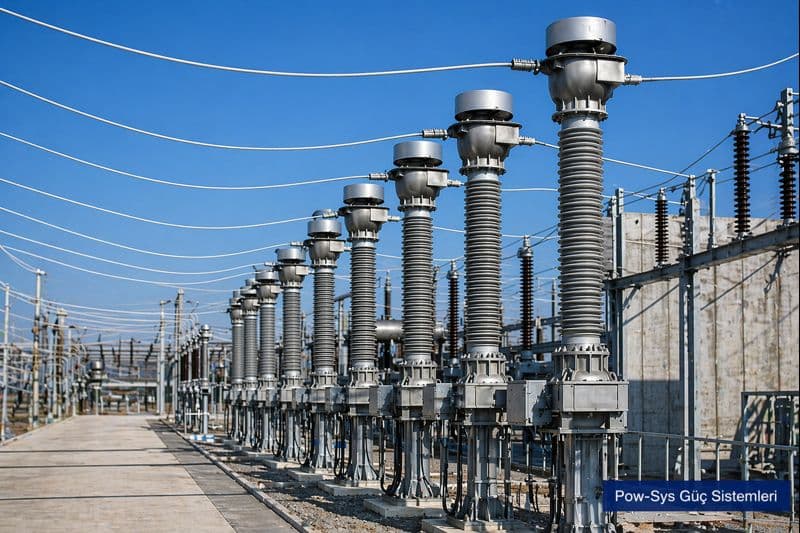
Summary Highlights
- What is a current transformer: basic definition, structure and purpose of use as a measurement transformer
- What does a current transformer do? Its task is to reduce high current to a safe level for measuring instruments and protection relays.
- Current transformer operating principle: primary-secondary structure, magnetic core and current ratio relationship
- Current transformer selection: ratio, accuracy class, Δ load, secondary current and mounting type
- Connection and safety: serial connection, polarity, secondary open circuit risk and considerations in field applications
Content
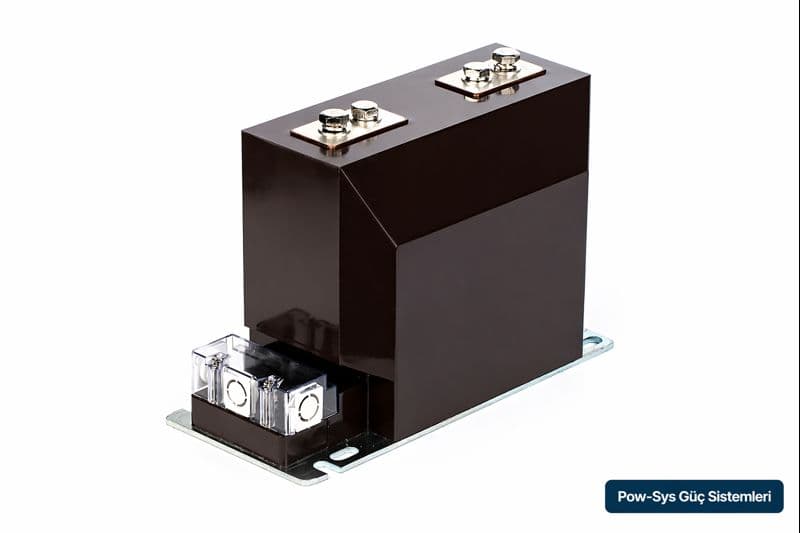
Current transformer is a measurement transformer that converts the high current passing through the primary circuit into a safe and standard value that can be used by measuring instruments and protection relays. It is not always practical or safe to directly measure currents of hundreds of amperes or higher in electrical installations. Therefore, current transformer; It reduces the current at a certain rate and carries information to energy analyzers, ammeters, meters and protection relays. Briefly, the answer to the question of what a current transformer is; It is a special transformer that provides measurement and isolation and is used to measure high current and carry it to protection systems.
To answer the question of what a current transformer is for in one sentence: It ensures the safe operation of measurement and protection systems by reducing the current flowing in the primary line to standard values such as 1 A or 5 A on the secondary side. Thanks to this structure, measuring devices are not directly exposed to high current and protection relays can perform fault analysis via direct current information. The use of current transformers is a basic need, especially in MV cubicles, compensation panels, main distribution panels and energy monitoring systems.
Current transformer operating principle is based on electromagnetic induction. The current passing through the primary circuit creates a variable flux in the magnetic core of the transformer. This flux creates a lower level current in the secondary winding but proportional to the primary current. In current transformers, the relationship is often expressed in terms of current ratio. For example, a 100/5 current transformer produces approximately 5 A current on the secondary side when 100 A current passes on the primary side. With the same logic, different ratios such as 300/5, 600/5 or 1000/5 are also selected according to the system needs.
The important point to note here is that the current transformer is connected in series to the circuit. Because the current transformer works by sampling the primary current passing through it. Unlike voltage transformers, it is not connected in parallel. While the primary winding is a single-bar transition structure in some types, some types may also have a primary winding design. But the basic purpose remains unchanged: conversion of the primary current into a safe and measurable value on the secondary side.
Current transformers can be classified as measurement current transformer and protection current transformer according to their purpose of use. The types used for measurement purposes focus on producing more precise measurements for meters and energy analyzers. Types used for protection purposes support the correct operation of relays in cases such as short circuit, overcurrent and ground fault. For this reason, two different current transformers in the same panel may undertake different tasks in terms of accuracy class and saturation characteristics, even if they are similar in appearance.
When choosing a current transformer, it is not enough to just look at the ratio value. Primary rated current, secondary current, accuracy class, burden, short-term thermal resistance, dynamic resistance and intended use should be evaluated together. For example, a current transformer selected only to feed a meter and a current transformer to feed a protection relay may not have the same technical features. Incorrectly selected ratio may cause measurement error at low load; Choosing the wrong class may negatively affect relay behavior in case of fault.
One of the most common expressions in the field is ratio definitions such as 100/5 current transformer, 200/5 current transformer or 300/5 current transformer. This ratio shows the conversion between primary current and secondary current. Although the secondary side is seen as 5 A in most projects, a 1 A secondary current transformer can also be preferred, especially in long cable distances, low loss requirements or sensitive protection applications. Therefore, when determining the current transformer ratio, not only the current load, but also the possibility of growth of the system and the technical expectations of the connected devices should be taken into account.
Polarity ends are also important in current transformer connection. There are P1-P2 signs on the primary side and S1-S2 signs on the secondary side. This directional information becomes especially critical in applications such as differential protection, directional protection and energy metering. Incorrect polarity connection may cause the device to detect the measurement incorrectly or cause the relay logic to malfunction. For this reason, polarity verification is not neglected during testing, maintenance and connection checks in MV and HV systems. For such field verifications HV/MV testing, maintenance and repair services should be carried out in a planned manner.
One of the most critical safety rules in current transformers is not to leave the secondary circuit open. Leaving the secondary terminals open while the primary circuit is energized may cause excessive magnetic flux in the core and dangerous voltage levels at the secondary terminals. This situation is risky for personnel safety and may damage the insulation of the current transformer. Therefore, the secondary circuits to be removed or disabled must first be short-circuited appropriately.
Depending on the mounting type, current transformers can be produced in different structures such as busbar type, cable pass-through type, ring type and resin MV current transformer. While more compact and panel type solutions are common in low voltage panels, resin insulated measurement transformers are used more frequently in medium voltage cells. Ambient conditions, busbar size, insulation level and existing cubicle design; It directly affects the physical structure of the current transformer to be selected.
Although current transformers often seem like passive equipment in terms of periodic maintenance, loose connections, insulation aging, secondary circuit breaks and incorrect ratio usage can cause serious operating problems. Especially in MV facilities, measurement transformers are an integral part of the healthy functioning of the protection system. For this reason, both current transformers and the relay and cell equipment they are connected to must be checked regularly in order to ensure operational continuity. These processes are carried out on the project, maintenance and field verification side. LV/MV/HV project design and consultancy Taking it together gives better results.
In summary, current transformer; It is one of the basic equipment that ensures that measurement, monitoring and protection systems work with accurate data. It is difficult to talk about a healthy energy infrastructure without the appropriate ratio, correct class, correct connection and safe secondary application. If your facility has suitability of existing current transformers, MV cubicle measurement circuits, test processes or field control needs. HV/MV testing, maintenance and repair for general business processes along with SA operation responsibility You can get support through our services.
Frequently Asked Questions
What is a current transformer?
Current transformer is a measurement transformer that reduces the high current passing through the primary circuit to a safe level for measuring instruments and protection relays. It is used for measurement, monitoring and protection purposes in electrical installations.
What does a current transformer do?
Current transformer; Instead of directly measuring high currents, it generally reduces these currents to 1 A or 5 A on the secondary side and carries safe information to devices such as meters, ammeters, energy analyzers and protection relays.
How does a current transformer work?
Current transformer works on the principle of electromagnetic induction. The current passing through the primary circuit creates flux in the magnetic core; this flux produces a proportional but lower current in the secondary winding. Thus, the high primary current is converted into a standard value that the devices can use.
What does 100/5 current transformer mean?
100/5 current transformer means that when 100 A current passes on the primary side, approximately 5 A current is obtained on the secondary side. This ratio shows the transformation ratio of the current transformer.
Why is the current transformer connected in series?
Since the current transformer works by sampling the primary current passing through it, it is connected in series to the circuit. Parallel connection does not comply with the operating logic of the current transformer and does not provide accurate measurement.
Should 1A or 5A be chosen for the current transformer?
This choice; It is made according to the technical requirements of the connected devices, cable distance, burden value and project design. While 5A is common in short-distance classical applications, 1A is preferred in some systems that require lower losses and sensitivity.
What to consider when choosing a current transformer?
Primary current value, secondary current, accuracy class, burden load, mounting type, insulation level and whether it will be used for measurement or protection purposes should be evaluated together. In MV and HV applications, field conditions and cell structure also affect the selection.
Why is the secondary of the current transformer not left open?
Leaving the secondary terminals open while the primary circuit is energized may cause dangerous voltage levels on the secondary side. This situation is risky for personnel safety and may damage the insulation of the transformer.
What is the difference between current transformer and voltage transformer?
The current transformer converts the current and is connected in series; The voltage transformer converts the voltage and is connected in parallel. They are both measurement transformers, but their functions, connection types and usage details are different.