

Summary Highlights
- What is an earth separator: its basic definition as an earthing switch or earth blade and its place in switchgear systems
- What does an earth separator do? Its task is to safely connect the de-energized circuit section to the earth.
- Grounding separator working principle: grounding after separation, short circuiting logic and interlock relationship
- Difference between earth separator and disconnector and breaker: separation of visible separation, load interruption and safe earthing functions
- Areas of use and selection: MV switchgear, transformer substations, cable outlets, busbar partitions and mechanical locking structures
Content
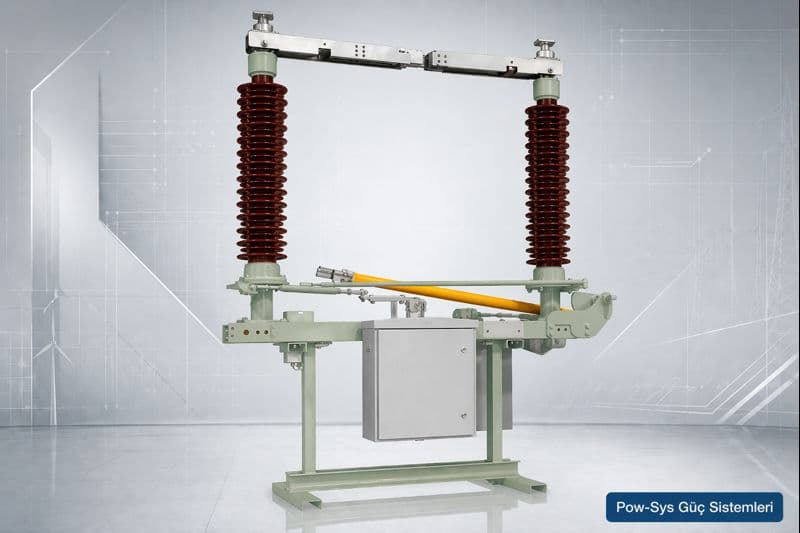
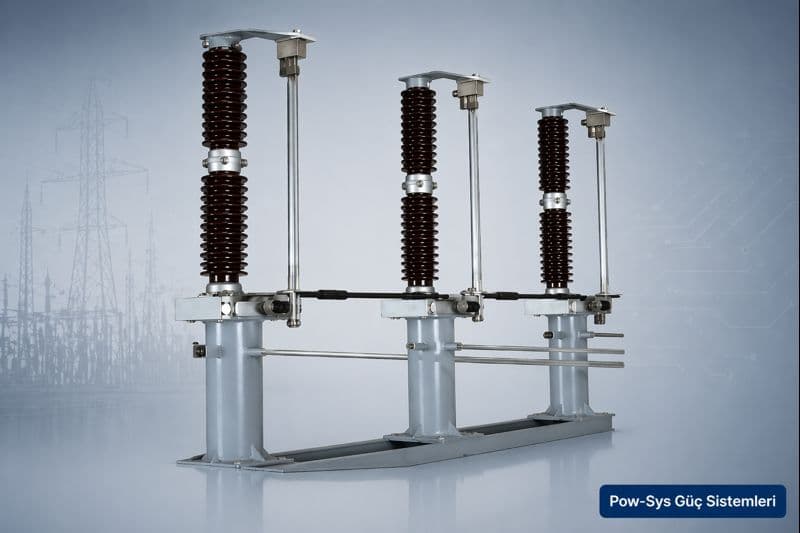
Earth separator, also known as earth knife or earthing switch, is switchgear equipment used to connect a de-energized circuit section to the ground in electrical installations. The main purpose of this equipment is to safely transfer residual voltages, induced voltages or dangerous potentials that may arise accidentally during maintenance or maneuvers to the ground. Briefly, the answer to the question of what is a soil separator is; It is equipment used not to separate the circuit, but to connect the part confirmed to be separated to ground for safe operation.
The best answer to the question of what a soil separator is for is to strengthen personnel safety and make the work area safe. Once a line is opened with a breaker and separated from the system with a splitter, that section really needs to be kept safe. This is where the earth separator comes into play. The circuit section is connected to the ground against risks such as induced voltages, residual loads or incorrect energy coming from external effects on the line, and the working area is made safer.
The working logic of the earth separator is different from the classical separator. A normal splitter physically separates the circuit from the system and creates visible isolation. The ground separator connects the circuit to the ground after this separation process. For this reason, these two pieces of equipment are not alternatives to each other, but are often complementary security elements. First separation, then grounding logic; It is one of the basic principles of safe operation in MV and HV facilities.
The difference between soil separator and separator is often confused in the field. The separator creates an isolation distance by visibly opening the circuit. The ground separator connects that separated circuit to the ground. In other words, one serves as separation from the system and the other serves as safe grounding. Likewise, earth separator and breaker are not the same equipment. The breaker can trip load current and short circuit currents under certain conditions; The ground separator is basically used for safe grounding purposes.
The ground blade is most often seen in MV cubicles, cable compartments, busbar sections, transformer cells and critical points where maintenance access is required. Earth separator, especially in metal-clad or metal-enclosed cell structures; It is considered together with cutter, disconnector and cover locking. In this way, maneuvering in the wrong order is prevented, maintenance covers can only be opened under suitable conditions, and the risk of personnel approaching the energized section is reduced.
In many modern medium voltage applications, grounding switches are designed to have the ability to close upon short circuit. This feature is a design advantage to increase operator safety when the ground separator is closed to an area that is accidentally live. However, this does not mean that the earth separator can be used as a breaker. In other words, the presence of shut-off resistance upon short circuit does not mean that it has the duty of switching the load current on and off. The aim here is to provide a margin of safety.
Interlock structures are extremely important in terms of the soil separator operating order. Because if this equipment is turned off at the wrong moment, serious danger may occur. For this reason, in most MV switchgears, the operation of the earth separator is prevented when the breaker is closed, or if the separator is not in a suitable position, the earth blade cannot be activated. Key locking, mechanical locking, electrical interlock or structures where these are used together; Supports safe operating procedure in the field.
In some systems with three positions, OFF, ON and EARTH positions can be collected on a single mechanism. In some systems, there is a separate separator and a separate earth separator. Although the architecture used varies, the purpose is the same: first, the safe separation of energy, then the connection of the required section to the ground in a controlled manner. Thanks to this structure, the maintenance team can trust not only the measurement, but also that the equipment is in the correct position and the lock logic is working.
When choosing an earth separator, only system voltage should not be taken into consideration. Rated voltage, short-term withstand current, peak withstand value, short-circuit making capacity, mounting type, indoor or outdoor conditions, mechanical life and current switchgear design should be evaluated together. Especially in MV cubicle applications, it is very important that the ground separator chosen is compatible with the cell interlock architecture.
There may be differences between the grounding separators used in cable outlets and the solutions used in busbar grounding, depending on the field needs. While in some applications it is necessary to secure only the cable side, in some structures the busbar section must also be grounded for maintenance purposes. Therefore, where the soil separator will be applied should be considered together with the protection and operation scenario. Grounding equipment positioned at the wrong point may not provide the expected safety.
The importance of soil separators is often more clearly understood during maintenance. Because seeing that a disabled section in the field is truly safe is not just about knowing that the power has been cut. Grounding must be done, the appropriate interlock chain must be completed and the risk of incorrect energy coming in must be controlled. That's why the soil knife is not an equipment on paper in MV/HV enterprises; It is one of the main elements of actual field safety.
In summary, the earth separator is a basic switchgear equipment that connects the de-energized circuit section to the ground for maintenance safety and works as a complement to the separator and breaker in most applications. Does not provide visible separation; its job is to create safe grounding. It plays a critical role in MV/HV facility safety thanks to its types capable of shutting down upon short circuit, interlock mechanisms and in-cell usage logic. If earth separator selection, cell operating sequence, interlock structure and MV/HV field safety will be evaluated together in your facility. HV/MV testing, maintenance and repair, on the project side LV/MV/HV project design and consultancy and business processes SA operation responsibility It is possible to progress in integration with services.
Frequently Asked Questions
What is an earth separator?
Ground separator is the switchgear equipment used to safely connect the de-energized circuit section to the ground. It is also called earth knife or earthing switch.
What does a soil separator do?
It safely transfers residual or induced voltages that may remain on the line during maintenance and maneuvering to the ground. Thus, the safety of the work area increases.
What is the difference between an earth separator and a separator?
The splitter visibly separates the circuit from the system. The ground separator connects the section confirmed to be separated to the ground. In other words, one provides isolation and the other provides safe grounding.
Are earth separator and breaker the same thing?
No. The breaker can trip load current and certain fault currents. Earth separator is basically used for safe grounding and is not considered as a breaker.
Why is a ground knife important for maintenance safety?
Because just having the power cut off is not always enough. When grounding is done, risks such as residual voltage, induced voltage or incorrect energy are controlled more safely.
Can the earth separator be operated under load?
The earth separator should mainly be used in the previously de-energized circuit section. It is necessary to act in accordance with the operating sequence and interlock logic.
What does the ability to close upon short circuit in an earth separator mean?
Some grounding switches are designed with a short-circuit closing capability to provide safety when accidentally closed to a live point. This feature is for security; It does not make the equipment cutter.
Where is soil separator used?
It is widely used in MV cubicles, cable compartments, busbar sections, transformer connections and switchgear points requiring maintenance access.
Why is interlock important in soil separator?
The interlock mechanism prevents the equipment from being operated in the wrong order. This prevents the earth separator from being activated while the breaker is closed or without disconnection.
What to consider when choosing an earth separator?
Rated voltage, short-term withstand current, short-circuit closing capacity, mounting structure, mechanical life, indoor or outdoor conditions and existing cell interlock architecture should be evaluated together.