
Summary Highlights
- What is a surge arrester: its basic definition as a surge arrester and its protection function in energy systems
- What does a surge arrester do: overvoltage limitation logic against lightning and switching impulses
- Surge arrester working principle: MOV blocks, parallel connection and structure of discharging pulse current to ground
- Surge arrester types: different surge arrester types according to distribution, station, line and application
- Surge arrester selection and use: rated voltage, protection level, energy resistance, body structure and mounting point
Content
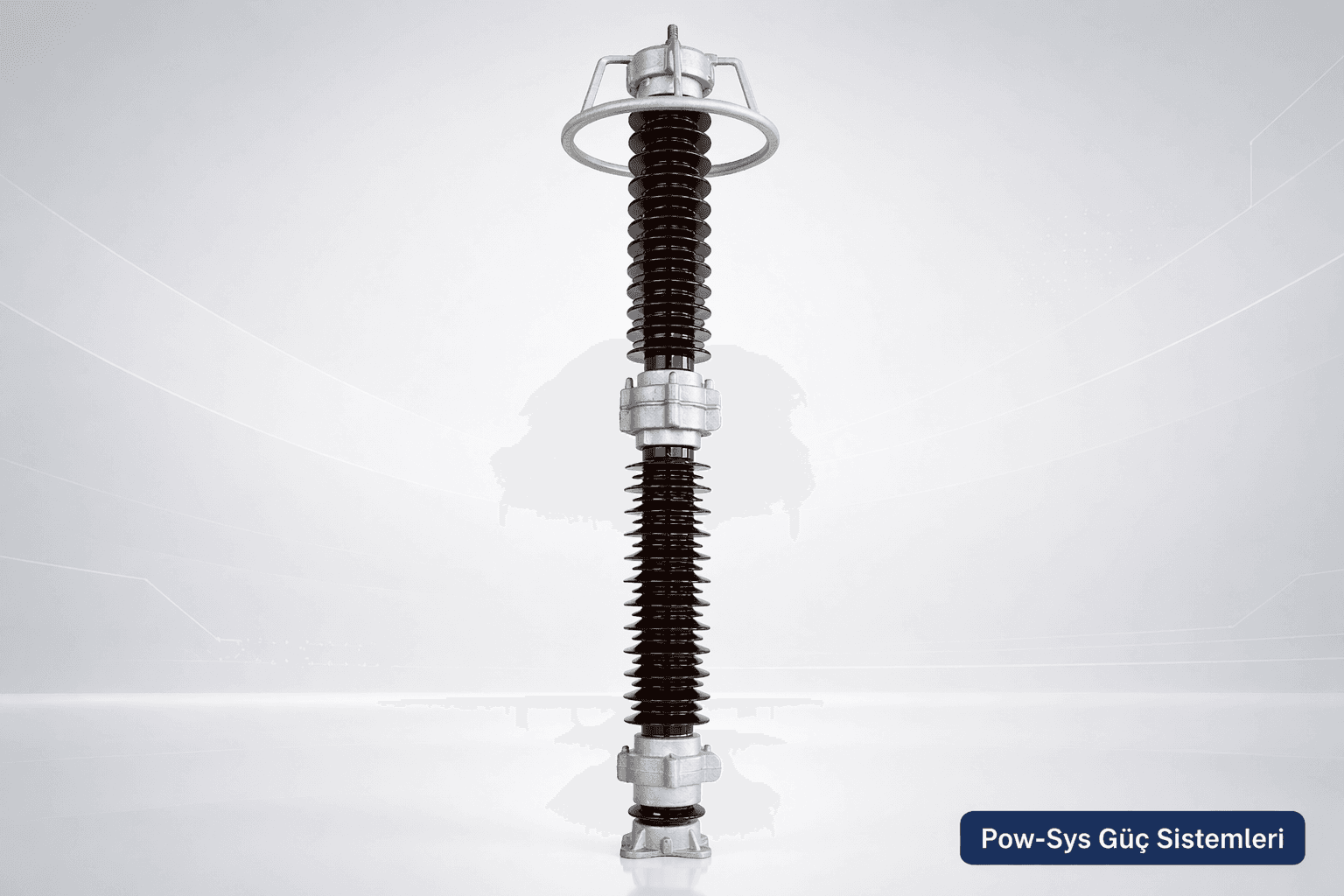
Surge arrester is a protection element used to protect equipment isolation by limiting lightning strikes and switching-induced temporary overvoltages in electrical systems. This equipment, also called surge arrester in the international literature, is used to prevent damage to critical elements such as transformers, breaker, cable header, busbar, motor, generator and switchgear. Briefly, the answer to the question of what a surge arrester is; It is protection equipment that suppresses sudden overvoltages occurring in the network and safely directs these impulses to the ground.
When asked what a surge arrester does, it would be incomplete to say that it only protects against lightning. Because harmful overvoltages in energy systems do not only occur with direct lightning strikes. Switching operations, line maneuvers, impact effects in the immediate environment and some temporary system events can also create voltage spikes that challenge the insulation level. By limiting these surges to a point close to the level that the equipment can withstand, the surge arrester reduces insulation puncture, winding damage, equipment aging and sudden failures.
At the center of the surge arrester operating principle are metal oxide varistors, namely MOV blocks. Modern surge arresters mostly work with these blocks that have a non-linear resistance character. At normal operating voltage, the MOV structure behaves almost like an insulator and does not carry significant current through the system. However, when the voltage rises to a dangerous level for a short time, this structure switches into conduction, discharges the pulse current to the ground and limits the voltage at the equipment terminals. When the overvoltage disappears, the surge arrester returns to the high impedance state.
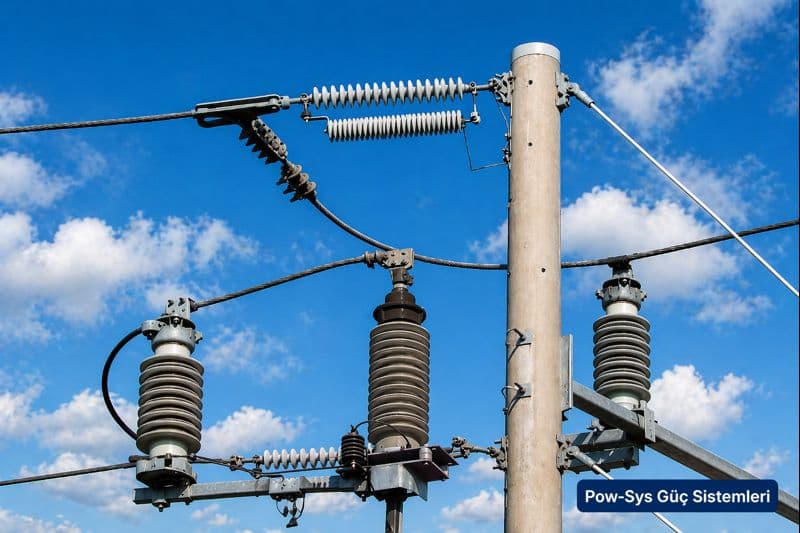
The important point to note here is that the surge arrester is connected to the circuit in parallel, not series. It is positioned next to the equipment to be protected via phase-ground or appropriate connection scheme and does not operate as the main power path carrying continuous current. Its main function is to remain passive in normal operation and provide active protection when an impact occurs. That's why surge arrester; It cannot be considered as a breaker, disconnector or fuse. It is a special protection element that does direct overvoltage limitation work.
The most common areas of use of surge arresters include substations, MV cubicles, distribution panels, overhead line entries, cable crossing points, motor feeds, generator connections and special switchgear systems such as GIS. A correctly positioned surge arrester, especially next to equipment with high insulation costs such as transformers and cables, significantly increases system reliability. A surge arrester placed in the wrong place or not selected at the appropriate level may not provide the expected protection.
Surge arrester types can be evaluated under different headings depending on the application. Distribution type surge arresters are widely used in medium voltage networks and protection of distribution equipment. Station type surge arresters are preferred for heavier duty conditions and more critical equipment protection. In addition, line surge arresters are used to improve lightning performance on certain transmission and distribution lines. In some applications, solutions with porcelain body and in some applications with silicone body come to the fore.
When choosing a surge arrester, it is not enough to look only at the system voltage. Continuous operating voltage, transient overvoltage resistance, nominal discharge current, protection level, energy absorption capacity, short circuit behavior, housing material and installation environment should be evaluated together. For example, in facilities that are very dirty, humid or where outdoor conditions are challenging, the body material and surface behavior become more critical. Likewise, at points where special loads or high impact energy are expected, a standard distribution type product may not be sufficient.
Surge arrester and lightning rod are not the same equipment and this difference is often confused. Lightning rod works with the logic of capturing the structure or facility directly against lightning strikes and transmitting them to the ground. Surge arrester is a protection element that limits overvoltages occurring at the equipment ends within the electrical system. That is, one is part of the external lightning capture system, while the other is the device that limits the electrical impulse voltage. Therefore, although they seem to be used for the same purpose, their job descriptions are different.
Surge arrester selection in MV and HV facilities should often be considered together with the transformer, breaker, cable header, current-voltage transformers and busbar layout. Because the level of protection depends not only on the product label, but also on the distance to the equipment, the length of the connecting conductor and the site layout. The shorter and more accurate the connection between the equipment to be protected and the surge arrester, the better the protection effect. Therefore, in practice, the correct mounting point is as important as good product selection.
Surge arresters are equipment that appear passive in the modern energy infrastructure, but have a huge impact. It often sits quietly in a system for years, but its real value is revealed at the moment of a major blow. The use of surge arresters directly contributes to operational continuity, especially in areas with high lightning activity, cable-overhead line transitions, open switchyards and sensitive load feeds such as motor-generators.
Before moving on to the maintenance side, it should be noted that the surge arrester should not be considered as a disposable element. A correctly selected and correctly applied MOV surge arrester can handle many surge events. However, the impact energy, environmental contamination, humidity, mechanical stress and aging effects it is exposed to over time may reduce its performance. For this reason, not only installation but also periodic inspection approach is important in systems with surge arresters.
Surge arresters are one of the important parts of main insulation coordination, especially in substations. In other words, it is not evaluated as a stand-alone piece of equipment, but as part of the voltage resistance scheme of the entire facility. If the protection level is not selected in accordance with the resistance level of the equipment, unnecessary costs will arise or the protection will be insufficient. For this reason, surge arrester selection is a serious design issue that requires engineering calculations.
In summary, surge arrester; It is a basic safety element that protects transformers, cables, switchgear equipment and other electrical assets by limiting temporary overvoltages caused by lightning and switching. Thanks to its MOV-based operating principle, it plays a passive role under normal conditions and an extremely critical role in the event of an impact. Regardless of distribution type, station type or line type, the right surge arrester; When selected for the right voltage level in the right place, it significantly increases system reliability. If surge arrester selection, MV/HV equipment protection, insulation coordination and field layout will be evaluated together in your facility HV/MV testing, maintenance and repair, on the project side LV/MV/HV project design and consultancy and business processes SA operation responsibility It is possible to progress in integration with services.
Frequently Asked Questions
What is a surge arrester?
Surge arrester is a protection element that protects equipment by limiting temporary overvoltages that occur in electrical systems. Also called surge arrester.
What does a surge arrester do?
Surge arrester; It limits the voltage and discharges the impulse current to ground to prevent lightning strikes, switching events and similar temporary overvoltages from damaging the equipment.
How does surge arrester work?
Modern surge arresters operate with metal oxide varistor blocks. They act with high impedance at normal voltage, switch into conduction when overvoltage occurs and provide protection by transferring the pulse current to the ground.
How is the surge arrester connected to the circuit?
The surge arrester is connected in parallel to the equipment to be protected. In normal operation, it does not operate like the mainstream route; It only activates when overvoltage occurs and limits the voltage.
Are surge arresters and lightning rods the same thing?
No. Lightning rod is part of the external lightning system that protects the structure against direct lightning strikes. Surge arrester is a protection element that limits overvoltages in the electrical system.
Where are surge arresters used?
It is used in substations, MV cubicles, overhead line entries, cable terminations, near breaker and transformer, motor and generator feeds and special switchgear systems such as GIS.
What are the types of surge arresters?
Depending on the application, distribution type, station type and line type surge arrester solutions are available. Additionally, depending on the body structure, silicone or porcelain body types may be preferred.
What to consider when choosing a surge arrester?
Criteria such as continuous operating voltage, nominal discharge current, protection level, energy resistance, environmental conditions, body material and installation close to the equipment to be protected should be evaluated together.
What does MOV surge arrester mean?
MOV surge arrester is a modern type of surge arrester that uses metal oxide varistor blocks. It switches into conduction at the moment of overvoltage, limits the pulse and directs it to the ground.
Why is the surge arrester placed close to the equipment?
Because the shorter and more accurate the connection between the equipment to be protected and the surge arrester, the more effective the protection level is in the event of an impact. Long connections may reduce protection performance.