
Summary Highlights
- Importance of transformer substation maintenance: energy continuity, equipment life, operational safety and reduction of fault risk
- Basic maintenance steps: visual inspection, cleaning, connection tightness, thermal inspection and general field suitability
- Tests to be performed: power transformer, circuit breaker, disconnector, earthing switch, instrument transformer, surge arrester and relay tests
- Auxiliary system checks: grounding, battery-charger system, DC supply, alarm and monitoring circuits
- Recording and trend tracking: comparison of test reports, thermal images, oil analyses, trip times and maintenance history
Article Details
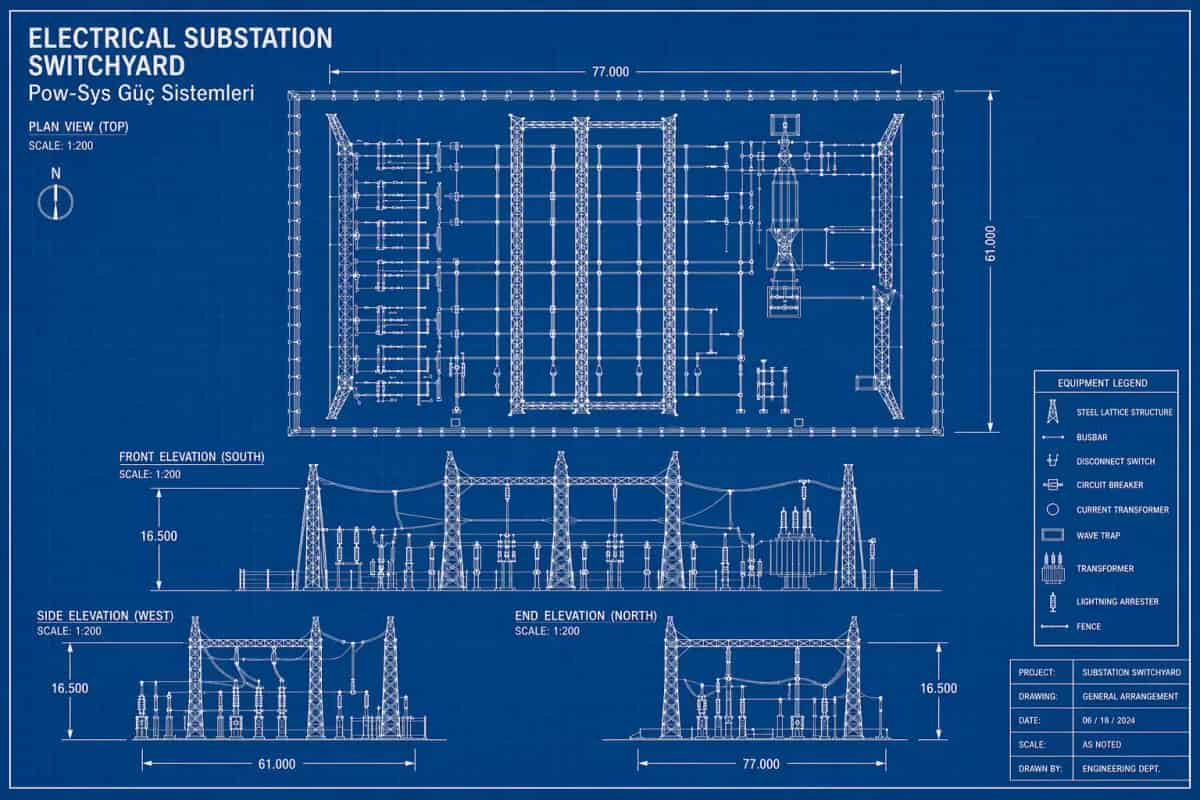
Transformer substations are not facilities consisting only of a power transformer; they are live energy nodes that contain switchgear, instrument transformers, surge arresters, protection relays, auxiliary DC systems, grounding infrastructure and many secondary circuits together. Therefore, the tests and maintenance required in transformer substations should be considered more broadly than a maintenance approach focused on a single item of equipment. The failure of any critical component in the substation can affect not only its own performance, but also the energy continuity and safety of the entire facility.
The first stage in transformer substation maintenance is always safety. The section to be worked on should be de-energized with the correct switching sequence, disconnector and earthing switch positions should be verified, absence of voltage should be confirmed with suitable devices and field access should be made safe. Especially in MV and HV substations, maintenance means not only testing equipment, but also creating correct isolation and proper work permission. For this reason, preparation before maintenance is as important as the maintenance itself.
General field inspection is the starting point of the maintenance program. At this stage, cubicles, transformer surroundings, cable trenches, busbar rooms, grounding conductors, areas with possible oil leakage, ventilation, fire safety equipment, door locks, warning signs and access routes should be reviewed. Findings such as dust, moisture, corrosion, overheating marks, loose connections, animal or insect effects, water ingress risk and mechanical damage determine the direction of detailed maintenance.
In power transformer maintenance, different headings come to the foreground according to oil-immersed and dry-type design. In oil-immersed transformers, oil level, leakage condition, radiators, fans, protection elements such as Buchholz, connection terminals and bushing surfaces are checked. In addition, oil samples are taken and DGA, general oil quality and, if necessary, moisture or aging indicators are evaluated. On the electrical side, tests such as winding resistance, turns ratio, insulation assessment and, when necessary, capacitance and power factor provide valuable information about the internal condition of the transformer.
In dry-type transformers, resin surface cleanliness, cracks or surface deterioration, connection tightness, contamination in winding areas, fan and ventilation arrangement and thermal traces come to the foreground. However, regardless of type, the basic purpose for the transformer is the same: preserving winding, insulation and connection health. Especially in industrial substations with large load changes, both electrical and thermal behavior of the transformer should be monitored regularly.
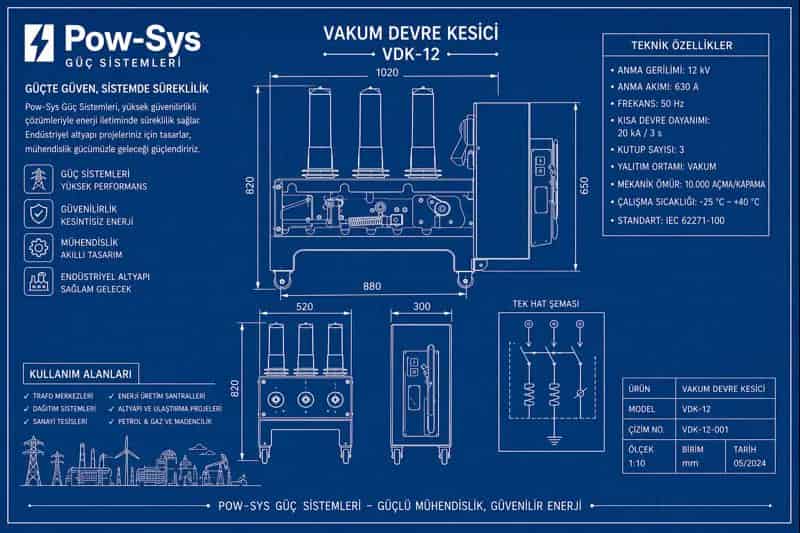
Circuit breakers are among the most critical protection elements of a transformer substation. Therefore, timing test, opening-closing times, synchronism between poles, contact resistance measurement, coil currents, spring charging system, auxiliary contacts and mechanical interlocks should be checked regularly. Even if the circuit breaker appears to operate in the field, delayed opening, mismatch between phases or increasing contact resistance can turn into a major problem during a fault. Therefore, circuit breaker maintenance should not be seen only as mechanical lubrication work.
For disconnectors and earthing switches, the functions of visible isolation and safe grounding should be verified separately. Whether disconnector blades fully reach the final position, contact pressure, mechanical movement, interlock system, position indicators and auxiliary contacts should be checked. On earthing switches, in addition to these, whether an effective grounding path is created, grounding busbar connections and safe switching sequence must be evaluated. Because transformer substation maintenance safety often depends on the correct operation of this equipment.
Current transformers and voltage transformers are the basic data sources of the protection and metering systems in the substation. Therefore, ratio accuracy, polarity, burden effect, secondary circuit continuity, the single-point grounding rule and connection logic should be reviewed regularly. While excitation and knee point assessment may be required on protection CTs, phase relationship and secondary voltage accuracy come to the foreground in VT circuits. In order for relays to make correct decisions, these instrument transformers must first operate properly.
Surge arresters are also among the silent but critical protection elements in a transformer substation. Body cracks, surface contamination, moisture effect, connection tightness, grounding path, surge counter and disconnector condition, if present, should be checked regularly. Thermal comparisons performed while energized and monitoring leakage current behavior in suitable applications can help detect surge arrester aging early. Surge arresters at transformer entrances, cable terminations and open-field connection points should especially not be neglected.
Protection relays and secondary systems are another main heading of transformer substation maintenance. Correctness of relay settings, secondary injection tests, alarm and trip logic, trip chain, auxiliary contact feedback, SCADA signals and, when necessary, test scenarios where the entire protection system is verified together should be applied. It is not enough for the relay only to be energized; the current-voltage information seen by the relay, the decision it makes and the command chain it sends to the circuit breaker should be tested as a whole.
Auxiliary AC/DC systems in the substation are also structures that are often remembered only during a fault but have critical importance. Battery groups, rectifiers, DC distribution circuits, fuses, charger alarm outputs, circuit breaker opening-closing supplies and emergency lighting infrastructure should be included in the maintenance program. If the auxiliary supply is weak, even the most accurate relay setting and the healthiest circuit breaker may not show the expected performance during a real fault.
The grounding system is the backbone of transformer substation safety. The main grounding busbar, equipotential bonds, equipment bodies, doors, cable screens, the relationship between lightning protection and grounding and field grounding points should be inspected regularly. Ground resistance or continuity checks should be performed where required, and loose or corroded connections should be corrected. Especially in large-field substations, the grounding grid may weaken over time due to mechanical damage, corrosion or additional installations.
Thermal camera inspections are among the most efficient tools of the maintenance program in a transformer substation. When busbar connections, cable terminations, circuit breaker terminals, disconnector contact areas, transformer bushings, surge arresters, LV panel connections and battery connections are thermally scanned, looseness and resistance increases that are not visible to the eye can be detected early. The important point here is not a single temperature value, but evaluating differences between similar phases and similar equipment.
One of the most critical but most frequently neglected sides of maintenance is record keeping. Oil analysis reports, opening-closing times, contact resistance measurements, relay test reports, grounding measurements, thermal images, battery results and field observations should be collected in a single history. Because many equipment problems appear not through sudden failure, but through slowly developing change. If trend tracking is not performed, small deteriorations are noticed only when a fault occurs.
In summary, the tests and maintenance required in transformer substations consist of general field inspection, power transformer checks, circuit breaker and switchgear equipment tests, disconnector and earthing switch verifications, current-voltage transformer checks, surge arrester inspections, protection relay and secondary circuit tests, auxiliary DC system maintenance, grounding checks and thermal inspections carried out together. The correct maintenance approach is based not only on repairing faults, but on seeing substation health before faults occur. If transformer substation general maintenance planning, MV/HV equipment tests, protection system verification and operational safety in your facility will be handled together, it is possible to proceed in an integrated way with HV/MV testing, maintenance and repair, LV/MV/HV project design and consultancy, transformer maintenance and testing and HV operation responsibility services.
Related Blog Posts
- What Is a Current Transformer? What Does It Do, How Does It Work and How Is It Selected?
- What Is a Voltage Transformer? What Does It Do, How Does It Work and Where Is It Used?
- What Is a Transformer Substation? What Does It Do, How Does It Work and Which Sections Does It Consist Of?
- What Is a Unit Protection Relay? How It Works
Related Services
Frequently Asked Questions
Why is maintenance required in transformer substations?
Maintenance is required in transformer substations because they are live energy nodes where many items of equipment operate together: power transformers, switchgear, instrument transformers, surge arresters, protection relays, auxiliary DC systems, grounding infrastructure and numerous secondary circuits. A problem in any of these, such as a circuit breaker that opens with delay, a weak auxiliary DC supply, a corroded grounding connection or an incorrect relay setting, can affect not only that component but the energy continuity and safety of the entire facility. Regular maintenance protects energy continuity, extends equipment life, supports operational safety and reduces fault risk. Because many substation problems develop slowly rather than appearing suddenly, a planned program of inspections and tests catches deterioration early, before it grows into an unplanned outage or a safety incident.
Which tests are performed in transformer substations?
The tests performed in transformer substations cover both primary and secondary equipment. On power transformers, oil analysis such as DGA, winding resistance, turns ratio, insulation assessment and, when necessary, capacitance and power factor measurements are applied. Circuit breakers receive timing tests, opening-closing time and pole synchronism checks, contact resistance measurements and checks of coils and the spring-charging system. Disconnectors and earthing switches are verified for correct mechanical operation and effective grounding, while current and voltage transformers are checked for ratio accuracy, polarity, burden effect and secondary circuit continuity. Surge arresters are inspected, protection relays undergo secondary injection tests and trip chain verification, the grounding system is checked for resistance and continuity, batteries and rectifiers are tested, and thermal camera inspections scan connections for hidden heating. The exact scope depends on the application and the condition of the equipment.
What is checked first in transformer substation maintenance?
Safety is always established first in transformer substation maintenance. The section to be worked on is de-energized with the correct switching sequence, the disconnector and earthing switch positions are verified, absence of voltage is confirmed with suitable devices, and field access is made safe under a proper work permission arrangement. Only after this isolation is complete does the technical work begin, starting with a general field inspection: cubicles, transformer surroundings, cable trenches, busbar rooms, grounding conductors, possible oil leakage areas, ventilation, fire safety equipment, door locks, warning signs and access routes are reviewed, together with visual inspection, cleaning and connection tightness checks. Findings such as dust, moisture, corrosion, overheating marks or loose connections then determine the direction of the detailed maintenance program. In substations, preparation before maintenance is treated as being as important as the maintenance itself.
Which maintenance headings come to the foreground on a power transformer?
The maintenance headings for a power transformer depend on whether it is oil-immersed or dry-type. In oil-immersed transformers, the oil level, leakage condition, radiators, fans, protection elements such as Buchholz, connection terminals and bushing surfaces are checked, and oil samples are taken for DGA, general oil quality and, if necessary, moisture or aging indicators. On the electrical side, winding resistance, turns ratio, insulation assessment and, when necessary, capacitance and power factor tests provide valuable information about the internal condition of the transformer. In dry-type transformers, resin surface cleanliness, cracks or surface deterioration, connection tightness, contamination in winding areas, fan and ventilation arrangement and thermal traces come to the foreground. Regardless of type, the basic purpose is the same: preserving winding, insulation and connection health, with both electrical and thermal behavior monitored regularly in facilities with large load changes.
What are the most important tests in circuit breaker maintenance?
The most important tests in circuit breaker maintenance are the timing test with opening and closing times, synchronism between poles, contact resistance measurement, coil current checks, and verification of the spring-charging system, auxiliary contacts and mechanical interlocks. These measurements matter because a breaker can appear to operate normally in the field while hiding problems: delayed opening, mismatch between phases or increasing contact resistance may only reveal their consequences during a real fault, exactly when the breaker must perform. Circuit breakers are among the most critical protection elements of a transformer substation, so their maintenance should not be seen only as mechanical lubrication work. A complete program treats the breaker as a system, covering the coils, the mechanism and the control circuit connections together with the main contacts, and records the results so that trends can be compared over time.
Why are protection relay tests part of transformer substation maintenance?
Protection relay tests are part of transformer substation maintenance because the relay is the system that detects the fault and produces the trip command; if the relay is not healthy or the current and voltage information it receives from the secondary circuits is incorrect, a healthy circuit breaker alone is not sufficient to protect the facility. Relay maintenance therefore checks the correctness of relay settings, applies secondary injection tests, and verifies alarm and trip logic, the trip chain, auxiliary contact feedback and SCADA signals, with test scenarios in which the entire protection system is verified together when necessary. It is not enough for the relay simply to be energized: the information the relay sees, the decision it makes and the command chain it sends to the circuit breaker must be tested as a whole, because protection only works when this complete chain functions correctly.
Why is a thermal camera used in a transformer substation?
A thermal camera is used in a transformer substation because it detects loose connections, increased contact resistance and heated points early, before they are visible to the eye or cause a failure. Thermal scans are applied to busbar connections, cable terminations, circuit breaker terminals, disconnector contact areas, transformer bushings, surge arresters, LV panel connections and battery connections. The key to interpreting the results is comparison: rather than judging a single temperature value in isolation, differences between similar phases and similar equipment are evaluated, because an unexplained temperature difference between identical connections is a strong early sign of a developing problem. This makes thermal inspection one of the most efficient tools in the substation maintenance program, revealing looseness and resistance increases while the equipment is in service and allowing corrective work to be planned before a fault interrupts operation.
Why should the grounding system be checked separately?
The grounding system should be checked separately because personnel safety and the safe dissipation of fault currents depend directly on it; it is the backbone of transformer substation safety. Regular inspection covers the main grounding busbar, equipotential bonds, equipment bodies, doors, cable screens, the relationship between lightning protection and grounding, and the field grounding points. Ground resistance or continuity checks are performed where required, and loose or corroded connections are corrected. This separate attention is necessary because the grounding grid can weaken silently over time: mechanical damage, corrosion or additional installations can degrade it without any visible symptom during normal operation, especially in large-field substations. A grounding defect shows its consequences during a fault, exactly when the system must work, so verifying the grounding infrastructure proactively is a core element of substation maintenance.
Why are battery and DC supply important?
The battery and DC supply are important because many protection relays, circuit breaker trip coils and alarm circuits operate from the auxiliary DC system; if this system is weak, the trip command may not be produced or applied during a real fault, no matter how accurate the relay settings are or how healthy the circuit breaker is. For this reason, battery groups, rectifiers, DC distribution circuits, fuses, charger alarm outputs, circuit breaker opening and closing supplies and the emergency lighting infrastructure must all be included in the maintenance program. These auxiliary systems are often remembered only during a fault, which is precisely when it is too late to discover a problem. Regular testing of the battery-charger system turns the DC supply from a hidden weak point into a verified part of the protection chain.
Why is record keeping required in transformer substation maintenance?
Record keeping is required because many equipment problems appear not through sudden failure but through slowly developing change, and only a maintenance history makes that change visible. Oil analysis reports, circuit breaker opening and closing times, contact resistance measurements, relay test reports, grounding measurements, thermal images, battery results and field observations should all be collected in a single history. When each new result is compared with previous ones, small deteriorations, such as a gradually rising contact resistance or a slowly changing oil analysis trend, are noticed at an early stage and can be corrected in a planned way. Without trend tracking, the same deteriorations are typically discovered only when a fault occurs and energy continuity is already lost. Consistent records therefore turn individual test results into a decision-making tool for preventive maintenance and long-term substation health.