
Summary Highlights
- What a current transformer is: its basic definition, structure and purpose as an instrument transformer
- What a current transformer does: reducing high current to a safe level for measuring instruments and protection relays
- Current transformer operating principle: primary-secondary structure, magnetic core and current ratio relationship
- Current transformer selection: ratio, accuracy class, burden load, secondary current and mounting type
- Connection and safety: series connection, polarity, secondary open-circuit risk and points to consider in field applications
Article Details
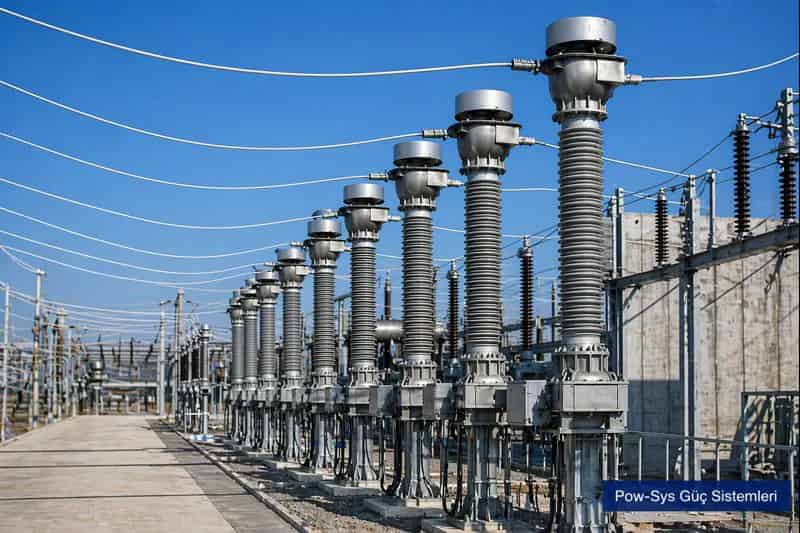
A current transformer is an instrument transformer that converts the high current flowing in the primary circuit to a safe and standard value usable by measuring instruments and protection relays. In electrical installations, measuring hundreds of amperes or higher currents directly is not always practical or safe. Therefore, a current transformer reduces the current by a defined ratio and carries information to power quality analyzers, ammeters, meters and protection relays. In short, the answer to what a current transformer is: it is a special transformer that provides measurement and isolation to measure high current and transmit it to protection systems.
To answer what a current transformer does in one sentence: it reduces the current flowing in the primary conductor to standard values, usually 1 A or 5 A on the secondary side, so measurement and protection systems can operate safely. Thanks to this structure, measuring devices are not exposed directly to high current and protection relays can perform fault analysis based on correct current information. Current transformers are a basic requirement especially in MV switchgear, power factor correction panels, main distribution panels and energy monitoring systems.
The operating principle of a current transformer is based on electromagnetic induction. The current flowing in the primary circuit creates a varying flux in the transformer's magnetic core. This flux produces a lower-level current in the secondary winding that is proportional to the primary current. In current transformers, this relationship is mostly expressed through the current transformer ratio. For example, a 100/5 current transformer produces approximately 5 A on the secondary side when 100 A flows on the primary side. Other ratios such as 300/5, 600/5 or 1000/5 are selected according to system requirements using the same principle.
The important point here is that the current transformer is connected in series with the circuit. A current transformer operates by sampling the primary current passing through it. Unlike voltage transformers, it is not connected in parallel. In some types, the primary winding is a single busbar-through structure, while in others there may be a wound primary design. However, the basic purpose does not change: converting primary current to a safe and measurable value on the secondary side.
Current transformers can be classified by purpose as measuring current transformers and protection current transformers. Measuring types focus on producing more accurate measurements for meters and power quality analyzers. Protection types support relay operation during short circuits, overcurrent and earth faults. Therefore, two different current transformers installed in the same panel may look similar externally but may perform different duties in terms of accuracy class and saturation characteristic.
When selecting a current transformer, looking only at the ratio value is not sufficient. Primary rated current, secondary current, accuracy class, burden or connected load value, short-time thermal withstand, dynamic withstand and purpose of use must be evaluated together. For example, a current transformer selected only to supply a meter may not have the same technical properties as a current transformer that will supply a protection relay. An incorrect ratio may create measurement error at low load; an incorrect class may negatively affect relay behavior during a fault.
One of the most common field expressions is a ratio definition such as 100/5 current transformer, 200/5 current transformer or 300/5 current transformer. This ratio shows the conversion between primary current and secondary current. Although the secondary side is seen as 5 A in many projects, 1 A secondary current transformers may also be preferred especially for long cable distances, low-loss requirements or sensitive protection applications. Therefore, when defining the current transformer ratio, not only the present load but also possible system growth and the technical expectations of connected devices must be considered.
Polarity terminals are also important in current transformer connection. The primary side has P1-P2 markings and the secondary side has S1-S2 markings. This direction information becomes critical especially in differential protection, directional protection and energy metering applications. Incorrect polarity connection may cause the device to read the measurement in reverse or the relay logic to operate incorrectly. For this reason, polarity verification is not neglected during testing, maintenance and connection checks in MV and HV systems. Such field verifications should be carried out in a planned way through HV/MV testing, maintenance and repair services.
One of the most critical safety rules for current transformers is that the secondary circuit must not be left open. If the secondary terminals remain open while the primary circuit is energized, excessive magnetic flux may occur in the core and dangerous voltage may appear at the secondary terminals. This is a risk for personnel safety and may also damage the insulation of the current transformer. Therefore, secondary circuits that will be removed or taken out of service must first be short-circuited properly before work begins.
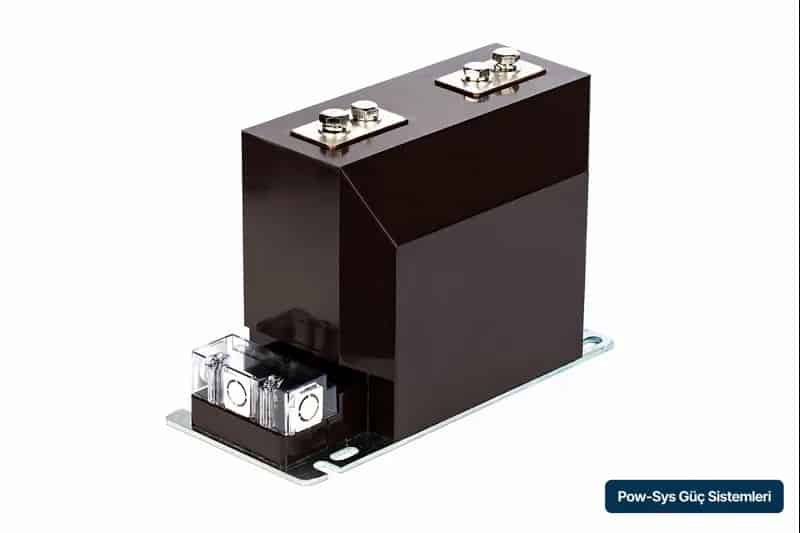
By mounting type, current transformers may be produced in different structures such as busbar type, cable-through type, ring type and resin-insulated MV current transformer. Compact panel-type solutions are common in low-voltage panels, while resin-insulated instrument transformers are used more frequently in medium-voltage switchgear. Environmental conditions, busbar dimensions, insulation level and the existing switchgear design directly affect the physical structure of the current transformer to be selected.
From a periodic maintenance perspective, current transformers may often look like passive equipment, but loose connections, insulation aging, secondary circuit interruptions and use of an incorrect ratio can cause serious operational problems. In MV installations, instrument transformers are an inseparable part of healthy protection system operation. Therefore, for operational continuity, both current transformers and the relays and switchgear equipment connected to them must be checked regularly. Handling these processes together with LV/MV/HV project design and consultancy on the project, maintenance and field verification side produces healthier results.
In summary, a current transformer is one of the basic items of equipment that enables measurement, monitoring and protection systems to operate with correct data. Without the appropriate ratio, correct class, correct connection and safe secondary practice, it is difficult to speak of a healthy power infrastructure. If your facility needs verification of existing current transformers, MV switchgear measurement circuits, test processes or field checks, you can receive support through our HV/MV testing, maintenance and repair service and, for general operation processes, through our HV operation responsibility service.
Related Blog Posts
Related Services
Frequently Asked Questions
What is a current transformer?
A current transformer is an instrument transformer that converts the high current flowing in the primary circuit into a safe, standard value that measuring instruments and protection relays can use. Measuring hundreds of amperes or higher currents directly is not always practical or safe, so the current transformer reduces the current by a defined ratio and carries the information to ammeters, meters, power quality analyzers and protection relays, while also providing measurement isolation between the primary circuit and the connected devices. Current transformers are a basic requirement especially in MV switchgear, power factor correction panels, main distribution panels and energy monitoring systems. In short, it is the special transformer that allows measurement, monitoring and protection systems to work with accurate current data without ever being exposed to the full primary current.
What does a current transformer do?
A current transformer reduces the current flowing in the primary conductor to standard values, usually 1 A or 5 A on the secondary side, so that measurement and protection systems can operate safely. Instead of measuring high currents directly, devices such as meters, ammeters, power quality analyzers and protection relays receive their current information through the transformer. Thanks to this structure, measuring devices are not exposed directly to high current, and protection relays can perform fault analysis based on correct current information during short circuits, overcurrent and earth faults. This function makes current transformers a basic requirement in MV switchgear, power factor correction panels, main distribution panels and energy monitoring systems. Without a properly working current transformer, neither accurate metering nor reliable relay protection is possible, so the whole measurement and protection chain depends on this equipment.
How does a current transformer work?
A current transformer works on the principle of electromagnetic induction. The current flowing in the primary circuit creates a varying magnetic flux in the transformer's magnetic core, and this flux produces a proportional but much lower current in the secondary winding. The relationship between the two sides is expressed through the current transformer ratio: for example, a 100/5 current transformer produces approximately 5 A on the secondary side when 100 A flows on the primary side, and ratios such as 300/5, 600/5 or 1000/5 follow the same principle. The transformer is always connected in series with the circuit and operates by sampling the primary current passing through it; in some designs the primary is a single busbar-through structure, in others a wound primary. The result is a safe, measurable secondary current that accurately represents the primary current.
What does a 100/5 current transformer mean?
A 100/5 current transformer means that when 100 A flows on the primary side, approximately 5 A is obtained on the secondary side; the figure 100/5 is the current transformer ratio, showing the conversion between primary current and secondary current. Ratios such as 200/5, 300/5, 600/5 and 1000/5 work in exactly the same way and are selected according to system requirements. Although a 5 A secondary is seen in many projects, 1 A secondary current transformers may be preferred especially for long cable distances, low-loss requirements or sensitive protection applications. When defining the ratio, not only the present load but also possible system growth and the technical expectations of the connected devices must be considered, because an incorrect ratio can create measurement error at low load and negatively affect how the protection system behaves during a fault.
Why is a current transformer connected in series?
A current transformer is connected in series because it operates by sampling the primary current that passes directly through it. Its magnetic core is excited by the flux created by the primary current, and that flux is what induces the proportional secondary current, so the device must sit in the current path itself. This is a fundamental difference from a voltage transformer, which is connected in parallel because its duty is to convert voltage rather than current. In some current transformer types, the primary is a single busbar-through structure; in others there is a wound primary design, but the series principle does not change. A parallel connection does not fit the operating principle of a current transformer and does not provide correct measurement, so the connection method is dictated by the physics of the device, not by installer preference.
Should 1 A or 5 A be selected for a current transformer?
The choice between a 1 A and a 5 A secondary depends on the technical requirements of the connected devices, the cable distance between the current transformer and those devices, the burden value and the overall project design. A 5 A secondary is common in conventional applications where the distance between the transformer and the instruments is short. A 1 A secondary is preferred especially in systems with long cable distances, low-loss requirements or sensitive protection applications. Because the secondary current interacts with burden and accuracy considerations, this selection should not be made in isolation: the primary rated current, accuracy class and the purpose of use, whether measurement or protection, must be evaluated at the same time. The practical rule is to match the secondary current to the actual devices and distances in the installation, also considering possible future system growth.
What should be considered when selecting a current transformer?
Selecting a current transformer requires much more than choosing a ratio. The primary rated current, secondary current, accuracy class, burden or connected load value, short-time thermal withstand, dynamic withstand, insulation level and the purpose of use must all be evaluated together. Measuring current transformers focus on accurate readings for meters and power quality analyzers, while protection current transformers must support relay operation during short circuits, overcurrent and earth faults, so two units in the same panel may look similar externally yet differ in accuracy class and saturation characteristic. Mounting type also matters: busbar type, cable-through, ring type and resin-insulated MV designs suit different panels and switchgear. An incorrect ratio may create measurement error at low load and an incorrect class may negatively affect relay behavior during a fault, so field conditions and switchgear structure must guide the final selection.
Why must the secondary of a current transformer not be left open?
The secondary circuit of a current transformer must never be left open while the primary circuit is energized, because dangerous voltage can appear at the open secondary terminals. When the secondary is open, excessive magnetic flux may occur in the core, and the resulting voltage is a direct risk to personnel safety; it may also damage the insulation of the current transformer itself. This is one of the most critical safety rules associated with current transformers in the field. For this reason, any secondary circuit that will be removed or taken out of service must first be short-circuited properly before work begins. Following this rule protects both the people working on the measurement circuits and the equipment, and it is a standard part of testing, maintenance and connection checks in MV and HV installations.
What is the difference between a current transformer and a voltage transformer?
A current transformer converts current, while a voltage transformer converts voltage, and this difference determines how each is connected. A current transformer is connected in series with the circuit and operates by sampling the primary current passing through it, reducing high currents to standard secondary values, usually 1 A or 5 A, that meters, power quality analyzers and protection relays can use. A voltage transformer, by contrast, is connected in parallel, which fits its duty of converting voltage rather than current. Both are instrument transformers, but their duties, connection methods and application details are different, so they are selected, installed and tested according to different criteria. In practice the two work side by side in MV switchgear, together feeding the measurement and protection systems, and confusing their roles or connection methods prevents correct measurement and healthy protection operation.