
Last updated: October 15, 2026
Technical contact: Hüseyin ÇOKAL, Electrical and Electronics Engineer. Content updated: October 15, 2026.
What changed: Service scope, report outputs, official sources, pre-proposal information and technical transparency notes were reviewed for the current period.
Bursa High Voltage (HV) and Medium Voltage (MV) Services Summary
- Equipment inventory, drawings, access and outage requirements define the proposed work.
- Selected switchgear, breaker and disconnector checks use the applicable model instructions.
- Cable, transformer, grounding, thermal and specialist assessments are itemized where included.
- Reports connect actual results and conditions to criteria, findings, limitations and follow-up.
- Repairs, replacement parts, extra tests and further outages are agreed as additional scope.
Technical contact and professional information
Bursa High Voltage (HV) and Medium Voltage (MV) Services Scope
What are Bursa HV/MV maintenance and testing services?
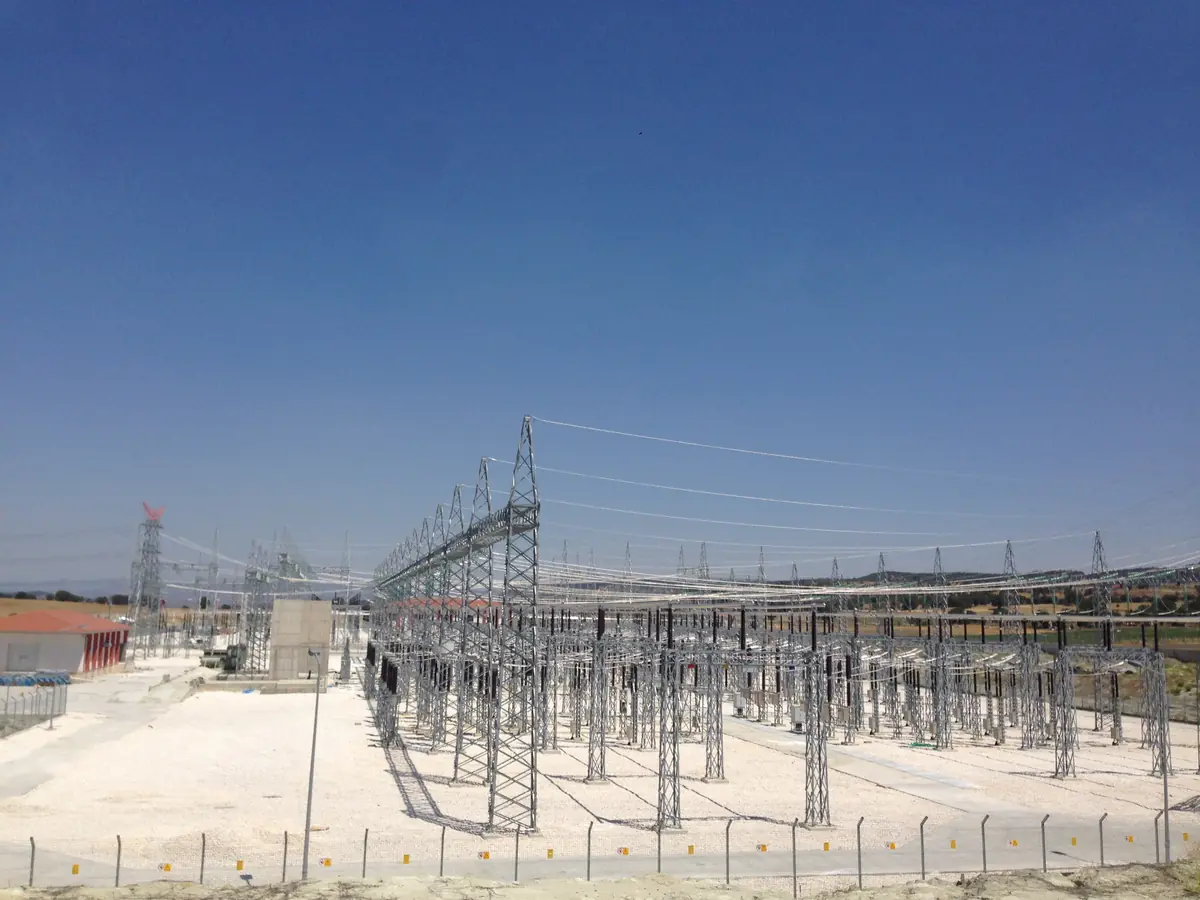
This service covers the field tests, maintenance tasks and repairs agreed for the high-voltage (HV) and medium-voltage (MV) assets at a Bursa facility. The electrical boundary can include switchgear, transformers, cables, lines, grounding and protection interfaces. The equipment inventory and objective determine the scope; the page is not a promise that every listed test is performed at every visit.
For privately transformer-fed factories, energy facilities, commercial buildings and infrastructure in Bursa OIZ, DOSAB, Nilufer OIZ, Hasanaga, Kayapa, Kestel, Gursu, Inegol, Gemlik and nearby areas, planning takes account of equipment condition, production constraints and existing records. Location or sector does not establish the technical configuration or substitute for a site-specific work plan.
Difference between HV operation responsibility and testing-maintenance
HV operation responsibility is an authorized technical follow-up appointment under the applicable Turkish framework, with its own operating boundary, coordination, findings and reporting duties. It is more than a signature and does not replace physical maintenance. A maintenance-test contract identifies the selected interventions and evidence; statutory periodic inspection and specialist work retain their separate scope, authorization and reporting requirements.
Site survey and outage planning
Provide the equipment list, nameplates, current single-line and relevant control/protection drawings, previous reports, known defects, fault or repair history and preferred work window. Cable type, route and length and the actual transformer/switchgear arrangement help define specialist work. Identify who controls site access, the operating plan and the decisions needed before work and restoration.
The survey confirms practical access and the proposed electrical boundary. Qualified personnel use the approved equipment-specific isolation and work/test plan, addressing relevant supplies and backfeeds, auxiliary power, remote or automatic commands, stored energy and required verification. A fixed outage duration cannot be promised from equipment counts alone; staged or weekend work depends on the actual system and permissions.
MV switchgear and panel maintenance scope
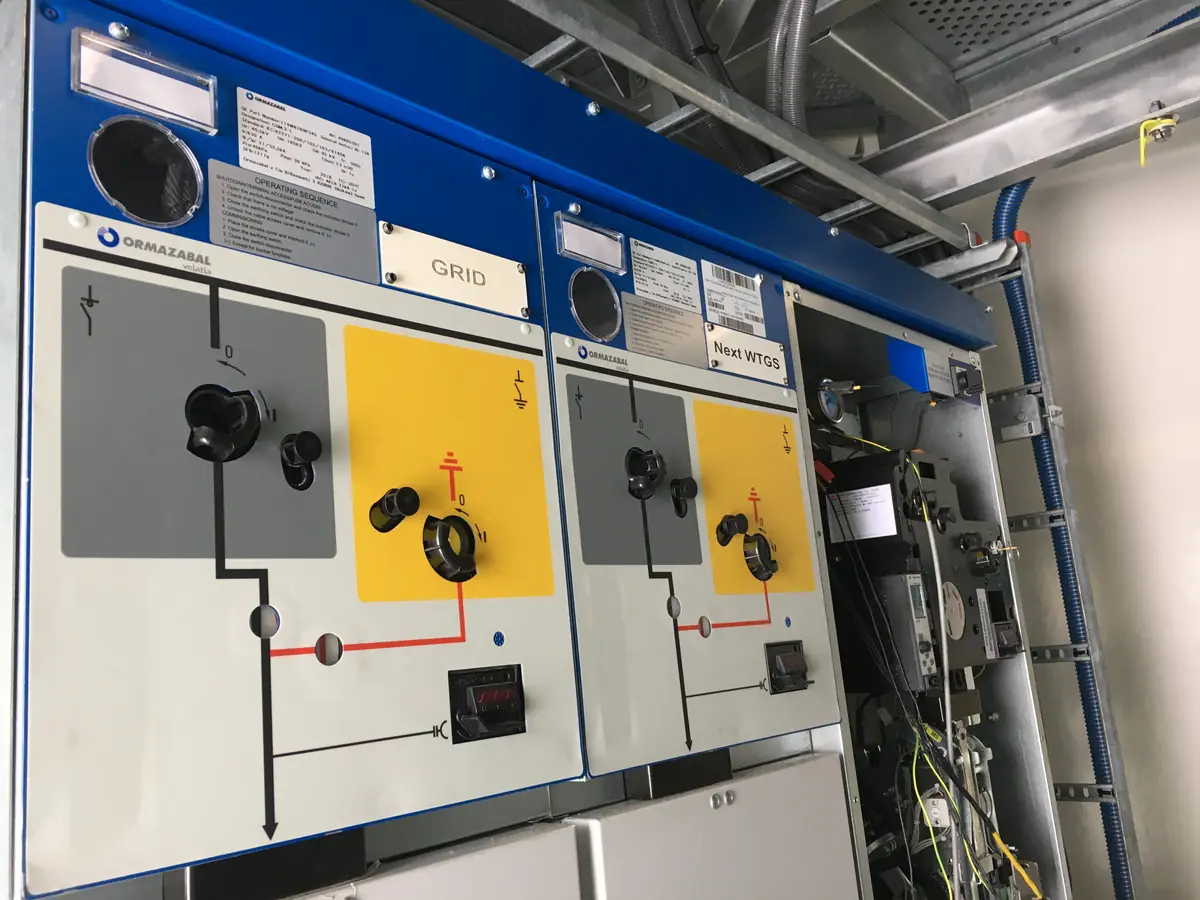
Select checks for the actual circuit breakers, disconnectors, switch-disconnectors, earthing arrangements, instrument transformers, surge arresters, bus connections and cable terminations included in the proposal. Distinguish the interrupting device from the cubicle, drive, auxiliary circuits and position interfaces. Vacuum, gas and oil systems require different equipment instructions; one checklist or a generic “level check” is unsuitable for every design.
The agreed work can combine inspection, selected mechanical and electrical assessments and recorded maintenance interventions. An interlock, open indication or successful function trial does not by itself prove absence of voltage or eliminate every hazard. Unavailable access, missing instructions or an excluded circuit must be reflected as a limitation rather than an implied pass. Circuit-breaker testing and maintenance and disconnector testing and maintenance explain these equipment boundaries in more detail.
HV/MV cable tests and fault location
Cable work is selected from the asset details and objective: investigation of a reported fault, an agreed insulation assessment, sheath examination or an appropriate acceptance/maintenance test. Insulation resistance, a selected withstand test and diagnostic measurements answer different questions. VLF, tan-delta and partial-discharge functions are not an interchangeable generic package; method suitability, connected equipment and conditions must be defined.
For fault-location work, the method and available route information determine how far a suspected location can be narrowed. Excavation or repair planning can need further confirmation and site permissions. Record the investigated section, actual method, findings and remaining uncertainty; avoid promising a precise excavation point before the assessment.
Grounding, lightning protection and safety assessments
The proposal identifies the agreed continuity, grounding or soil measurements and any separate design assessment. Geometry, parallel paths, accessibility and the chosen method affect interpretation. A single resistance value does not establish step/touch-voltage safety, lightning performance or the condition of every earth path. Calculations or additional measurements are specified where needed for the actual installation.
Maintenance evidence can inform a separate statutory inspection or engineering assessment, but the maintenance report is not automatically an official inspection report. Identify the required report type and responsible authorized party before work so that the selected scope and deliverables match the purpose.
Thermal and partial-discharge observations
Where suitable and agreed, thermal inspection records the accessible equipment, loading and observation conditions. An unusual pattern may justify investigation; it does not by itself identify a loose connection or prove that every hidden defect has been found. Energized observations require their own authorized access and work conditions and are not a general substitute for isolated maintenance.
Any partial-discharge or corona assessment is a separately identified method with its own sensor positions, operating conditions and interpretation limits. A thermal image is not a PD measurement. Record which areas or paths were observed and which were inaccessible, rather than presenting “no indication” as proof of complete insulation health.
Technical interpretation of test results
Each result is interpreted against the applicable equipment instructions and criteria appropriate to the selected method. The record identifies the asset, measured path or function, setup, conditions, instrument and criterion source. Prior results are useful only where the basis is comparable; an unexplained change calls for assessment rather than an automatic pass, failure or root-cause conclusion.
Separate findings needing an operating decision from recommendations for planned work or further diagnosis. Assign an owner and follow-up step for open items where agreed. The report describes the condition observed and work performed; it does not guarantee future fault-free operation or create authority to ignore an unresolved restriction.
HV/MV repair and spare-part planning
Repair options follow the findings and equipment requirements. They may include cable joint or termination work, connection or bushing replacement, mechanism work, instrument-transformer or surge-arrester replacement, or other agreed interventions. The need for compatible parts, specialist diagnosis, manufacturer or authorized-service coordination and a further outage is assessed separately.
Before implementation, agree the added work, material, cost, timing and verification required after the change. Post-fault urgency does not remove the need to establish the affected boundary and qualified operating decision. A repair recommendation, a completed intervention and a verified result are different records.
New installation commissioning and acceptance tests
Site commissioning or acceptance work uses the approved project requirements and actual equipment instructions. It can include selected post-assembly, function, protection-interface and interlock checks. Factory type/routine tests and field tests have different purposes; a field maintenance visit does not re-establish every factory rating.
The report identifies checks completed, results, limitations, restoration and any unresolved prerequisites. It is an input to the responsible authorized parties’ decision on energization; it is not an unconditional declaration or permit that the whole installation is ready. Design changes or capacity increases can require a separate LV/MV/HV project-design and consultancy scope.
Reporting and preparation for inspections
Deliver the agreed asset register, test and maintenance records, relevant photographs or thermal images, result interpretation, work performed, limitations and an action list. Attach the criterion or document reference used for each material acceptance statement. Do not convert an unperformed check into a pass or describe a recommendation as a completed repair.
Illustrative request, not a client result: a facility asks for two cubicles to be maintained during a short work window, but lacks the current control drawings. The proposal should identify which checks require those drawings, who will provide them, whether an initial survey is needed, and what will remain outside the visit. An agreed restriction belongs in the quotation and final report, not only in a verbal handover.
Maintenance intervals and production planning
Maintenance and test intervals depend on manufacturer instructions, use, environment, equipment condition, fault history and previous results. Inspection, maintenance, statutory periodic inspection and the appointed operation supervisor’s visits or reporting periods are separate requirements. A schedule for one manufacturer’s device cannot set one annual overhaul interval for every asset.
Record the selected work and the basis for the next review. Outage planning can compare scope options, staged work and separate specialist visits where the system permits them, without guaranteeing zero production interruption or a fixed repair duration.
Pricing and the proposal process
A scoped quotation uses equipment models and counts, transformer and cable details, requested methods, drawings and records, site access, travel and the permitted outage. It identifies the agreed deliverables and any assumptions that require survey confirmation. There is no single fixed price for every HV/MV maintenance visit.
Before agreement, distinguish the selected visit from additional diagnosis, parts, laboratory analysis, repairs, specialist tests and further outages. Applicable taxes, travel, work timing and acceptance arrangements belong in the commercial terms. Share the facility information and preferred work window to prepare a practical Bursa HV/MV maintenance proposal.
Technical source boundaries: the Schneider HVL/cc bulletin illustrates exact-model safety, inspection, maintenance and restoration requirements; it is not a universal breaker test menu. The Siemens GM-SG manual adds equipment-specific control, stored-energy and field-test limits; its values are not a universal test prescription. The Aktif 2020 catalogue shows product-specific switching/earthing arrangements. The current EMO operation-responsibility regulation supports the distinction between the appointed operating role and separately scoped physical work. The work plan and interpretation require the instructions and conditions for the actual installation.
Reporting, Inspection and Proposal Preparation
Sample Inspection Table
This table summarizes which headings are evaluated on site and which outputs may appear in the report.
| Inspected area | Checked criterion | Report output |
|---|---|---|
| Site and equipment condition | Existing equipment structure, access conditions, visible risks and operating conditions | Site inspection note and prioritized findings list |
| Document and project conformity | Single-line diagram, current project, labeling, reports and conformity with site implementation | Document conformity assessment and missing record list |
| Safety and operational risk | Life safety, equipment safety, energy continuity and maintenance access risk headings | Risk classification and corrective action recommendations |
| Measurement, test or inspection need | Measurement, test, visual inspection and technical review items required by the service scope | Measurement/test plan or inspection scope note |
| Reporting and follow-up | Nonconformity priority, follow-up date, responsibility allocation and next steps | Photo-supported report, action list and follow-up recommendation |
Agreed Maintenance-Test Scope and Additional Work
The proposal specifies the HV/MV equipment, maintenance tasks and tests included in the visit. This agreed work is distinguished from additional repairs and separate contractual services.
| Work item | Relationship to the service | Scope decision |
|---|---|---|
| Selected HV/MV maintenance and testing | Switchgear, transformer, cable, grounding and protection work follow the equipment and tests selected in the proposal. | Actual agreed interventions, measurements, criteria, findings and limitations are recorded; unperformed items are identified. |
| Additional repairs, replacement or testing | Unexpected findings may require materials, laboratory work or a further outage. | Additional scope, cost and timing are agreed before implementation. |
| Operation responsibility and statutory inspection | These services have their own authorization, contract and reporting requirements. | A maintenance-test visit and report do not replace separate operation responsibility, statutory inspection or authorized energization decisions. |
Technical and Regulatory Sources
- Siemens GM-SG instruction manual — equipment-specific control, testing and maintenance boundaries
Claim supported on this page: Qualified equipment-specific work; control/stored-energy and auxiliary-function limits; separate inspection/maintenance guidance. Not universal values or a breaker-specific instruction manual.
- Schneider HVL/cc instruction bulletin — exact-model safety and maintenance boundaries
Claim supported on this page: Qualified work, indication/interlock limits, separate inspection/maintenance schedules and model-specific preparation/restoration.
- Aktif General Catalogue 2020 — bounded equipment examples
Claim supported on this page: Historical product-specific fixed/withdrawable, off-load disconnector and earthing arrangements; not current availability or a universal procedure.
- Current EMO HV operation responsibility regulation
Claim supported on this page: Operating-role, appointment, employer and coordination boundaries; not company credential verification or a maintenance result.
Frequently Asked Questions
For which types of HV and MV installations do you provide service?
We plan agreed field testing, maintenance and repair for HV/MV assets at factories, energy facilities, commercial buildings and infrastructure sites, subject to the actual equipment, access and work conditions. Identify the transformer, switchgear, cable and line boundary. Detailed transformer testing or oil analysis is a separately defined scope, even when coordinated with the same visit.
Which tests are carried out in HV/MV maintenance?
The proposal itemizes the selected equipment checks and any cable, transformer, grounding, thermal or specialist assessment. It states required conditions, deliverables and exclusions. VLF, PD and other methods are not automatically included or interchangeable. A maintenance report does not automatically become a statutory inspection report.
Is it necessary to stop the entire facility for maintenance and tests?
The required outage follows the equipment, test method and approved isolation boundary. Some authorized observations may be possible during operation, but that does not make isolated maintenance unnecessary. Staged or weekend work may be considered where the system permits; a fixed duration or zero interruption cannot be guaranteed from counts alone.
How do you determine periodic maintenance intervals?
Use manufacturer instructions, service conditions, operating/fault history and previous findings. Inspection and maintenance can have different triggers. Statutory periodic inspection and the appointed HV operation supervisor’s visits or reporting periods remain separate. The plan records the actual assets and basis for the next review.
Can we receive service for HV/MV installations outside Bursa?
Bursa is the main service area. Work in nearby provinces depends on the location, logistics, equipment, access and agreed scope. Share those details for an assessment. A maintenance-service location decision does not establish a separate operating-responsibility appointment or its authorization conditions.
Which areas in Bursa do you serve for HV/MV maintenance and testing?
We can assess requests for facilities in Bursa OIZ, DOSAB, Nilufer OIZ, Hasanaga, Kayapa, Kestel, Gursu, Inegol, Gemlik, Osmangazi and nearby areas. Confirm the actual site, equipment and available work window; listing an area does not imply a completed customer project or unconditional availability.
Which checks are performed during MV switchgear maintenance?
Choose checks for the actual breaker, disconnector, load-break/earthing arrangement, instrument transformers, surge arresters, connections, control and interlock functions included in the proposal. Record results and exclusions against applicable criteria. Additional repairs and the authorized decision to return the installation to service are separate from the maintenance findings.