
Last updated: September 9, 2026
Reviewed by Hüseyin ÇOKAL, Electrical and Electronics Engineer. Updated: September 9, 2026.
What changed: Service scope, report outputs, official sources, pre-proposal information and technical transparency notes were reviewed for the current period.
Bursa Periodic Inspection and Examination Summary
- Regulation-compliant periodic inspection and examination service in Bursa and surrounding provinces for electrical installation, power panels, grounding installation, lightning protection installation, transformer, generator, UPS-battery groups and fire detection-warning systems: your whole electrical inspection obligation handled by one engineering team
- Legal basis: under Law No. 6331, Annex III of the Regulation on Health and Safety Conditions in the Use of Work Equipment and the Electrical Internal Installations Regulation, electrical installations and related work equipment must be inspected at regular intervals — your obligation met with a documented, regulation-based plan
- Comprehensive measurement, testing and technical assessment report for electrical installation periodic inspection, grounding measurements, lightning protection tests, transformers and MV switchgear, generators and battery rooms: risks reach you in writing before they become failures
- Facility-risk-specific inspection plan for food, automotive supply, machinery-metal, textile, plastic, chemical, logistics warehouses, shopping centers, hospitals, schools and offices in Nilufer, DOSAB, NOSAB, Hasanaga, Kayapa, Demirtas, Kestel and Inegol organized industrial zones: an inspection calendar aligned with your production, not against it
- Field tests with calibrated measurement devices and standard-compliant assessments by EKİPNET-registered electrical / electrical-electronics engineers: results you can defend in audits
- Electrical periodic inspection report, nonconformity list, corrective action recommendations and engineer-signed periodic examination reports valid in audits: no finding is left without a documented follow-up path
- Electrical-group focused service: mechanical work equipment such as forklifts, cranes and pressure vessels are outside the scope of this page; only electrical installation and electrically related work equipment are covered — you know exactly what is and is not included before you commit
Technically reviewed by
Bursa Periodic Inspection and Examination Scope
What is the Bursa periodic inspection service
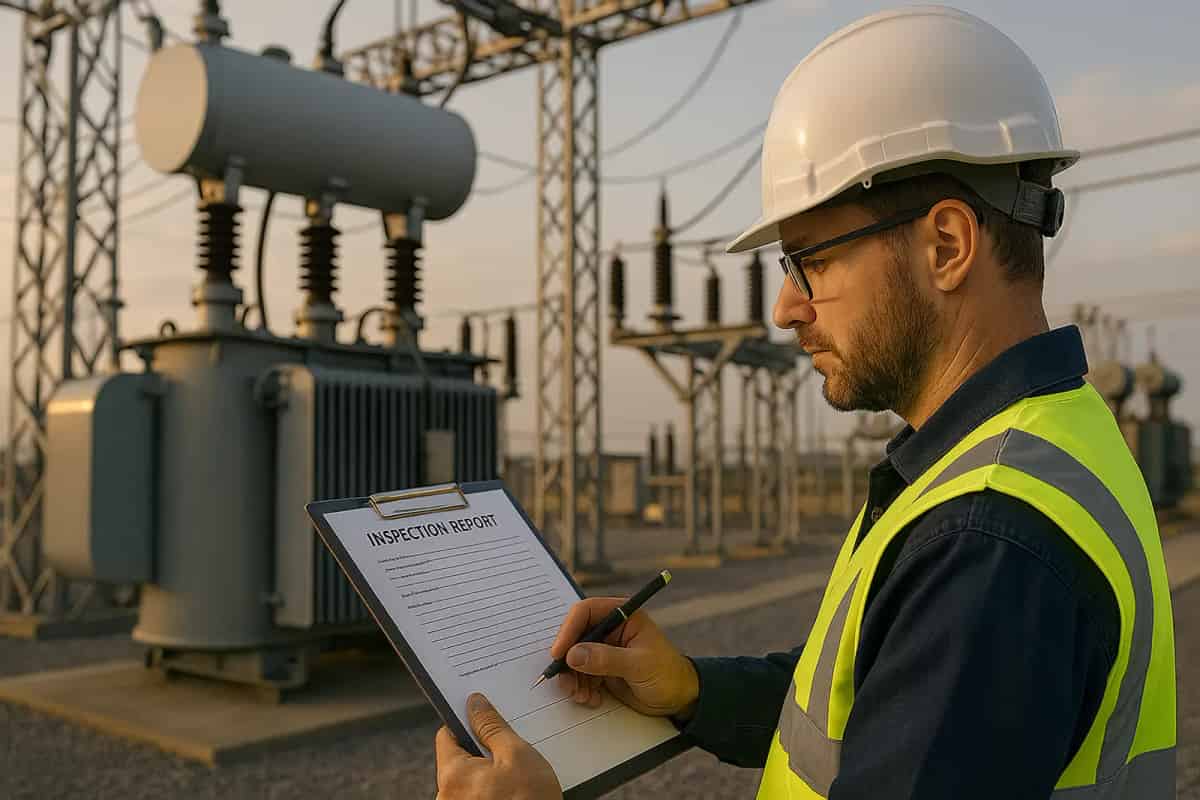
The Bursa periodic inspection service covers the measurement, testing and reporting of electrical installations, grounding, lightning protection, transformers, generators, UPS-battery groups and fire detection systems at defined intervals. The purpose is not only to complete documentation, but to identify electrical fire, leakage current, short circuit, weak grounding and unplanned outage risks on site.
This work is a critical inspection process for factories, organized industrial zone facilities, warehouses, shopping centers, hospitals, schools, offices and production areas in terms of occupational safety, insurance, official audits and business continuity.
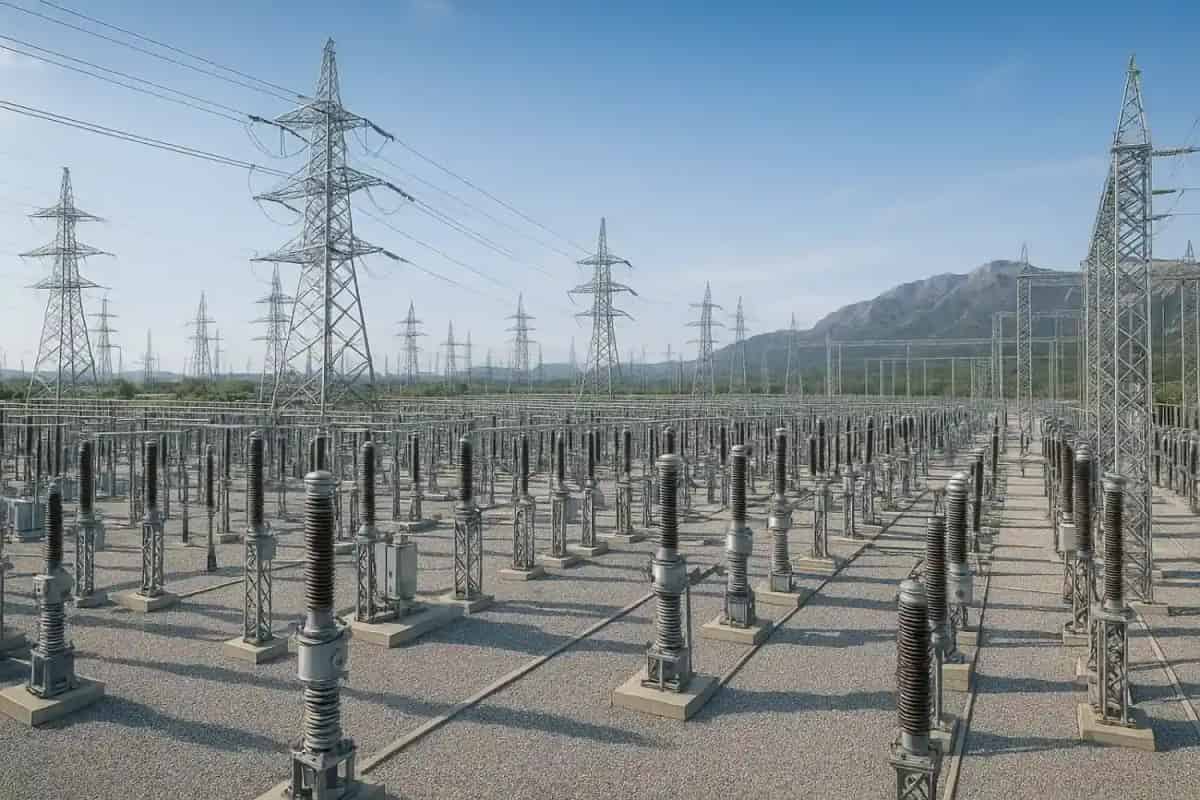
Bursa periodic inspection is not limited to a single measurement; in one facility, electrical installations and power panels, grounding installation, lightning protection, transformers and MV switchgear, generators, UPS-battery groups and fire detection and warning systems can be handled within the same programme. For factories, warehouses and commercial buildings in central Bursa districts and in organized industrial zones such as Nilufer, DOSAB, NOSAB, Hasanaga, Kayapa, Demirtas, Kestel and Inegol, the inspection calendar is built around the facility risk level and the production schedule. In this way the Bursa periodic inspection service runs without interrupting production and produces engineer-signed reports valid in audits.
What are periodic inspection and periodic examination
Periodic inspection means checking installations and equipment used in workplaces at defined intervals through measurement, testing, visual examination and document review. Periodic examination is the broader term covering the full inspection and reporting process.
On the electrical side, this scope includes electrical installations, power panels, grounding installations, lightning protection installations, transformers and MV switchgear, generators, UPS-battery systems and fire detection and warning systems.
Legal basis and technical standards
Periodic inspection work is evaluated together with Law No. 6331 on Occupational Health and Safety, Annex III of the Regulation on Health and Safety Conditions in the Use of Work Equipment, the Electrical Internal Installations Regulation and the relevant TS EN, TS HD and IEC standards.
The Work Equipment Regulation requires periodic inspections to be performed by authorized persons and the results to be reported. For electrical installations, manufacturer instructions, the facility risk level, previous reports and site operating conditions must also be considered when determining the inspection interval.
Which electrical equipment is inspected
Pow-Sys focuses only on electrical installations and electrically related work equipment on this page. Mechanical work equipment such as forklifts, cranes and pressure vessels is not included in this service scope.
The inspection scope consists of electrical installations and panels, grounding measurements, lightning protection down conductors and air terminals, transformers and MV switchgear, generator control and transfer systems, UPS-battery groups, battery rooms, fire detection panels, detectors, manual call points, sounders and strobes.
When needed, electrical installation, grounding, lightning protection, transformer, generator, battery and fire detection inspections can be planned during the same site visit to reduce business downtime.
How is the inspection interval determined
The periodic inspection interval should not be determined only by assuming once per year. The maximum periods stated in the relevant regulations, manufacturer recommendations, equipment age, frequency of use, environmental conditions, previous examination results and the facility fire or explosion risk must be evaluated together.
For electrical installations, grounding and lightning protection systems, an annual inspection approach is commonly used in practice. However, in heavy industry, chemical, textile, plastic, logistics warehouse and intensive production facilities, the inspection interval should be shortened if the risk is high.
Site survey, measurement and testing process
The work starts with reviewing existing electrical projects, single-line diagrams, previous periodic inspection reports and corrective action records. Then transformers, MV switchgear, main distribution panels, sub-panels, battery-generator rooms, grounding points and lightning protection installations are evaluated on site.
During the measurement stage, tests such as grounding measurement, loop impedance, residual current, insulation, continuity, thermal camera inspection, generator and UPS function checks are performed. Results are compared with regulatory and standard limits and classified as suitable, conditionally suitable or nonconforming findings.
Who can perform periodic inspection
Periodic inspections of electrical installations and electrically related work equipment must be performed by specialists who are authorized in the relevant field, registered in EKİPNET and using measurement devices with valid calibration.
Electrical periodic inspection should not be performed only for a signature. An engineering team with practical industrial facility experience should interpret measurement results together with the real risks of the facility and provide applicable corrective action recommendations.
Reporting and audit readiness
At the end of the inspection, electrical installation periodic inspection reports, grounding and lightning protection measurement reports, transformer, MV switchgear, generator, UPS-battery and fire detection assessments, nonconformity lists and corrective action recommendations are prepared.
Engineer-signed periodic examination reports are core technical documents that can be used in Ministry of Labor audits, organized industrial zone inspections, fire brigade procedures, insurance reviews and internal occupational safety audits.
Service scope in Bursa and surrounding areas
The service area covers Bursa center, Nilufer, Osmangazi, Yildirim, Mudanya and industrially concentrated districts, as well as organized industrial zones such as Nilufer OSB, DOSAB, NOSAB, Hasanaga, Kayapa, Demirtas, Kestel, Gursu and Inegol OSB.
Electrical periodic inspection work can also be organized in nearby regions such as Balikesir, Bandirma OSB, Kutahya, Bilecik, Bozuyuk OSB, Yalova and Eskisehir depending on facility size and planning.
How are Bursa periodic inspection prices determined
Periodic inspection prices are not determined from a fixed list; they depend on facility size, number of buildings, number of panels and transformers, grounding points, number of lightning protection systems, generators, UPS-battery groups, fire detection systems and reporting scope.
For a clear proposal, it is sufficient to share the number of transformers, panels, generators, UPS-battery groups and lightning protection systems together with the approximate enclosed area of the facility. With this information, site duration, measurement scope and reporting needs can be planned more accurately. Scope is clarified from this information, and before signing you see in writing what is included and what is planned as a separate service.
Why professional periodic inspection is required
Electrical risks can cause fire, electric shock, production downtime, equipment damage and insurance problems. Regular periodic inspection reveals weak connections, overheated cables and busbars, inadequate grounding, unsuitable lightning protection connections and protection deficiencies at an early stage.
A standard-compliant periodic inspection performed with an engineering perspective strengthens employee safety, reduces fault risk, makes audit preparation easier and makes the electrical infrastructure of the business more sustainable.
Reporting, Inspection and Proposal Preparation
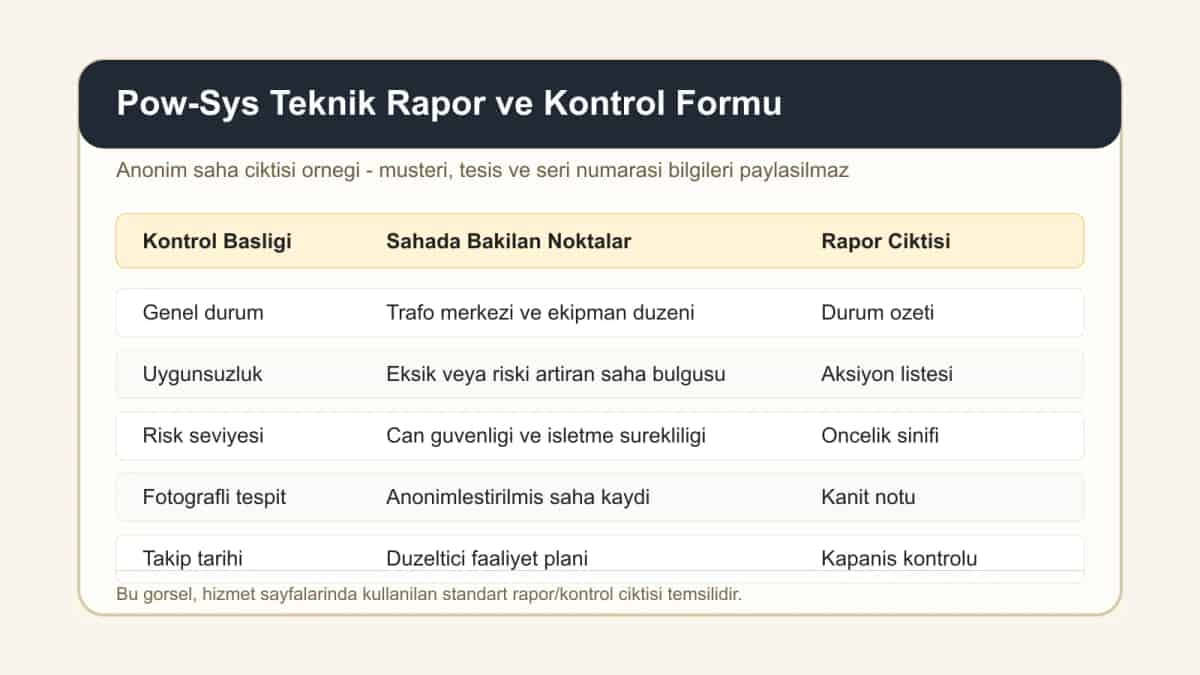
Sample Inspection Table
This table summarizes which headings are evaluated on site and which outputs may appear in the report.
| Inspected area | Checked criterion | Report output |
|---|---|---|
| Site and equipment condition | Existing equipment structure, access conditions, visible risks and operating conditions | Site inspection note and prioritized findings list |
| Document and project conformity | Single-line diagram, current project, labeling, reports and conformity with site implementation | Document conformity assessment and missing record list |
| Safety and operational risk | Life safety, equipment safety, energy continuity and maintenance access risk headings | Risk classification and corrective action recommendations |
| Measurement, test or inspection need | Measurement, test, visual inspection and technical review items required by the service scope | Measurement/test plan or inspection scope note |
| Reporting and follow-up | Nonconformity priority, follow-up date, responsibility allocation and next steps | Photo-supported report, action list and follow-up recommendation |
Selected Inspection Scope and Additional Work
The proposal identifies which electrical systems and inspections are included. Grounding measurement is part of the service when grounding inspection is included in that inventory.
| Work item | Relationship to the service | Scope decision |
|---|---|---|
| Agreed electrical inspections and measurements | The selected installation, grounding and other equipment inspections follow the agreed inventory. | Findings and measurement results are recorded in the applicable inspection reports. |
| Equipment or tests outside the selected inventory | Additional systems require their own inspection methods and site time. | Additional scope and reporting are agreed before inspection. |
| Repair, replacement and physical remediation | An inspection identifies a defect; corrective work may require materials and installation. | Remediation is planned separately and does not replace the inspection report. |
Official Regulatory Sources
- EMO certificate verification portal
Claim supported on this page: EMO registration, SMM and certificate verification transparency.
- TEDAŞ official website
Claim supported on this page: Distribution infrastructure, project/acceptance processes and technical specification context.
- TEİAŞ official website
Claim supported on this page: Transmission system, connection and high-voltage infrastructure context.
- Electrical High Current Installations Regulation
Claim supported on this page: Installation, operation, maintenance and safety of high-current electrical installations.
Frequently Asked Questions
What is the difference between periodic inspection and periodic examination?
Periodic inspection refers to measurement, testing and visual examination of work equipment such as electrical installations, grounding, lightning protection, transformers and generators at defined intervals. Periodic examination defines the general process covering all these checks. In practice, the two concepts are used together and handled within the same legislative framework.
Which equipment is subject to periodic inspection?
Under the Regulation on Health and Safety Conditions in the Use of Work Equipment, electrical installation, grounding installation, lightning protection systems, transformers and MV switchgear, generators, UPS/battery groups and fire detection-warning systems are subject to periodic inspection. Their conformity with the relevant legislation and standards must be checked at defined intervals.
How often should periodic inspections be performed?
The interval is determined by considering the relevant standards, maximum periods in the Annex III table, manufacturer recommendations and risk assessment together. For most electrical installations, grounding and lightning protection systems, the maximum inspection interval is generally considered as one year in practice. In high-risk facilities or heavy operating conditions, this period is shortened further.
Who can perform periodic inspection?
Periodic inspections must be performed by engineers, technicians, senior technicians or technical teachers who are authorized under the Regulation on Health and Safety Conditions in the Use of Work Equipment, registered in EKİPNET and have technical knowledge of the subject. Test devices must be calibrated and reports must be prepared in accordance with legislation.
Are your reports valid in official audits?
Yes. Engineer-approved periodic inspection and examination reports prepared by EKİPNET-registered personnel and referencing the relevant legislation and standards are valid and strong documents in Ministry of Labor, organized industrial zone administration, fire brigade and insurance audits.
What is the risk of not having periodic inspection performed?
In electrical installations and equipment that are not inspected regularly, leakage current, inadequate grounding, non-operating lightning protection, overheated panels and faulty transformer or generator protections may go unnoticed. This can lead to electric shock, fire, production loss and serious material damage, as well as administrative fines, work stoppage and insurance problems.
What should you consider when choosing a periodic inspection company in Bursa?
Price should not be the only criterion. Check whether the inspections are performed by authorized, EKİPNET-registered electrical or electrical-electronics engineers, whether the measurement devices have valid calibration certificates, and whether the reports follow the formats required by the legislation so they hold up in Ministry of Labor, OIZ, fire brigade and insurance audits. Practical industrial experience also matters: a good provider interprets measurement results together with the real risks of your facility and gives applicable corrective action recommendations rather than producing a signature-only report. Finally, ask whether electrical installation, grounding, lightning protection, transformer, generator, battery and fire detection inspections can be planned in the same site visit — integrated planning reduces downtime and keeps the audit file consistent.