
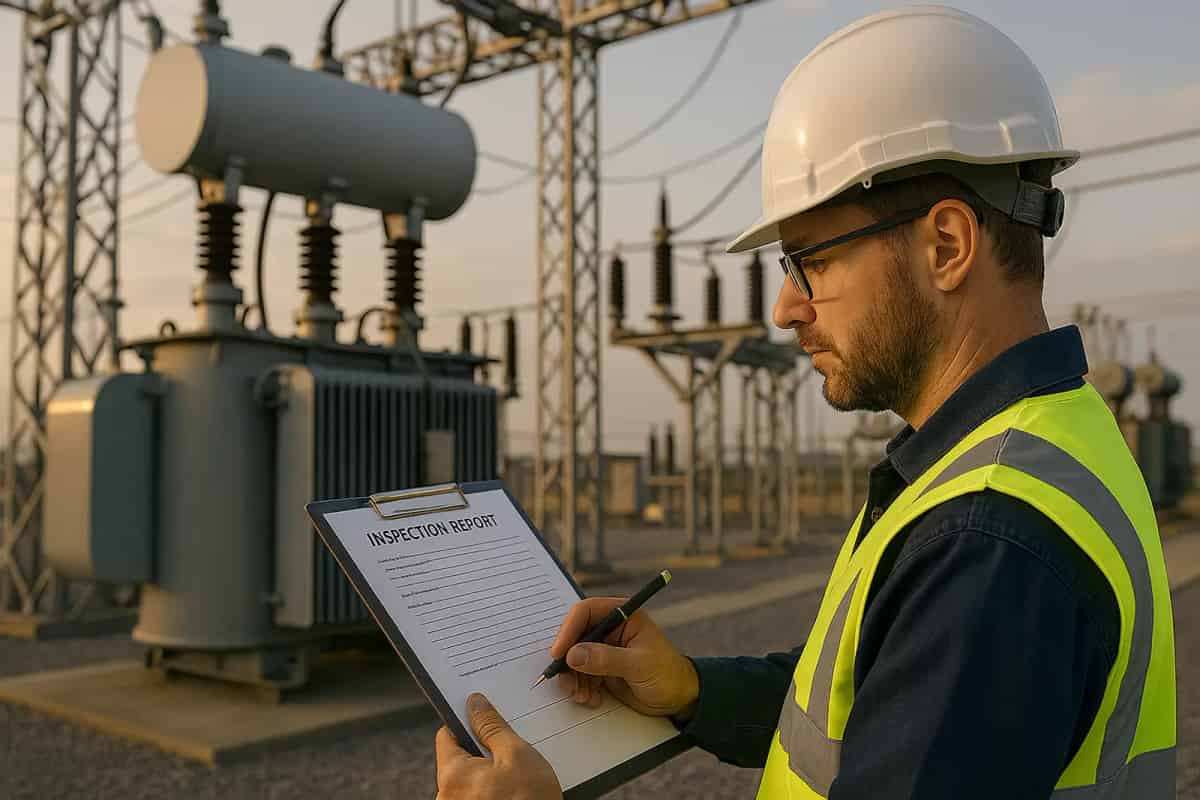
Last updated: September 9, 2026
Reviewed by Hüseyin ÇOKAL, Electrical and Electronics Engineer. Updated: September 9, 2026.
What changed: Service scope, report outputs, official sources, pre-proposal information and technical transparency notes were reviewed for the current period.
Bursa Lightning Protection Measurement and Periodic Inspection Summary
- Bursa lightning protection periodic inspection covers visual examination of the air terminal or lightning rod, air-termination network, down conductors, test clamps, lightning protection grounding and equipotential bars, together with lightning protection grounding resistance and down-conductor continuity tests: the full lightning current path verified end to end
- Lightning protection installation measurements include grounding resistance for each down conductor, down-conductor continuity, ring earth electrode, Faraday cage, natural conductors and lightning event counter checks based on the Regulation on Grounding in Electrical Installations, the Electrical High Current Installations Regulation, relevant technical legislation and TS EN 62305; results are documented as a grounding measurement report and lightning protection periodic inspection report: documents you can present in audits without hesitation
- Within the scope of Bursa lightning protection periodic inspection, conventional Franklin rod systems, active ESE lightning terminals, mesh / Faraday cage systems, roof car parks, silos, chimneys, antenna towers and external lightning protection installations of industrial facilities are evaluated as a whole: every system type inspected with the method it requires
- The lightning protection periodic inspection report includes measured lightning protection grounding resistance values, down-conductor continuity results, grounding continuity tests, detected mechanical and corrosion-related problems, risk levels of nonconformities and required corrective or improvement measures: weak points reach you in writing before the next storm season
- In Bursa organized industrial zones and industrial areas such as Nilufer OSB, DOSAB, Hasanaga, Kayapa, Kestel, Gursu and Inegol OSB, support is provided for planning annual inspection periods for lightning protection systems, aligning them with electrical installation and grounding installation periodic inspections and preparing reports suitable for EKİPNET-OHS-KATIP documentation: inspection deadlines tracked so nothing lapses
- By planning lightning protection periodic inspection together with grounding installation periodic inspection, electrical installation periodic inspection, MV/HV maintenance-test, SELVAZ test, soil resistivity measurement and thermal camera measurements, we provide integrated, regulation-compliant and cost-effective solutions for Bursa electrical, grounding and lightning protection periodic inspections: one visit, one consistent report set
Technically reviewed by
Bursa Lightning Protection Measurement and Periodic Inspection Scope
What is lightning protection periodic inspection in Bursa
Lightning protection system periodic inspection is the process of visually examining and electrically testing the lightning protection installation of a building or facility, including the lightning rod, Faraday cage, air terminals, down conductors and grounding system, at defined intervals. Businesses and buildings in Bursa often refer to this process as lightning protection measurement, lightning protection periodic examination, lightning protection installation inspection, lightning protection grounding measurement or lightning protection report. Their common purpose is to verify whether you have a reliable lightning protection system that will minimize loss of life and property in the event of a lightning strike.
Which components make up a lightning protection installation
A lightning protection installation includes air terminals or lightning rods on the roof, down conductors that carry the lightning current to the ground around the building, test clamps, ring or local earth electrodes, lightning protection grounding bars and equipotential bonding. In addition, within internal lightning protection measures, surge protective devices (SPDs) in panels, equipotential bonding of metal installations such as natural gas, water and ventilation ducts, and their relationship with the building's internal grounding system must also be evaluated.
Periodic inspection and maintenance are different
Lightning protection periodic inspection should not be confused with lightning protection maintenance. Lightning protection periodic inspection is an independent examination, measurement and testing activity performed by an authorized engineer or a Type A inspection body with TURKAK accreditation, and it is documented with an official lightning protection periodic inspection report. Maintenance consists of applications such as painting, corrosion cleaning, correcting support spacing, renewing insulating supports and organizing conductor routes; it does not replace a periodic inspection report by itself.
Legal basis and TS EN 62305 scope
The legal basis for periodic inspection of lightning protection installations is Law No. 6331 on Occupational Health and Safety and the Regulation on Health and Safety Conditions in the Use of Work Equipment published under this law. Lightning protection installation is evaluated among electrical-group work equipment. In addition, the Regulation on Grounding in Electrical Installations, the Electrical High Current Installations Regulation, electrical installation and grounding installation periodic inspection forms, and the TS EN 62305 series standards form the basis for the design, grounding arrangement, periodic inspection criteria and report format of lightning protection installations.
Where this service is required in Bursa
In Bursa organized industrial zones, large industrial facilities, logistics warehouses, shopping centers, hotels, hospitals, schools, high-rise buildings and residential complexes, the need for lightning protection is determined by evaluating building use, risk analysis, building height, environmental conditions and relevant legislation together. In existing lightning protection installations, if the lightning current cannot be safely conducted to earth through a controlled path, roof fires, facade damage, serious failures in electronic systems and life-safety risks may occur. Regular lightning protection periodic inspections and grounding measurements allow these risks to be anticipated and prevented in advance.
Site preparation and document review
In the field, lightning protection periodic inspection is generally carried out in three stages: preliminary preparation and document review, visual examination and electrical measurements. During the preparation stage, the lightning protection project, risk analysis, previously prepared lightning protection reports and grounding measurement reports are reviewed. The intended use of the facility, such as industrial, residential, hospital or explosive atmosphere, building height, roof access possibilities and environmental conditions are assessed; then the inspection plan is created.
Visual inspection steps
During the visual examination stage, the placement of air terminals, routes of down conductors, support spacing, corrosion condition, mechanical damage, adequacy of cross-sections, accessibility of test clamps, continuity of the ring earth electrode, use of natural conductors outside the building, warning signs and labels are checked one by one. Broken or loose connections, conductors weakened by corrosion, non-standard cross-sections or incorrect routes may be evaluated as major nonconformities.
Lightning protection grounding measurement
During the electrical measurement and test stage, lightning protection grounding resistance measurement, down-conductor continuity tests, ring earth electrode resistance, analysis of combined grounding systems and, when necessary, step-touch voltage assessments are performed. Grounding measurements are usually performed with an earth tester using the three-point method and the 62% rule; where suitable, clamp-meter lightning protection grounding measurement can also be performed without disconnecting the circuit. When needed, soil resistivity measurement is carried out by the Wenner method to obtain data for grounding design.
Which tests are performed during inspection
Depending on site conditions, air terminal visual inspection, down-conductor continuity testing, test clamp inspection, lightning protection grounding resistance measurement, ring earth electrode continuity checks, equipotential bonding checks, surge protective device (SPD) condition checks and lightning event counter inspection may be performed. The test scope is determined according to the facility's lightning protection class, system type, roof access, grounding arrangement and risk condition.
Down-conductor, counter and SPD checks
In lightning protection periodic inspection, the operation of lightning event counters, recorded discharge numbers, the condition of SPDs and equipotential connections between the panel, main grounding bar and lightning protection grounding are also checked. If your grounding system was previously tested by the SELVAZ method, new measurement results can be compared with those records and possible changes in grounding performance can be analyzed.
Lightning protection inspection interval
The lightning protection periodic inspection interval is one of the most frequently asked topics in practice. Unless otherwise specified in legislation, the maximum inspection interval for lightning protection installations is generally accepted as one year. Therefore, the practical answer to how often lightning protection measurements or lightning protection grounding measurements should be performed is at least once a year for most businesses in Bursa. In chemically exposed, coastal, highly corrosive, explosive-atmosphere or very high-rise facilities, this interval should be shortened according to risk analysis and manufacturer recommendations.
Authorized personnel and report validity
Periodic inspection of lightning protection installations must be performed by electrical / electrical-electronics engineers with the qualifications specified in the Regulation on Health and Safety Conditions in the Use of Work Equipment or by Type A inspection bodies with TURKAK accreditation. Measurements must be made with devices whose calibration is current, the methods used must be clearly stated in the report, and the signature/seal information of the engineers performing the inspection must be included for official audits.
Bursa OIZ service scope
As Pow-Sys Power Systems, we provide Bursa lightning protection periodic inspection service throughout Bursa, especially in Nilufer OSB, Demirtas OSB (DOSAB), Hasanaga, Kayapa, Kestel, Gursu, Inegol and surrounding organized industrial zones. For businesses searching for Bursa lightning protection measurement, Bursa lightning protection installation report, Bursa lightning protection periodic inspection companies or Bursa grounding measurement, we examine the existing system on site and prepare a report that clearly reveals missing or weak points.
Technical correction of nonconformities
During lightning protection periodic examination, the system is traced end-to-end starting from air terminals, down conductors, test clamps, ring earth electrode, main grounding bar and equipotential bars. The grounding resistance and continuity results of each down-conductor line are recorded. For points exceeding limits or considered critical for safety, technical improvements such as installing additional electrodes, increasing conductor cross-section, renewing connection points or special solutions for areas with high soil resistivity are recommended.
EKİPNET and OHS-KATIP processes
Mandatory lightning protection inspections require an İSG-KATİP contract approved by the employer and authorized inspector at least one day beforehand. EKİPNET holds the inspector registration. Retain the signed inspection report with the facility records and verify authorization before commissioning the inspection.
Pricing and scope options
Bursa lightning protection periodic inspection prices are determined according to the number and type of lightning protection systems, such as conventional Franklin rod, active ESE or mesh system, the number and lengths of down conductors, number of grounding points and measurements, roof access conditions including height, roof slope and safe access, additional tests such as soil resistivity measurement, SELVAZ test or thermal camera scan, and the location of the facility. After preliminary survey or project review, we provide clear pricing and different proposal scenarios ranging from narrow packages that include only lightning protection measurement to integrated packages that also include grounding and electrical installation periodic inspections.
Integrated inspection plan
When needed, we plan lightning protection periodic inspection together with grounding installation periodic inspection, electrical installation periodic inspection and MV/HV maintenance-test works. In this way, your internal installation, general grounding system and lightning protection installation are inspected in the same period, and the relationship between them can be read in a single report set. For detailed information, you can also review our Bursa grounding installation periodic inspection, Bursa electrical installation periodic inspection and Bursa HV/MV maintenance and testing pages.
Annual follow-up and measurement history
We configure our Bursa lightning protection periodic inspection service, as far as possible, as an annual contracted structure rather than a one-time service. In this way, a measurement history is created for each down conductor and grounding point, trends can be monitored and the improvement steps that must be completed before the next periodic inspection period can be managed more systematically. This model makes the safety of your lightning protection system a sustainable part of your occupational health and safety management together with your electrical installation and grounding installation periodic inspections. To receive a proposal, share your building or facility type, the number of lightning protection systems and down conductors and the roof access conditions; scope is clarified from this information, and before signing you see in writing what is included and what is planned as a separate service.
Reporting, Inspection and Proposal Preparation
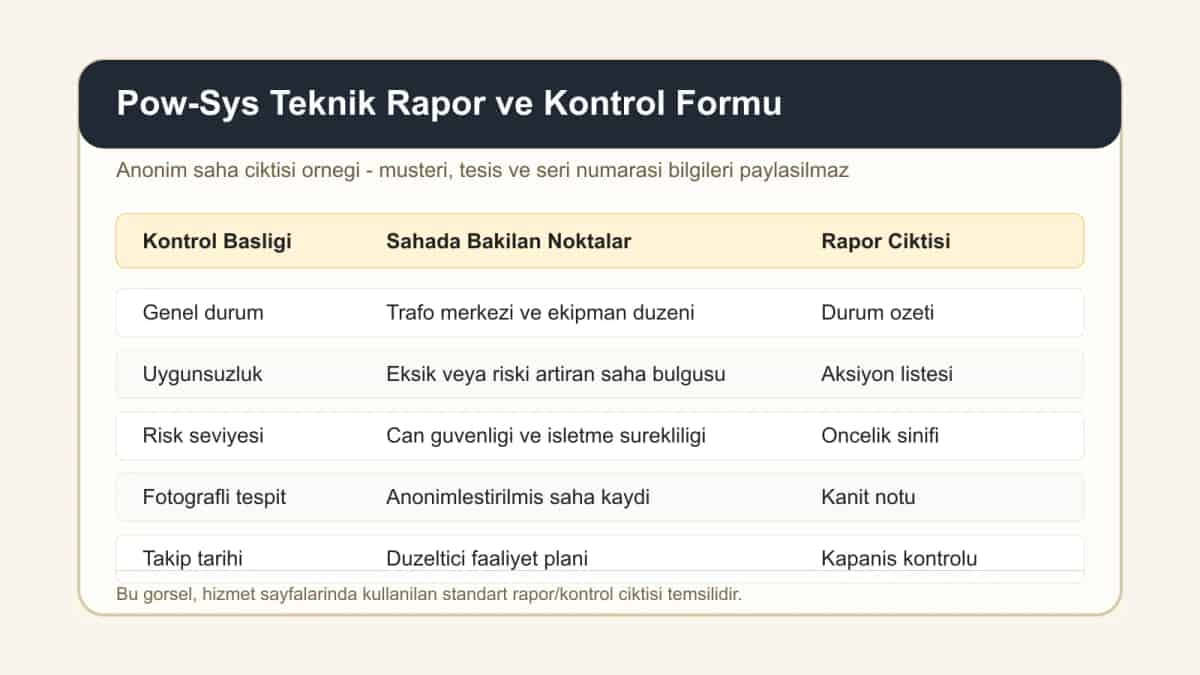
Sample Inspection Table
This table summarizes which headings are evaluated on site and which outputs may appear in the report.
| Inspected area | Checked criterion | Report output |
|---|---|---|
| Site and equipment condition | Existing equipment structure, access conditions, visible risks and operating conditions | Site inspection note and prioritized findings list |
| Document and project conformity | Single-line diagram, current project, labeling, reports and conformity with site implementation | Document conformity assessment and missing record list |
| Safety and operational risk | Life safety, equipment safety, energy continuity and maintenance access risk headings | Risk classification and corrective action recommendations |
| Measurement, test or inspection need | Measurement, test, visual inspection and technical review items required by the service scope | Measurement/test plan or inspection scope note |
| Reporting and follow-up | Nonconformity priority, follow-up date, responsibility allocation and next steps | Photo-supported report, action list and follow-up recommendation |
Included Measurements and Separately Planned Work
The grounding and continuity measurements specified for the lightning protection installation are part of this inspection. Physical improvements and additional tests are evaluated separately.
| Work item | Relationship to inspection | Scope decision |
|---|---|---|
| Grounding and continuity measurements | Performed according to the methods explained on this page and the agreed proposal. | Measurements and findings within the core inspection scope are reported. |
| Conductor, connection or earth electrode improvement | Physical remediation of a detected defect may require materials and installation. | The inspection identifies the need; implementation is quoted separately. |
| Additional examinations outside the agreed scope | Determined by site conditions, existing design and risk assessment. | Test method, outage and additional reporting requirements are clarified before the proposal. |
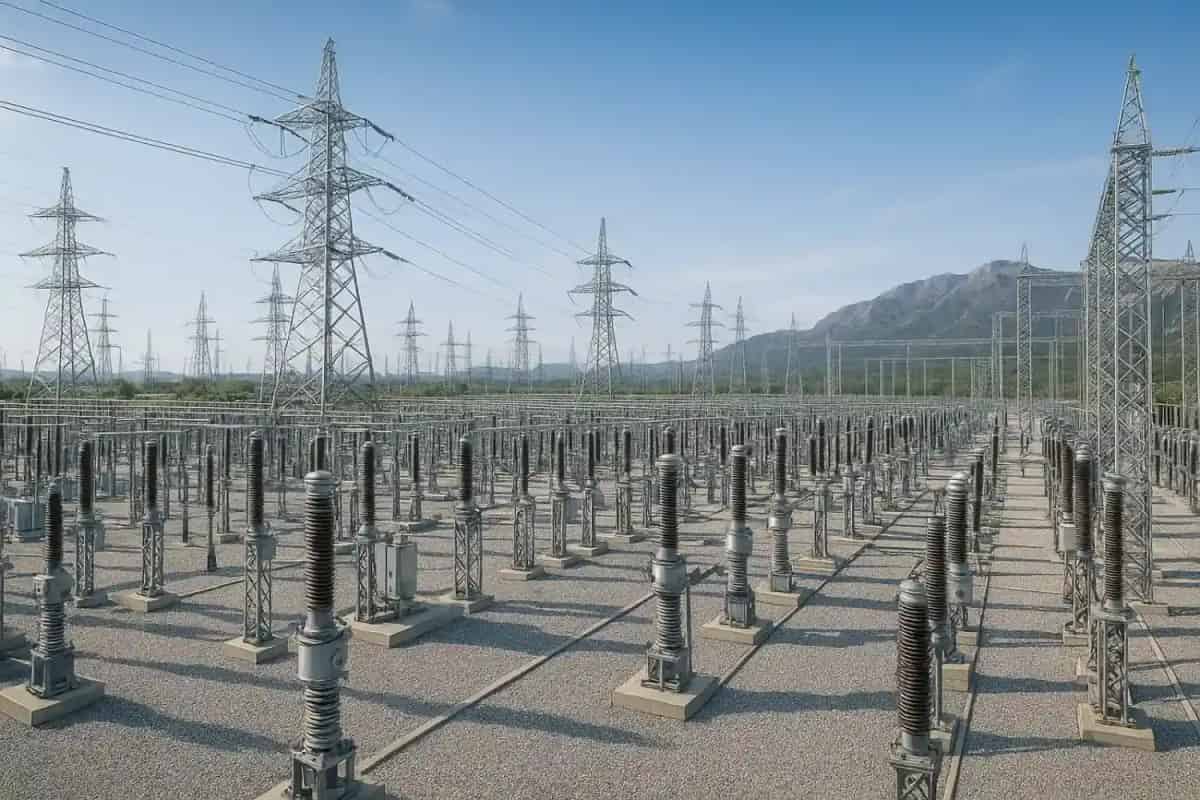
Official Regulatory Sources
- EMO certificate verification portal
Claim supported on this page: EMO registration, SMM and certificate verification transparency.
- TEDAŞ official website
Claim supported on this page: Distribution infrastructure, project/acceptance processes and technical specification context.
- TEİAŞ official website
Claim supported on this page: Transmission system, connection and high-voltage infrastructure context.
- Electrical High Current Installations Regulation
Claim supported on this page: Installation, operation, maintenance and safety of high-current electrical installations.
Frequently Asked Questions
What is lightning protection periodic inspection? Which equipment does it cover?
Lightning protection periodic inspection is the visual examination and electrical testing of a building's lightning protection installation, including the lightning rod or air terminals, air-termination network, down conductors, test clamps, ring or local earth electrodes, lightning protection grounding bars, equipotential bonding and related surge protective devices, at defined intervals. During the inspection, both mechanical integrity and grounding resistance-continuity are evaluated; results are documented as an official lightning protection periodic inspection report and grounding measurement report.
What is the lightning protection periodic inspection interval? How often should measurements be performed?
For lightning protection installations, the maximum periodic inspection interval is generally accepted as one year in practice. Therefore, lightning protection periodic inspection and grounding measurements should be performed at least once a year in workplaces as a basic occupational health and safety requirement. In facilities with high corrosion risk, coastal conditions, chemical exposure or explosive atmospheres, more frequent inspection intervals may be required according to manufacturer recommendations and risk analysis.
How is lightning protection measurement performed? How is grounding resistance tested?
Lightning protection measurement is the testing of the earth resistance of the lightning protection grounding system and the continuity of down conductors. Usually, the grounding resistance of each down conductor is measured separately with an earth tester by using the three-point method and the 62% rule; if there is a ring earth electrode, the total earth resistance is also evaluated. Where suitable, clamp-meter measurement can be made without disconnecting the circuit. The results are interpreted according to the Regulation on Grounding in Electrical Installations, TS EN 62305 and the relevant project specifications.
How many ohms should lightning protection grounding resistance be?
There is no single fixed value valid for all facilities. The permitted maximum value may vary according to building type, lightning protection class, grounding arrangement and the lightning current path foreseen in the project. In many projects, values of 5 ohms or below are targeted; however, lower or higher limits may also be defined in technical specifications. The important point is to have a grounding design and measurement results that safely conduct lightning current to earth and prevent dangerous step-touch voltages inside the facility.
Who performs lightning protection periodic inspection? Who is authorized?
Lightning protection periodic inspection and measurement must be performed by electrical / electrical-electronics engineers with the qualifications specified in the Regulation on Health and Safety Conditions in the Use of Work Equipment or Type A inspection bodies accredited by TURKAK under TS EN ISO/IEC 17020. The persons or organizations performing the inspection must know the Regulation on Grounding in Electrical Installations, TS EN 62305 and the relevant standards, use test devices with current calibration and issue a signed report accepted in official audits.
Are lightning protection periodic inspection and grounding periodic inspection the same thing?
No. Lightning protection periodic inspection covers the inspection and tests of the lightning protection installation, such as lightning rod, Faraday cage, down conductors and lightning protection grounding. Grounding installation periodic inspection includes panel and machine body grounding, main grounding bar, foundation and ring earth electrodes, internal installation grounding bars and equipotential bars. The two inspections are related and ideally should be performed in the same period; however, in reporting they are generally arranged under separate headings.