
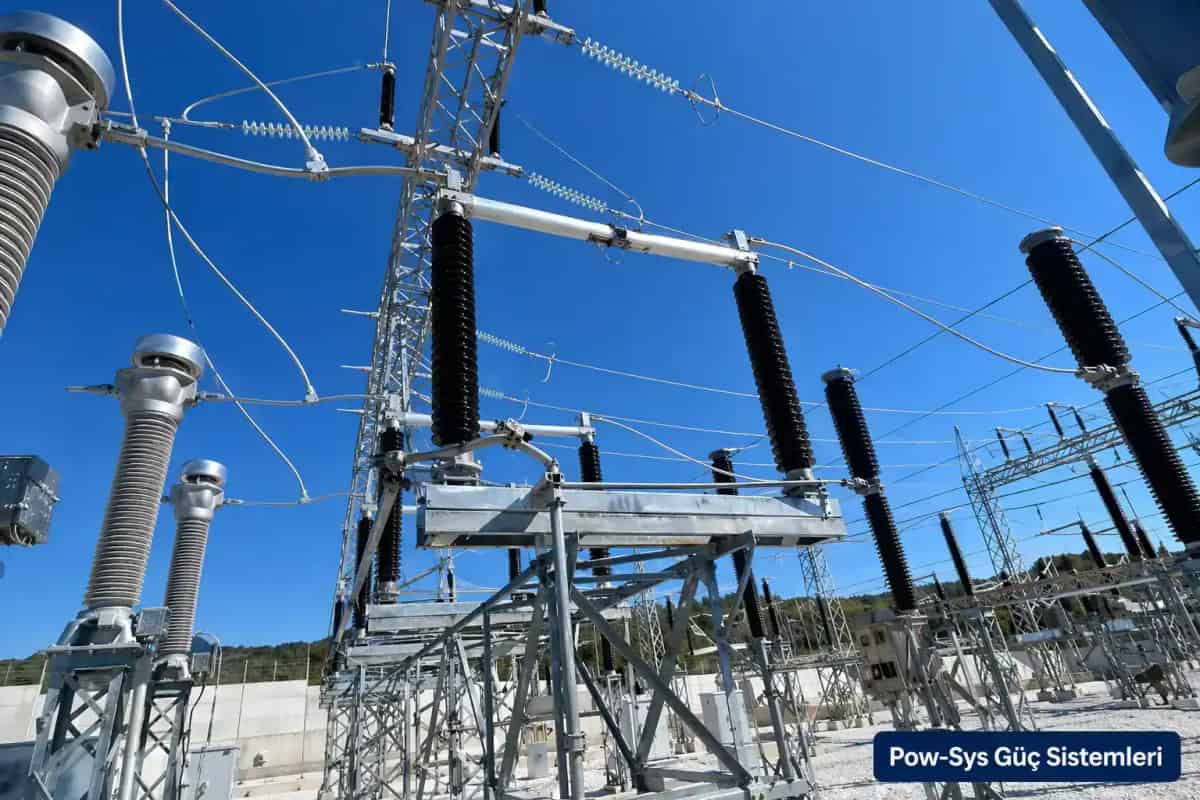
Summary Highlights
- What a disconnector is: its basic definition and duty in power systems
- What a disconnector does: providing visible and safe isolation during maintenance and operation
- Disconnector operating principle: physical separation in open position, interlock logic and relationship with grounding
- Disconnector types: MV disconnector, earthing switch, indoor and outdoor disconnectors and the difference from a load break switch
- Disconnector selection and use: rated voltage, rated current, short-time withstand, mounting structure and safety interlock arrangement
Article Details
A disconnector is switching equipment used in electrical power systems to safely separate one circuit section from another and to create a visible isolation distance in the open position. This equipment is indispensable especially for maintenance and operational safety. In short, the answer to what a disconnector is: it is a switching device that physically separates energy safely and allows personnel to visually verify that the line is truly isolated.
The most accurate answer to what a disconnector does is not load interruption but safe isolation. If maintenance will be performed on a line, a transformer cubicle will be taken out of service, or a busbar section will be prepared for safe work, the disconnector physically separates the relevant part of the circuit from the grid. This allows maintenance personnel to rely not only on measurement but also on the separation distance created by the visible open contact gap. This feature is one of the foundations of work safety in MV and HV installations.
The operating principle of a disconnector is quite clear. In the closed position, the conductive path is continuous and the system is energized. When an opening command is given, the moving contacts of the disconnector separate from the fixed contacts and a visible gap is formed in the circuit. This gap is not only a theoretical interruption; it is a genuinely observable isolation distance. Therefore, disconnectors have a different function from circuit breakers in terms of maintenance safety. A circuit breaker can interrupt current, but a disconnector provides safe and visible isolation in the circuit.
The most important point here is that a conventional disconnector is not designed for opening and closing under load in the classic sense. Standard disconnectors are mostly operated under no-load conditions. In other words, no current should be flowing in the circuit before the disconnector is opened. This is why a disconnector and a circuit breaker are not the same equipment. A circuit breaker can interrupt load current and, under defined conditions, short-circuit current; a disconnector is mainly used to provide safe isolation in a circuit that is not carrying current. This distinction is one of the most important operating rules in the field.
If opening and closing under load is required, a conventional disconnector is not the right equipment; a load break switch or, where appropriate, a circuit breaker should be considered. A load break switch can open and close normal operating currents but is generally not designed to interrupt short-circuit currents like a circuit breaker. Therefore, there are functional differences between a disconnector, load break switch and circuit breaker. Confusing these three items of equipment in practice may cause both equipment damage and serious safety risks.
In MV switchgear, a disconnector is often a system component that works together with the circuit breaker, earthing switch and switchgear interlocks. Especially in metal-clad or metal-enclosed switchgear, the disconnector is an important part of the maintenance sequence. First the circuit breaker is opened, then the circuit is visibly isolated with the disconnector, and then, if necessary, the earthing switch is closed to create safe working conditions on the line. This sequence is critical for personnel safety, and the mechanical-electrical interlock systems in switchgear are generally designed according to this logic.
The earthing switch is equipment mentioned together with the conventional disconnector but different in duty. A conventional disconnector separates the circuit, while an earthing switch connects the line, whose de-energized status has been verified, to ground and helps discharge residual or induced voltages safely. Especially in MV and HV switchyards, isolation alone is not enough; grounding is also required for safe work when appropriate. Therefore, the disconnector and earthing switch are considered together, but they should not be evaluated as the same equipment.
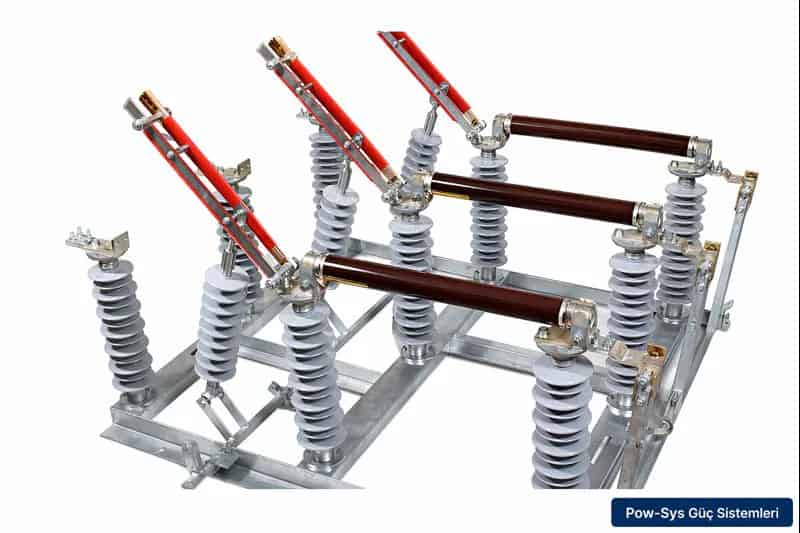
Disconnector types differ according to the installation location. Indoor disconnectors may be compact structures used in MV switchgear, while outdoor disconnectors may have mechanical arrangements such as pole-mounted, column type or center-break designs. Single-pole, three-pole, horizontal or vertical opening designs are selected according to the field application. In addition, some facilities use disconnector solutions that can be operated remotely with a motorized operating mechanism. Whether manual or motorized, however, the basic duty of the disconnector does not change: providing visible isolation.
When selecting a disconnector, not only the voltage level but also rated current, short-time withstand current, dynamic withstand, pollution level, installation environment, interlock structure and maintenance access must be evaluated together. In outdoor applications especially, climate conditions, ice load, pollution class and mechanical strength become important. In indoor switchgear, compatibility with switchgear architecture, the mechanical relationship with the circuit breaker and earthing switch, and the operating sequence are more prominent.
Disconnectors are not protection equipment; the protection function is mainly performed by the relay and circuit breaker chain. However, this does not mean that the disconnector is unimportant. On the contrary, if a disconnector is not operated correctly or its interlocks do not work properly, one of the greatest risks in the field appears. A structure operated in the wrong sequence, forced to open under load or working incompatibly with the earthing switch may harm both personnel and equipment. Therefore, disconnector operation logic must be supported by clear field procedures.
In maintenance and field applications, the contact structure, blade mechanism, hinge points, connection surfaces, motion transmission system, motor drive mechanism if present, and position indicators of the disconnector must be evaluated together. Visually appearing open is not enough by itself; it must also be verified that the contacts have actually reached the correct position, the locks operate properly and auxiliary contact feedback is correct. Especially in older facilities, oxidation, mechanical looseness and contact surface problems may reduce disconnector performance.
The difference between a disconnector and a circuit breaker is one of the most commonly confused topics in the field. A circuit breaker opens the faulty circuit by command from the protection relay and can operate under load. A disconnector mainly provides visible isolation for maintenance safety and is mostly used under no-load operation. Therefore, it is not correct to think of a disconnector as a circuit breaker or a circuit breaker as a disconnector. For safe operation in an electrical installation, each item of equipment must be evaluated in its own role.
In summary, a disconnector is fundamental switching equipment that provides visible isolation in electrical installations, makes maintenance safety possible and plays an important role in the operating chain between the circuit breaker and the earthing switch. It is designed for safe isolation, not for opening under load. Whether indoor, outdoor, with an earthing switch or motorized, its main duty does not change. If disconnector selection, in-switchgear operating sequence, interlock structure, MV/HV field suitability and switching equipment need to be evaluated together in your facility, it is possible to proceed in an integrated way with HV/MV testing, maintenance and repair, LV/MV/HV project design and consultancy and HV operation responsibility services.
Related Blog Posts
Related Services
Frequently Asked Questions
What is a disconnector?
A disconnector is switching equipment used in electrical power systems to safely separate one circuit section from another and to create a visible isolation distance in the open position. In some field usage it is also called an isolator. Its defining feature is that, when opened, the moving contacts separate from the fixed contacts and form a genuinely observable gap in the circuit, so personnel can visually verify that the line is truly isolated rather than relying only on measurement. This makes the disconnector indispensable for maintenance and operational safety in MV and HV installations. It is designed for safe isolation, not for interrupting load current, which is why it works together with the circuit breaker and earthing switch in the operating chain of a switchgear installation.
What does a disconnector do?
A disconnector ensures that a line, a transformer cubicle or a busbar section is safely separated from the grid during maintenance and operation. Its duty is not load interruption but safe isolation: when maintenance will be performed, the disconnector physically separates the relevant part of the circuit, and maintenance personnel can rely not only on measurement but also on the separation distance created by the visible open contact gap. This visible verification is one of the foundations of work safety in MV and HV installations. In medium-voltage switchgear the disconnector is an important part of the maintenance sequence: first the circuit breaker is opened, then the circuit is visibly isolated with the disconnector, and then, if necessary, the earthing switch is closed to create safe working conditions on the line.
Can a disconnector be opened under load?
No, a conventional disconnector is not designed for opening and closing under load in the classic sense. Standard disconnectors are mostly operated under no-load conditions, which means no current should be flowing in the circuit before the disconnector is opened. This is one of the most important operating rules in the field. If opening and closing under load is required, a load break switch or, where appropriate, a circuit breaker should be considered instead: a load break switch can open and close normal operating currents, while a circuit breaker can interrupt load current and, under defined conditions, short-circuit current. Forcing a disconnector to open under load, or operating it in the wrong sequence, may harm both personnel and equipment, so the operation logic must be supported by clear field procedures.
What is the difference between a disconnector and a circuit breaker?
A circuit breaker can interrupt load current and, under defined conditions, short-circuit current; it opens the faulty circuit by command from the protection relay and can operate under load. A disconnector, by contrast, mainly provides visible isolation for maintenance safety and is mostly used under no-load operation. In other words, the circuit breaker interrupts current while the disconnector provides safe and visible separation in a circuit that is not carrying current. This is one of the most commonly confused topics in the field, and confusing the two may cause both equipment damage and serious safety risks. In practice the two work together: during the maintenance sequence in MV switchgear, first the circuit breaker is opened, then visible isolation is provided with the disconnector. Each item of equipment must be evaluated in its own role.
Are a disconnector and a load break switch the same thing?
No, they are not the same. A load break switch can open and close normal operating currents, but it is generally not designed to interrupt short-circuit currents like a circuit breaker. A conventional disconnector, on the other hand, is mostly used for no-load isolation and its main duty is to create a visible separation distance in the circuit for maintenance safety. So there are clear functional differences between a disconnector, a load break switch and a circuit breaker, even though they may look similar in the field. If opening and closing under load is required, a conventional disconnector is not the right equipment; a load break switch or, where appropriate, a circuit breaker should be considered. Confusing these three items of equipment in practice may cause both equipment damage and serious safety risks.
What is an earthing switch?
An earthing switch is equipment used to connect a line, whose de-energized status has been verified, to ground, helping discharge residual or induced voltages safely. It is often mentioned together with the conventional disconnector but its duty is different: a disconnector separates the circuit and creates visible isolation, while the earthing switch provides safe grounding of the isolated line. Especially in MV and HV switchyards, isolation alone is not enough; grounding is also required for safe work when appropriate. In the typical operating sequence of medium-voltage switchgear, first the circuit breaker is opened, then the circuit is visibly isolated with the disconnector, and then, if necessary, the earthing switch is closed to create safe working conditions on the line. The two devices are therefore considered together but should not be evaluated as the same equipment.
Why does a disconnector provide visible isolation?
Because in maintenance safety, not only the measurement result but also seeing a physically open contact gap matters. When an opening command is given, the moving contacts of the disconnector separate from the fixed contacts and a visible gap is formed in the circuit. This gap is not a theoretical interruption; it is a genuinely observable isolation distance that personnel can verify with their own eyes before starting work. This is exactly what distinguishes the disconnector from a circuit breaker in terms of maintenance safety: a circuit breaker can interrupt current, but a disconnector provides safe and visible isolation in the circuit. That visible separation distance is one of the foundations of work safety in MV and HV installations, which is why the disconnector is considered indispensable in maintenance and operational procedures.
How is a disconnector used in MV switchgear?
In MV switchgear, a disconnector generally works together with the circuit breaker, the earthing switch and the switchgear interlocks. The safe operating sequence is clear: first the circuit breaker is opened, then the circuit is visibly isolated with the disconnector, and then, if necessary, the earthing switch is closed to create safe working conditions on the line. This sequence is critical for personnel safety, and the mechanical-electrical interlock systems in metal-clad or metal-enclosed switchgear are generally designed according to this logic. If a disconnector is not operated correctly or its interlocks do not work properly, one of the greatest risks in the field appears: a structure operated in the wrong sequence, forced to open under load or working incompatibly with the earthing switch may harm both personnel and equipment.
What should be considered when selecting a disconnector?
When selecting a disconnector, not only the voltage level but also rated current, short-time withstand current, dynamic withstand, pollution level, installation environment, interlock structure and maintenance access must be evaluated together. The installation location strongly influences the requirements: in outdoor applications, climate conditions, ice load, pollution class and mechanical strength become especially important, while in indoor switchgear, compatibility with the switchgear architecture, the mechanical relationship with the circuit breaker and earthing switch, and the operating sequence are more prominent. The mechanical design must also match the field application, since single-pole, three-pole, horizontal or vertical opening arrangements are selected accordingly, and some facilities prefer motorized operating mechanisms that can be operated remotely. Whether manual or motorized, the basic duty does not change: providing visible isolation safely and reliably.
Is a disconnector protection equipment?
No, a disconnector is not protection equipment; it is mainly isolation and safe separation equipment. The protection function in an electrical installation is mainly performed by the relay and circuit breaker chain, which detects faults and interrupts the current. However, this does not mean the disconnector is unimportant. On the contrary, if a disconnector is not operated correctly or its interlocks do not work properly, one of the greatest risks in the field appears: a structure operated in the wrong sequence, forced to open under load or working incompatibly with the earthing switch may harm both personnel and equipment. So while the disconnector does not clear faults, it makes maintenance safety possible by creating a visible isolation distance, and its correct operation must be supported by clear field procedures.
What are the types of disconnectors?
Disconnector types differ mainly according to the installation location and the mechanical design. Indoor disconnectors may be compact structures used in MV switchgear, while outdoor disconnectors may have mechanical arrangements such as pole-mounted, column type or center-break designs. Single-pole, three-pole, horizontal or vertical opening designs are selected according to the field application. In addition, some facilities use disconnector solutions that can be operated remotely with a motorized operating mechanism, while others rely on manual operation. The earthing switch is related equipment that is often mentioned together with the disconnector, but its duty is grounding rather than isolation. Whether manual or motorized, indoor or outdoor, the basic duty of the disconnector does not change: providing a visible isolation distance so that maintenance work can be carried out safely in MV and HV installations.