
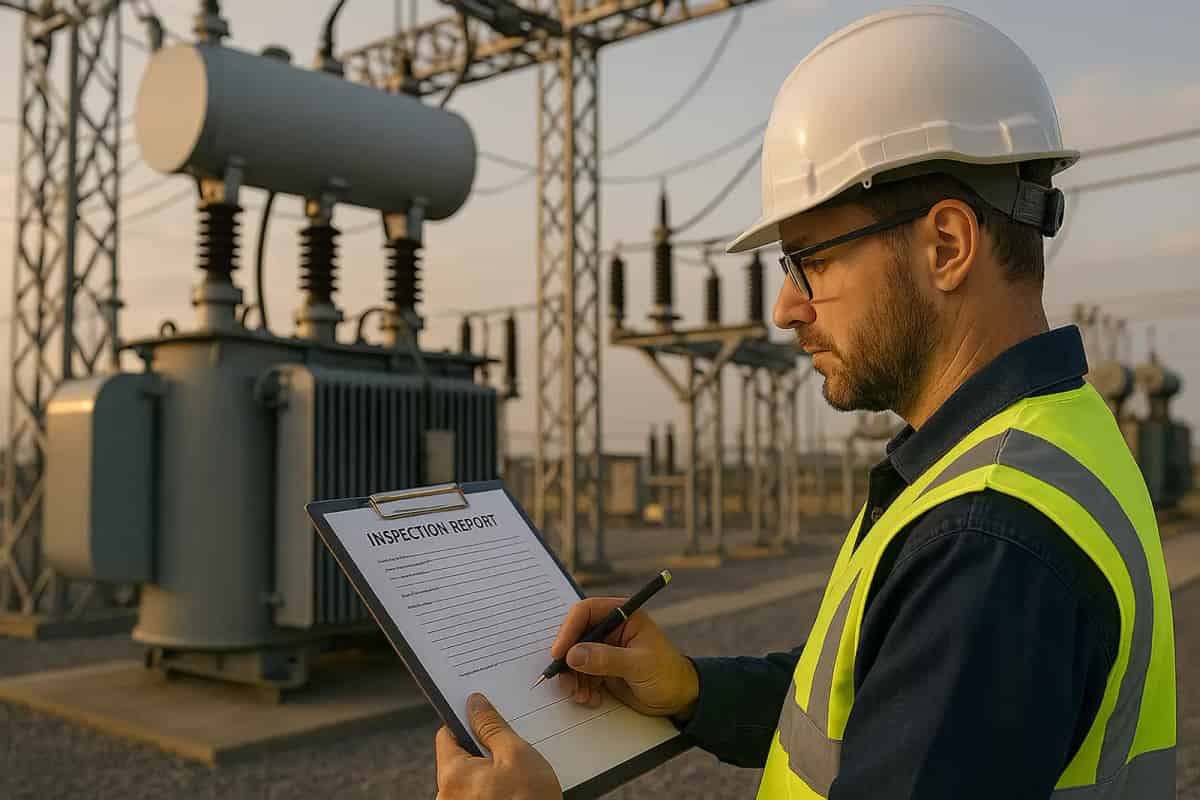
Summary Highlights
- What a transformer substation is: the basic definition of a facility where electrical energy is converted, protected and distributed
- What a transformer substation does: voltage level conversion, switching, protection, metering and ensuring energy continuity
- How a transformer substation works: MV/HV incoming feeder, power transformer, busbar system, switchgear equipment and LV/MV outgoing logic
- Transformer substation sections: transformer, circuit breaker, disconnector, instrument transformers, protection relays, grounding and auxiliary systems
- Transformer substation types: indoor, outdoor, AIS, GIS, prefabricated, mobile and different substation solutions according to purpose of use
Article Details
A transformer substation is an electrical facility where electrical energy is converted from one voltage level to another and where switching, protection, metering, control and distribution functions are carried out together. In short, the answer to the question of what a transformer substation is: it is an integrated system that not only converts energy but also manages and distributes it safely. Therefore, a transformer substation is not only a transformer; it is an organized infrastructure containing multiple primary and secondary pieces of equipment.
The answer to what a transformer substation does is not only reducing or increasing voltage. A transformer substation converts the energy coming from the grid to the appropriate level, protects lines and equipment, isolates circuits when necessary, controls energy flow and distributes it to different sections according to the facility's needs. Although every transformer substation stands out with different duties on the generation, transmission, distribution and consumer side, the main purpose does not change: to operate energy safely, controllably and with continuity preserved.
When energy leaves a power plant in the electrical system, it is usually carried to higher voltage levels for transmission and then converted again at different points and reduced to distribution and end-user levels. Transformer substations are critical stops in this chain. In other words, a transformer substation is one of the backbone points of the grid. Energy is not converted here only by the transformer; it is also brought under control through the busbar system, circuit breakers, disconnectors, instrument transformers, surge arresters and protection relays.
At the heart of a transformer substation there is often a power transformer. A power transformer can convert high voltage to medium voltage or medium voltage to low voltage. However, the transformer alone is not sufficient. Circuit breakers are needed to protect the circuits entering and leaving the transformer, disconnectors for safe isolation, earthing switches for maintenance safety, current and voltage transformers for metering and relaying, surge arresters for overvoltage protection and control-protection panels for operation monitoring. For this reason, a transformer substation is not a single device; it is a group of coordinated equipment.
It is possible to explain how a transformer substation works with a simple example. Energy coming from the grid first reaches the MV or HV incoming cubicle. Here it is controlled through protection and switching equipment. Then it is converted to a new voltage level through the power transformer. On the outgoing side, energy is directed to main distribution panels, MV ring lines or different supply points. Throughout this process, measuring devices, relays and auxiliary systems monitor energy quality, fault conditions and operational safety.
Transformer substation sections can generally be considered as primary equipment and secondary systems. On the primary side, the power transformer, busbars, circuit breakers, disconnectors, instrument transformers, cable terminations and surge arresters are located. On the secondary side, protection relays, control panels, SCADA connections, auxiliary AC/DC supply systems, batteries, alarm and monitoring circuits are located. A well-designed transformer substation operates these two worlds in harmony with each other.
Transformer substations can be installed in different structures according to the place of use and voltage level. Indoor transformer substations are generally installed inside buildings or compact cubicle structures. Outdoor substations can be created in open yards, on pole structures or with open switchgear arrangements. In addition, there are different applications such as AIS solutions using air insulated switchgear, GIS solutions using gas insulated switchgear, hybrid substations, prefabricated substations, mobile substations and micro transformer substations. Selection is made according to area, safety, environmental conditions and operational needs.
Consumer transformer substations used in industrial facilities are often structures that convert from MV to LV. In these substations, MV incoming cubicles, transformer protection cubicles, metering cubicles, power factor correction arrangement, main low-voltage panel and, when necessary, generator connections may be present together. In large facilities, multiple transformers, ring supply structure, redundancy scenario and load sharing may also be involved. Therefore, transformer substation design is directly related to the facility's power requirement, redundancy expectation and growth plan.
For a transformer substation to be considered safe, it is not enough for only the electrical equipment to be of good quality. The grounding system, equipotential connections, connection of metal bodies to the common grounding point, proper grounding of cable screens and safe inclusion of door and panel bodies in the system are required. Especially in indoor substations, grounding infrastructure is at least as critical a design element as primary equipment for personnel safety.
The concepts of transformer substation and switching substation are sometimes confused. Every transformer substation may include a switching function; however, every switching substation does not necessarily include a power transformer. If the main function in the substation is energy conversion, the transformer substation concept comes to the forefront. If the emphasis is on busbar, line, circuit breaker and routing functions, the term switching substation can be used. In practice, these two structures are often intertwined, but from an engineering perspective it is important which function is dominant.
When selecting and designing a transformer substation, rated powers, short-circuit levels, internal auxiliary supply, ventilation, fire safety, ease of access, maintenance area, cubicle type, transformer cooling structure, grounding resistance and protection coordination should be evaluated together. An incorrectly sized substation may create both operational limitations and safety risk in the future. Therefore, a transformer substation is not only a room or yard to be installed, but a system solution that requires detailed engineering.
From an operational perspective, a transformer substation is a live infrastructure that requires regular inspection and periodic maintenance. Transformer tests, circuit breaker maintenance, disconnector and earthing switch checks, instrument transformer verifications, thermal camera inspections, grounding checks and protection relay tests should be carried out with defined programs. Because the failure of any critical equipment inside the substation becomes not only a device problem but a problem affecting the energy continuity of the entire facility.
In summary, a transformer substation is a multi-component electrical facility established for the safe conversion, routing, protection and distribution of electrical energy. Although it contains a transformer, what determines its value is the correct operation of all equipment together. Regardless of whether it is indoor, outdoor, AIS, GIS, prefabricated or mobile, a good transformer substation becomes reliable with correct project design, correct equipment selection, solid grounding and regular operating discipline. If a new transformer substation installation, revision of an existing substation, MV/HV suitability assessment or operation processes need to be handled together in your facility, it is possible to proceed in an integrated way with HV/MV testing, maintenance and repair, LV/MV/HV project design and consultancy on the project side, transformer maintenance and testing on the transformer side and HV operation responsibility services in operation processes.
Related Blog Posts
Related Services
Frequently Asked Questions
What is a transformer substation?
A transformer substation is an electrical facility where electrical energy is converted from one voltage level to another and where switching, protection, metering, control and distribution functions are carried out together. It is an integrated system that not only converts energy but also manages and distributes it safely, which is why it is far more than a single transformer: it is an organized infrastructure containing multiple primary and secondary pieces of equipment, from busbars, circuit breakers and disconnectors to instrument transformers, surge arresters and protection relays. In the electrical grid, transformer substations are critical stops in the chain that carries energy from power plants at high voltage down to distribution and end-user levels, making them some of the backbone points of the whole system.
What does a transformer substation do?
A transformer substation converts the energy coming from the grid to the appropriate voltage level, protects lines and equipment, isolates circuits when necessary, controls energy flow and distributes electricity to different sections according to the facility's needs. Its role is therefore much wider than simply reducing or increasing voltage. Depending on whether it serves the generation, transmission, distribution or consumer side, each substation stands out with different duties, but the main purpose does not change: operating energy safely, controllably and with continuity preserved. Throughout this process, measuring devices, protection relays and auxiliary systems monitor energy quality, fault conditions and operational safety, so the substation acts as the point where energy is not only transformed but actively managed on its way to main distribution panels, MV ring lines or other supply points.
Does a transformer substation consist only of a transformer?
No, a transformer substation consists of much more than a transformer. Although a power transformer is often at its heart, the transformer alone is not sufficient. Circuit breakers are needed to protect the circuits entering and leaving the transformer, disconnectors for safe isolation, earthing switches for maintenance safety, current and voltage transformers for metering and relaying, surge arresters for overvoltage protection and control-protection panels for operation monitoring. The equipment is generally grouped into two worlds: the primary side, with the power transformer, busbars, circuit breakers, disconnectors, instrument transformers, cable terminations and surge arresters, and the secondary side, with protection relays, control panels, SCADA connections, auxiliary AC/DC supply systems, batteries and alarm and monitoring circuits. A well-designed substation operates these two worlds in harmony.
How does a transformer substation work?
A transformer substation works as a controlled path for energy. Energy coming from the grid first reaches the MV or HV incoming cubicle, where it is controlled through protection and switching equipment. It is then converted to a new voltage level through the power transformer. On the outgoing side, the energy is directed to main distribution panels, MV ring lines or different supply points, depending on the facility's structure. Throughout this process, measuring devices, relays and auxiliary systems continuously monitor energy quality, fault conditions and operational safety, so problems can be detected and faulty circuits isolated. In consumer substations in industrial facilities, this chain often includes MV incoming cubicles, transformer protection cubicles, metering cubicles, a power factor correction arrangement, the main low-voltage panel and, when necessary, generator connections.
What is the difference between an indoor transformer substation and an outdoor transformer substation?
The difference lies in where and how the substation is installed. Indoor transformer substations are generally installed inside buildings or compact cubicle structures, while outdoor substations are created in open yards, on pole structures or with open switchgear arrangements designed for open-air conditions. The selection between them is made according to available area, safety requirements, environmental conditions, operational needs and maintenance access. Beyond this basic split, there are further variations such as AIS solutions using air insulated switchgear, GIS solutions using gas insulated switchgear, hybrid substations, prefabricated substations, mobile substations and micro transformer substations. In indoor substations in particular, the grounding infrastructure is at least as critical a design element as the primary equipment for personnel safety, and factors such as ventilation, fire safety and maintenance area must be evaluated during design.
What do AIS and GIS transformer substations mean?
AIS refers to a substation arrangement using air insulated switchgear, while GIS refers to an arrangement using gas insulated switchgear. Both solutions can be applied in transformer substations, and they sit alongside other structural options such as hybrid substations, prefabricated substations, mobile substations and micro transformer substations. The selection between AIS and GIS is made according to project conditions: available area, safety, environmental conditions and operational needs all play a role, just as they do when choosing between indoor and outdoor installation. Whichever technology is chosen, the substation still contains the same functional building blocks, including the power transformer, busbar system, circuit breakers, disconnectors, instrument transformers, surge arresters and protection relays, and it still requires proper grounding, protection coordination and regular maintenance to operate reliably.
Are a transformer substation and a switching substation the same thing?
Not exactly, and the distinction depends on which function is dominant. Every transformer substation may include a switching function, but every switching substation does not necessarily include a power transformer. If the main function of the facility is energy conversion from one voltage level to another, the transformer substation concept comes to the forefront. If the emphasis is instead on busbar, line, circuit breaker and routing functions, the term switching substation can be used. In practice these two structures are often intertwined, and the same site may perform conversion, switching, protection and metering together. From an engineering perspective, however, it is important to identify the dominant function, because it shapes the equipment list, the protection approach and how the facility is treated in design and operation.
Which safety elements are important in a transformer substation?
The most important safety elements of a transformer substation are the grounding system and equipotential connections, together with protection relays, suitable interlocks, correct equipment selection, fire and ventilation arrangements and safe operating procedures. For a substation to be considered safe, good electrical equipment alone is not enough: metal bodies must be connected to the common grounding point, cable screens must be properly grounded, and door and panel bodies must be safely included in the grounding system. Especially in indoor substations, this grounding infrastructure is at least as critical a design element as the primary equipment for personnel safety. Alongside design measures, operational discipline matters too, since regular inspections, periodic maintenance and protection relay tests are what keep these safety layers effective throughout the life of the facility.
Where are transformer substations used?
Transformer substations are widely used in power generation facilities, industrial organizations, organized industrial zones, large commercial buildings, infrastructure projects and electricity distribution and transmission systems. In the grid, they are the critical stops where energy leaving a power plant is raised for transmission and then converted again at different points down to distribution and end-user levels. On the consumer side, industrial facilities typically use substations that convert from MV to LV, containing MV incoming cubicles, transformer protection cubicles, metering cubicles, power factor correction, the main low-voltage panel and, when necessary, generator connections. In large facilities, multiple transformers, a ring supply structure, redundancy scenarios and load sharing may also be involved, so the substation design follows the facility's power requirement, redundancy expectation and growth plan.
What should be considered when selecting a transformer substation?
When selecting a transformer substation, the power requirement, voltage level, short-circuit levels, redundancy need, substation type, grounding structure, protection coordination, maintenance access and environmental conditions should all be evaluated together. Design details such as rated powers, internal auxiliary supply, ventilation, fire safety, ease of access, maintenance area, cubicle type, transformer cooling structure and grounding resistance also belong in this assessment. An incorrectly sized substation may create both operational limitations and safety risks in the future, which is why a substation is not simply a room or a yard to be installed but a system solution requiring detailed engineering. The design should also reflect the facility's growth plan, since decisions about multiple transformers, ring supply and load sharing are much easier to make at the project stage than afterwards.