
Summary Highlights
- What an insulator is: basic equipment that performs electrical insulation and mechanical support duties together
- What an insulator does: separating the conductor from the support structure, preventing leakage current and enabling safe operation
- Insulator operating principle: relationship between high dielectric strength, surface creepage path and mechanical strength
- Insulator types: porcelain, glass and composite; pin, suspension, line post and station post types
- Insulator selection and use: voltage level, pollution condition, creepage distance, mechanical load and mounting structure
Article Details
An insulator is an insulating component in electrical systems that carries energized conductors or live parts while allowing these parts to operate safely without contacting poles, towers, switchgear enclosures or other grounded metal structures. In short, the answer to what an insulator is: it is basic power system equipment that performs electrical separation and mechanical support duties at the same time. Therefore, an insulator is not only an insulating material; it is also an engineering component that carries mechanical loads in the field.
Answering what an insulator does with only the word insulation would be insufficient. The duty of insulators is not only to prevent current from flowing through unwanted paths. They also keep the conductor in the correct position and support the system under external effects such as wind, vibration, short-circuit forces and mechanical tension. Especially on overhead lines, in switchyards, MV switchgear and busbar systems, both the electrical and mechanical roles of the insulator are extremely critical.
The operating principle of an insulator is based on a material with high electrical resistance creating a safe insulation distance between the conductor and the grounded part. However, this is not limited to preventing current through the bulk of the material. Leakage currents that may form on the insulator surface can become serious because of pollution, humidity, salt, industrial contamination and environmental effects. Therefore, in a good insulator design, not only material quality but also surface profile, shed structure and creepage distance are very important.
In electrical systems, insulators are used both indoors and outdoors. Insulators used on overhead lines to separate conductors from towers and station post insulators that support busbars and equipment in transformer substations operate with the same basic logic, but their design requirements may differ. In some applications, tensile strength is the priority, while in others polluted-environment performance, use in limited space or high dielectric strength may be more important.
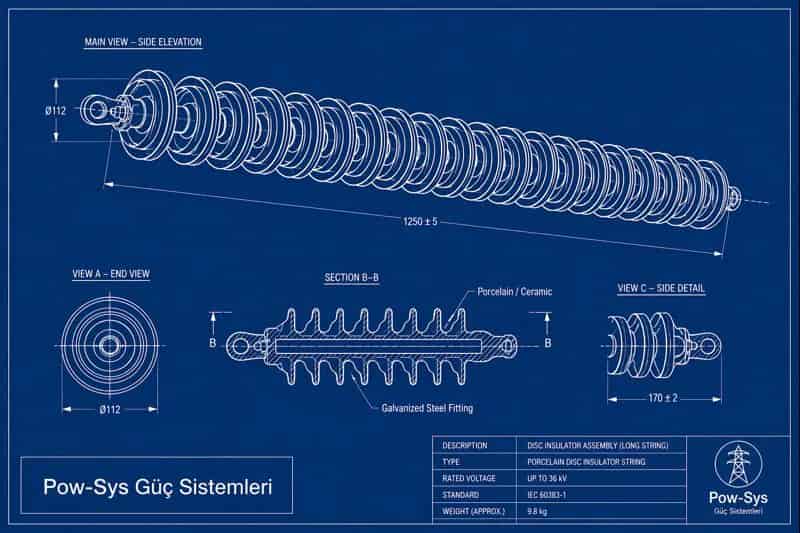
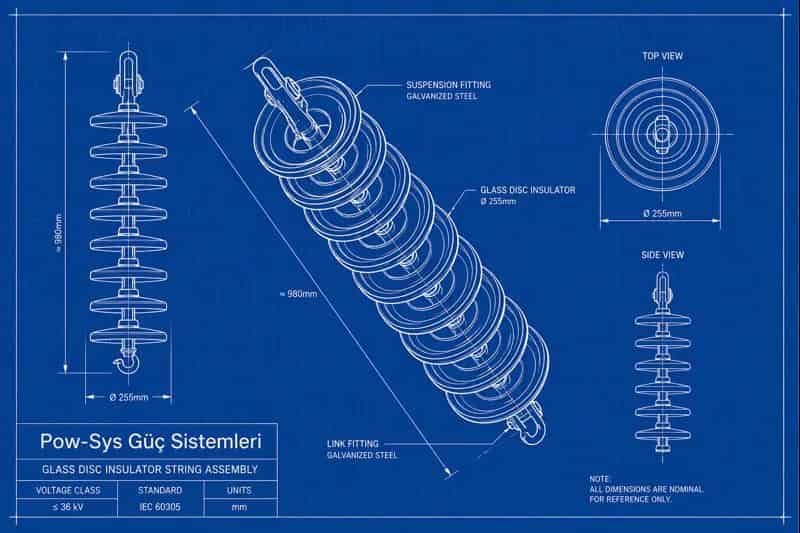
When insulator types are evaluated by material, the most common groups are porcelain insulators, glass insulators and composite or polymer insulators. Porcelain insulators are classic solutions used for many years and are preferred in many applications because of their robust structure. Glass insulators are used especially in some overhead line applications and may offer advantages such as easier visual inspection. Composite insulators stand out in many modern applications because of properties such as lighter construction, hydrophobic surface and good surface behavior in polluted environments.
Structurally, pin insulators, suspension insulators, line post insulators, station post insulators and different designs for special applications are seen. Pin insulators are mostly encountered at certain distribution levels and pole-top solutions, while suspension insulators are used to suspend conductors on transmission and distribution lines. Station post insulators perform important duties in transformer substations to support disconnectors, busbars and various switchgear equipment.
One of the main reasons composite insulators have become widespread is their low weight and environmental performance. The silicone-based outer surface may help reduce surface leakage currents in polluted and humid conditions thanks to its water-repellent behavior. On the other hand, porcelain insulators still have a very wide application area because of their high mechanical strength, long service experience and predictable behavior under different field conditions. Therefore, which insulator type is more suitable must be evaluated according to the application conditions.
When selecting an insulator, voltage level alone is not considered. Creepage distance, pollution level, altitude, mechanical tensile or compressive load, indoor or outdoor conditions, UV effect, risk of breakage, ease of maintenance and mounting form must be evaluated together. Especially for insulators used in open fields, environmental pollution and humidity behavior are very important, while in transformer substations and in-switchgear applications, equipment layout and mechanical support requirements may be more prominent.
Support or post insulators used in switching equipment are used not only to provide insulation but also to safely carry circuit breakers, disconnectors, busbars and connection parts. Therefore, insulator selection is related not only to the electrical withstand of the relevant equipment but also to mechanical movement and operational loads. Insulators used especially in disconnector and earthing switch mechanisms must withstand the forces that occur during operation.
An insulator and a bushing are not the same thing, although they are often confused. An insulator is generally an element that supports a conductor and provides insulation. A bushing is a special insulating component that allows an energized conductor to pass safely through a tank, panel or enclosure wall. In other words, every bushing is a type of insulation solution, but every insulator is not a bushing. This distinction is especially important in transformers and switching equipment.
Field performance of insulators is not determined only by initial installation quality. Over time, contamination, UV aging, mechanical fatigue, corrosion, surface cracks and mounting looseness may affect performance. Therefore, whether on an overhead line, in MV switchgear or in a transformer substation, insulators should be considered part of the maintenance program. An insulator failure is not only a local component problem; it can directly affect system safety and energy continuity.
In summary, an insulator is a basic power infrastructure component that safely supports conductors in electrical systems, separates them from grounded structures and helps prevent leakage current. It may be made of porcelain, glass or composite material and may be used in different types such as suspension, pin, line post or station post. A correctly selected insulator provides not only electrical insulation but also long-term mechanical reliability. If MV/HV equipment, busbar systems, disconnector structures and insulator selections need to be evaluated together in your facility, it is possible to proceed in an integrated way with HV/MV testing, maintenance and repair, LV/MV/HV project design and consultancy and HV operation responsibility services.
Related Blog Posts
Related Services
Frequently Asked Questions
What is an insulator?
An insulator is an insulating component in electrical systems that carries energized conductors or live parts while allowing them to operate safely without contacting poles, towers, switchgear enclosures or other grounded metal structures. It is basic power system equipment that performs electrical separation and mechanical support duties at the same time. This double role is important: an insulator is not only an insulating material but also an engineering component that carries real mechanical loads in the field, keeping the conductor in the correct position under wind, vibration, short-circuit forces and mechanical tension. Insulators are found on overhead lines, in switchyards, in MV switchgear and on busbar systems, and they may be made of porcelain, glass or composite material in forms such as pin, suspension, line post or station post types.
What does an insulator do?
An insulator prevents current from flowing through unwanted paths, insulates the conductor from the support structure and at the same time performs a mechanical support duty. Answering with only the word insulation would be insufficient: insulators also keep the conductor in the correct position and support the system under external effects such as wind, vibration, short-circuit forces and mechanical tension. On overhead lines they separate conductors from towers, while in transformer substations station post insulators support busbars, disconnectors and various switchgear equipment. In switching equipment, support insulators must also withstand the forces that occur during operation of disconnector and earthing switch mechanisms. Both the electrical and the mechanical role are therefore extremely critical: a correctly selected insulator provides not only electrical insulation but also long-term mechanical reliability for the whole installation.
How does an insulator work?
An insulator works by placing a material with high electrical resistance between the conductor and the grounded part, creating a safe insulation distance. However, performance is not limited to preventing current through the bulk of the material. Leakage currents that may form on the insulator surface can become serious because of pollution, humidity, salt, industrial contamination and other environmental effects. Therefore, in a good insulator design, not only material quality but also the surface profile, the shed structure and the creepage distance are very important. The same basic logic applies indoors and outdoors: insulators separating conductors from towers on overhead lines and station post insulators supporting busbars in transformer substations operate the same way, although their design requirements may differ in tensile strength, polluted-environment performance, space constraints or dielectric strength.
What are the types of insulators?
By material, the most common groups are porcelain insulators, glass insulators and composite or polymer insulators. Porcelain insulators are classic solutions used for many years and are preferred in many applications because of their robust structure. Glass insulators are used especially in some overhead line applications and may offer advantages such as easier visual inspection. Composite insulators stand out in modern applications thanks to lighter construction, a hydrophobic surface and good surface behavior in polluted environments. By structure, pin insulators, suspension insulators, line post insulators, station post insulators and special designs are seen. Pin insulators are mostly encountered at certain distribution levels and pole-top solutions, suspension insulators suspend conductors on transmission and distribution lines, and station post insulators support disconnectors, busbars and switchgear equipment in transformer substations.
What is the advantage of a composite insulator?
The main advantages of composite insulators are low weight and environmental performance, which are the main reasons they have become widespread. Their silicone-based outer surface behaves in a water-repellent, hydrophobic way, which may help reduce surface leakage currents in polluted and humid conditions. This good surface behavior makes composite insulators stand out in many modern applications, particularly where environmental pollution would stress a conventional surface. Their lighter construction also makes handling and mounting easier compared with heavier alternatives. That said, composite is not automatically the right answer everywhere: porcelain insulators still have a very wide application area because of their high mechanical strength, long service experience and predictable behavior under different field conditions. Which insulator type is more suitable must always be evaluated according to the actual application conditions of the installation.
Why are porcelain insulators still used?
Porcelain insulators are still widely preferred because they offer high mechanical strength, long service experience and predictable behavior under different field conditions. They are classic solutions that have been used for many years, and their robust structure makes them suitable for a wide range of applications, from overhead lines to transformer substations. While composite insulators have gained ground thanks to lighter construction and good surface behavior in polluted environments, that does not make porcelain obsolete: in many installations the priority is mechanical reliability and a well-understood, proven track record, which porcelain provides. The correct choice between porcelain, glass and composite always depends on the application conditions, including creepage distance, pollution level, mechanical load, indoor or outdoor use and mounting form, rather than on any single material being universally better.
Are an insulator and a bushing the same thing?
No, an insulator and a bushing are not the same thing, although they are often confused. An insulator is generally an element that supports a conductor and provides insulation, keeping energized parts safely separated from grounded structures such as poles, towers or switchgear enclosures. A bushing is a special insulating component that allows an energized conductor to pass safely through a tank, panel or enclosure wall. In other words, every bushing is a type of insulation solution, but not every insulator is a bushing. This distinction is especially important in transformers and switching equipment, where conductors must physically enter enclosed housings. Understanding the difference matters in practice, because the two components solve different problems: one supports and separates a conductor in an open arrangement, while the other manages the safe wall penetration of a live conductor.
What should be considered when selecting an insulator?
Voltage level alone is never enough when selecting an insulator. Creepage distance, pollution level, altitude, mechanical tensile or compressive load, indoor or outdoor conditions, UV effect, risk of breakage, ease of maintenance and mounting form must all be evaluated together. For insulators used in open fields, environmental pollution and humidity behavior are very important, while in transformer substations and in-switchgear applications, equipment layout and mechanical support requirements may be more prominent. Support or post insulators in switching equipment deserve special attention, because they safely carry circuit breakers, disconnectors, busbars and connection parts, so selection is related not only to electrical withstand but also to mechanical movement and operational loads. Insulators used in disconnector and earthing switch mechanisms in particular must withstand the forces that occur during operation.
Where are insulators used?
Insulators are used both indoors and outdoors throughout the power system. They are widely found on overhead lines, where they separate conductors from towers, and in transformer substations, where station post insulators support busbars, disconnectors and various switchgear equipment. They also appear in MV switchgear, busbar systems and switching equipment, including the mechanisms of disconnectors and earthing switches, where they must withstand operational forces in addition to providing insulation. Although the basic operating logic is the same everywhere, design requirements differ by location: in some applications tensile strength is the priority, in others polluted-environment performance, use in limited space or high dielectric strength may be more important. This is why the same facility can contain several different insulator types, each selected for its own electrical and mechanical duty.
Why should insulators be included in the maintenance program?
Because field performance is not determined only by initial installation quality. Over time, contamination, UV aging, mechanical fatigue, corrosion, surface cracks and mounting looseness may affect insulator performance, whether the insulator is on an overhead line, in MV switchgear or in a transformer substation. Surface pollution combined with humidity is particularly significant, since leakage currents that form on the insulator surface can become serious under polluted, humid, salty or industrially contaminated conditions. An insulator failure is not only a local component problem; it can directly affect system safety and energy continuity. For these reasons insulators should be treated as part of the regular maintenance program of the facility, with attention paid to surface condition, cracks, mechanical integrity and the tightness of mounting connections over the whole service life.
Why is creepage distance important for insulators?
Creepage distance is important because insulation performance is not limited to preventing current through the bulk of the insulating material. Leakage currents can form along the insulator surface, and these can become serious because of pollution, humidity, salt, industrial contamination and other environmental effects. The creepage distance, together with the surface profile and shed structure, determines how well the insulator resists this surface leakage, which is why a good insulator design considers all of them alongside material quality. Creepage distance is also a core selection criterion: it must be evaluated together with pollution level, altitude, mechanical load, indoor or outdoor conditions and mounting form. For insulators in open fields especially, environmental pollution and humidity behavior are critical, and composite insulators with hydrophobic silicone surfaces may help reduce surface leakage currents in such conditions.