
Summary Highlights
- What metal-clad switchgear is: its basic definition as a separately metal-compartmented switchgear system used in medium voltage
- What metal-clad switchgear does: providing central protection, switching, safety and maintenance convenience
- How metal-clad switchgear works: busbar, circuit breaker, metering and cable connection sections operating in separate compartments
- Difference between metal-clad and metal-enclosed: compartmentalization level, withdrawable circuit breaker structure and safety approach
- Metal-clad selection and use: voltage level, short-circuit withstand, cubicle arrangement, maintenance need and field conditions
Article Details
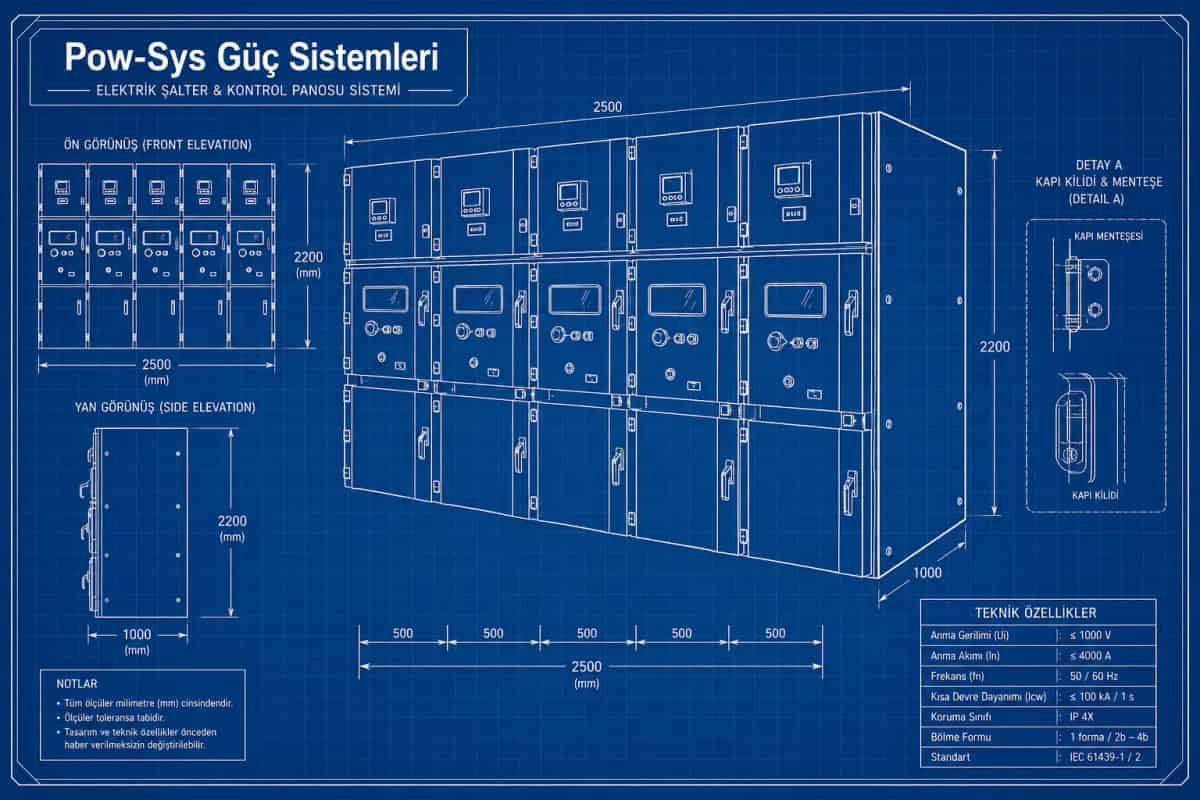
Metal-clad refers to a special switchgear structure used in medium-voltage switching systems where the main electrical components are housed in separate metal compartments. In short, the answer to what metal-clad switchgear is: it is a medium-voltage panel system designed for safety and maintenance convenience by providing physical separation between the busbar, circuit breaker, instrument transformer and cable connection sections. Because this structure offers higher compartmentalization and access control than conventional compact solutions, it is widely preferred especially in critical facilities.
The most accurate answer to what metal-clad switchgear does is not only opening and closing energy. These systems provide protection, control, measurement and safe operation of medium-voltage circuits. They also help limit the effects of a fault, provide controlled access to certain sections during maintenance and allow equipment to be taken out of service more safely. Therefore, metal-clad construction is not only a panel; it is a distribution and protection solution with a strong safety logic.
The most important feature of metal-clad systems is compartmentalization. In these structures, the main busbar compartment, circuit breaker compartment, cable connection compartment, instrument transformer compartment or auxiliary equipment sections are separated from each other by metal partitions. In this way, work or a possible problem in one compartment does not mean direct open access to other compartments. This approach significantly improves both operational safety and maintenance discipline.
To explain simply how metal-clad switchgear works: medium-voltage energy from the grid reaches the busbar system, is controlled through the circuit breaker in the relevant cubicle and is transferred to the outgoing cable or load feeder. During this process, instrument transformers, protection relays, auxiliary circuits and cable terminations perform their functions in the relevant compartments. The important difference is that every critical section is separated from the others, and this separation improves the service safety of the system.
When metal-clad construction is mentioned, a withdrawable circuit breaker system often comes to mind. In such designs, the circuit breaker can operate in different states such as service position, test position and isolated position. In this way, the circuit breaker can be moved in a controlled manner for maintenance or testing without dismantling the entire cubicle. This feature is one of the most important practical advantages of metal-clad systems and greatly improves maintenance convenience.
Metal-clad and metal-enclosed systems are often confused. Although both are metal-enclosed switchgear solutions, the main difference is the level of compartmentalization. In metal-enclosed structures, some equipment may be located in common compartments. In metal-clad construction, the concept of separate metal compartments is much more pronounced. Therefore, metal-clad solutions are evaluated as a more advanced class in terms of safety, maintenance and access control.
This structure is preferred especially in industrial facilities, power generation plants, large commercial buildings, critical infrastructure, process-dependent facilities and transformer substations. The reason is not only electrical performance but operational reliability. In places with high short-circuit levels, where outages are costly or where maintenance discipline is important, metal-clad systems provide serious advantages.
Protection systems in metal-clad panels are often relay-based. The circuit breakers used in these structures are usually medium-voltage vacuum or similar switching devices, and the protection logic works together with relays, instrument transformers and auxiliary circuits. Therefore, a metal-clad system means not only mechanical compartmentalization but also a well-designed protection and control infrastructure.
One of the safety advantages of metal-clad construction is controlled access. Access to the cable compartment, busbar compartment or circuit breaker compartment is not random. Door interlocks, mechanical locking, test positions and operating sequence are used to prevent personnel from accessing the wrong compartment at the wrong time. For this reason, metal-clad systems stand out especially in facilities requiring high safety discipline.
Arc-resistant designs are another important topic mentioned together with metal-clad systems. Not every metal-clad panel is automatically arc-resistant; however, this technology is often applied on metal-clad structures. The aim is to limit internal arc energy from being directed toward the operator and to make the effect of the event more controlled. Therefore, metal-clad and arc-resistant concepts should be evaluated without confusing them during project selection.
When selecting metal-clad switchgear, rated voltage, rated current, short-circuit breaking capacity, short-time withstand current, cubicle arrangement, feeder structure, busbar system, need for withdrawable circuit breaker, protection relay architecture and maintenance approach must be evaluated together. It is not correct to select only by looking at the number of cubicles. The metal-clad system must meet both today's loads and future operating scenarios.
In these systems, cable terminations, instrument transformers, grounding arrangement, auxiliary DC/AC supplies and secondary wiring are at least as important as the main busbar and circuit breaker. Although a metal-clad panel looks compact and orderly from the outside, multiple subsystems operate together inside it. Therefore, a good metal-clad solution consists not only of a high-quality cubicle body but of all equipment inside being designed in harmony.
In summary, metal-clad switchgear is a panel structure with separate metal compartments developed to provide safety, compartmentalization, maintenance convenience and controlled operation in medium-voltage switching systems. With its withdrawable circuit breaker arrangement, relay protection, controlled access logic and high application reliability, it is a strong solution for critical facilities. If metal-clad cubicle selection, MV panel modernization, circuit breaker-relay coordination and field operation safety need to be evaluated together in your facility, HV/MV testing, maintenance and repair and LV/MV/HV project design and consultancy services can support the technical decision process.
Related Blog Posts
- What Tests and Maintenance Are Required for Metal-Clad Switchgear?
- What Is a Power Quality Analyzer? What Does It Do, How Does It Work and What Does It Measure?
- What Is Short-Circuit Analysis? What Does It Do, How Is It Performed and Why Is It Necessary?
- What Tests and Maintenance Are Required for Surge Arresters?
Related Services
Frequently Asked Questions
What is metal-clad switchgear?
Metal-clad switchgear is a medium-voltage panel system in which the main electrical components are housed in separate metal compartments. The busbar section, circuit breaker section, instrument transformer section and cable connection section are physically separated from each other by metal partitions, a design developed specifically for safety and maintenance convenience. Because this construction offers higher compartmentalization and access control than conventional compact solutions, it is widely preferred in critical facilities. Metal-clad construction should not be understood as just a panel: it is a distribution and protection solution with a strong safety logic, usually combined with withdrawable circuit breakers, relay-based protection and controlled access features. Work or a possible problem in one compartment does not mean direct open access to the other compartments, which significantly improves both operational safety and maintenance discipline in medium-voltage installations.
What does metal-clad switchgear do?
Metal-clad switchgear provides protection, control, measurement and safe operation of medium-voltage circuits, so its duty goes well beyond opening and closing energy. It helps limit the effects of a fault, provides controlled access to specific sections during maintenance and allows equipment to be taken out of service more safely than in conventional compact panels. The compartmentalized structure means a problem in one section is contained rather than exposing the whole panel, and door interlocks, mechanical locking and defined operating sequences prevent personnel from reaching the wrong compartment at the wrong time. Together with its relay-based protection working through medium-voltage circuit breakers and instrument transformers, the metal-clad system acts as the central distribution and protection node of the facility, combining electrical performance with a disciplined safety and maintenance approach.
How does metal-clad switchgear work?
In metal-clad switchgear, medium-voltage energy from the grid reaches the busbar system, is controlled through the circuit breaker in the relevant cubicle and is transferred to the outgoing cable or load feeder. During this process, instrument transformers, protection relays, auxiliary circuits and cable terminations perform their functions in their own dedicated compartments. The defining difference from other panel types is that every critical section, including the busbar compartment, circuit breaker compartment, cable connection compartment and metering compartment, is separated from the others by metal partitions, and this separation improves the service safety of the system. In many designs the circuit breaker is withdrawable, so it can be moved between service, test and isolated positions in a controlled manner, allowing maintenance or testing without dismantling the entire cubicle while the rest of the panel keeps operating.
What is the difference between metal-clad and metal-enclosed?
Both metal-clad and metal-enclosed systems are metal-enclosed switchgear solutions, so the two terms are often confused, but the main difference is the level of compartmentalization. In metal-enclosed structures, some equipment may be located in common compartments, sharing space inside the enclosure. In metal-clad construction, the concept of separate metal compartments is much more pronounced: the busbar, circuit breaker, instrument transformer and cable connection sections each have their own metal-partitioned compartment. Because of this stricter separation, metal-clad solutions are evaluated as a more advanced class in terms of safety, maintenance and access control. Work in one compartment does not expose the others, faults are better contained and maintenance discipline is easier to enforce. When comparing offers for a project, checking the actual compartment arrangement is therefore more meaningful than relying on the label alone.
Why are withdrawable circuit breakers used in metal-clad systems?
Withdrawable circuit breakers are used because they allow the breaker to operate in different controlled states, typically the service position, the test position and the isolated position. Thanks to this arrangement, the circuit breaker can be moved in a controlled manner for maintenance or testing without dismantling the entire cubicle, which is one of the most important practical advantages of metal-clad systems. Maintenance teams can withdraw the breaker, test it safely and return it to service while the compartmentalized structure keeps the rest of the panel protected. Combined with door interlocks, mechanical locking and the defined operating sequence of the panel, the withdrawable design greatly improves both maintenance convenience and operating safety, and it is one of the features most strongly associated with metal-clad construction in the field.
Where is metal-clad switchgear used?
Metal-clad switchgear is preferred especially in industrial facilities, power generation plants, large commercial buildings, critical infrastructure, process-dependent facilities and transformer substations. The reason for this preference is not only electrical performance but operational reliability. In places with high short-circuit levels, in facilities where outages are costly and in operations where maintenance discipline is important, the compartmentalized structure, withdrawable circuit breakers and controlled access logic of metal-clad systems provide serious advantages. A process plant, for example, benefits from being able to withdraw and test a breaker without a wide outage, while critical infrastructure benefits from the containment that separate metal compartments provide during a fault. Wherever high reliability and strict safety discipline are required at medium-voltage distribution points, metal-clad construction is one of the strongest candidates.
Is every metal-clad panel arc-resistant?
No, not every metal-clad panel is automatically arc-resistant. Arc resistance is a separate design feature: its aim is to limit internal arc energy from being directed toward the operator and to make the effect of such an event more controlled. This technology is often applied on metal-clad structures, which is why the two concepts are frequently mentioned together, but compartmentalization by itself does not guarantee arc-resistant behavior. During project selection, the metal-clad and arc-resistant concepts should therefore be evaluated separately and without confusing them: one describes how the panel is compartmentalized into separate metal sections, the other describes how the design manages internal arc events. A facility that needs both properties must specify both explicitly, and the panel documentation should confirm each capability rather than assuming one implies the other.
What should be considered when selecting metal-clad switchgear?
When selecting metal-clad switchgear, rated voltage, rated current, short-circuit breaking capacity, short-time withstand current, cubicle arrangement, feeder structure, busbar system, the need for withdrawable circuit breakers, the protection relay architecture and the maintenance approach must all be evaluated together. Selecting only by the number of cubicles is not correct: the system must meet both today's loads and future operating scenarios. The equipment inside the panel matters as much as the enclosure, because cable terminations, instrument transformers, the grounding arrangement, auxiliary DC and AC supplies and secondary wiring are at least as important as the main busbar and circuit breaker. A good metal-clad solution consists not only of a high-quality cubicle body but of all internal subsystems designed in harmony, so the selection should be treated as a complete engineering exercise.
Why are relays important in metal-clad panels?
Relays are important because protection in metal-clad systems is mostly relay-based: the protection logic works through relays cooperating with medium-voltage circuit breakers, typically vacuum or similar switching devices, and with instrument transformers and auxiliary circuits. The mechanical compartmentalization of the panel protects people and contains faults, but it is the relay architecture that actually detects abnormal conditions and commands the breaker to clear them. A metal-clad system therefore means not only separate metal compartments but also a well-designed protection and control infrastructure. Panel safety depends on this protection logic as much as on the mechanical construction, which is why the relay architecture is one of the core selection criteria and why the secondary wiring, instrument transformers and auxiliary supplies feeding the relays must be engineered with the same care as the primary equipment.
What is the greatest advantage of a metal-clad system?
The greatest advantage of a metal-clad system is that it offers safety, maintenance convenience and controlled access together through its separate metal compartment structure. Because the busbar, circuit breaker, instrument transformer and cable sections are physically partitioned, work or a problem in one compartment does not expose the others, which increases operating reliability in critical facilities. The withdrawable circuit breaker arrangement adds practical value by allowing service, test and isolated positions without dismantling the cubicle, and door interlocks with mechanical locking enforce the correct operating sequence. For facilities with high short-circuit levels, costly outages or strict maintenance discipline, this combination of compartmentalization, relay protection and access control is exactly what makes metal-clad construction stand out from conventional compact panel solutions and justifies its use in critical infrastructure.