
Summary Highlights
- Six core parameters that set the fee: transformer power (kVA), number of transformers, MV/LV switchgear count, facility size, visit frequency and reporting scope
- What the EMO minimum fee tariff is and how it defines the price floor
- How transformer operation responsibility fees relate to the high voltage operation responsibility cost
- How extra services such as grounding measurement, relay testing and thermal imaging affect the price
- Why you should compare scope, report format and visit frequency, not just the headline price
Article Details
High voltage operation responsibility cost is calculated per facility based on transformer power, number of transformers, MV/LV switchgear count, facility size and location, planned visit frequency, the scope of tests to be performed and the reporting detail. There is no fixed price list; the fee is worked out for each facility's technical structure and is set so that it is never below the minimum fee tariff published each year by the Chamber of Electrical Engineers (EMO). This article explains the factors that shape the price, how the EMO tariff works and what to check when requesting a proposal.
The EMO minimum fee tariff sets the price floor. EMO publishes a minimum fee tariff, updated every year, for services such as high voltage operation responsibility, largely graded by transformer power. An authorised engineer cannot sign a contract below this tariff; the rule protects both service quality and professional responsibility. So if you receive a strikingly low offer, it is worth questioning whether the scope is genuinely complete and whether it complies with the tariff.
Transformer power (kVA) is the main line item affecting the price. The EMO tariff is itself graded largely by transformer power; higher installed power means higher risk and a more comprehensive inspection scope, so the fee rises accordingly. If your facility has more than one transformer, the power and count of each transformer are reflected in the total. Stating your transformer kVA values and the number of transformers clearly is therefore the first step toward accurate pricing.
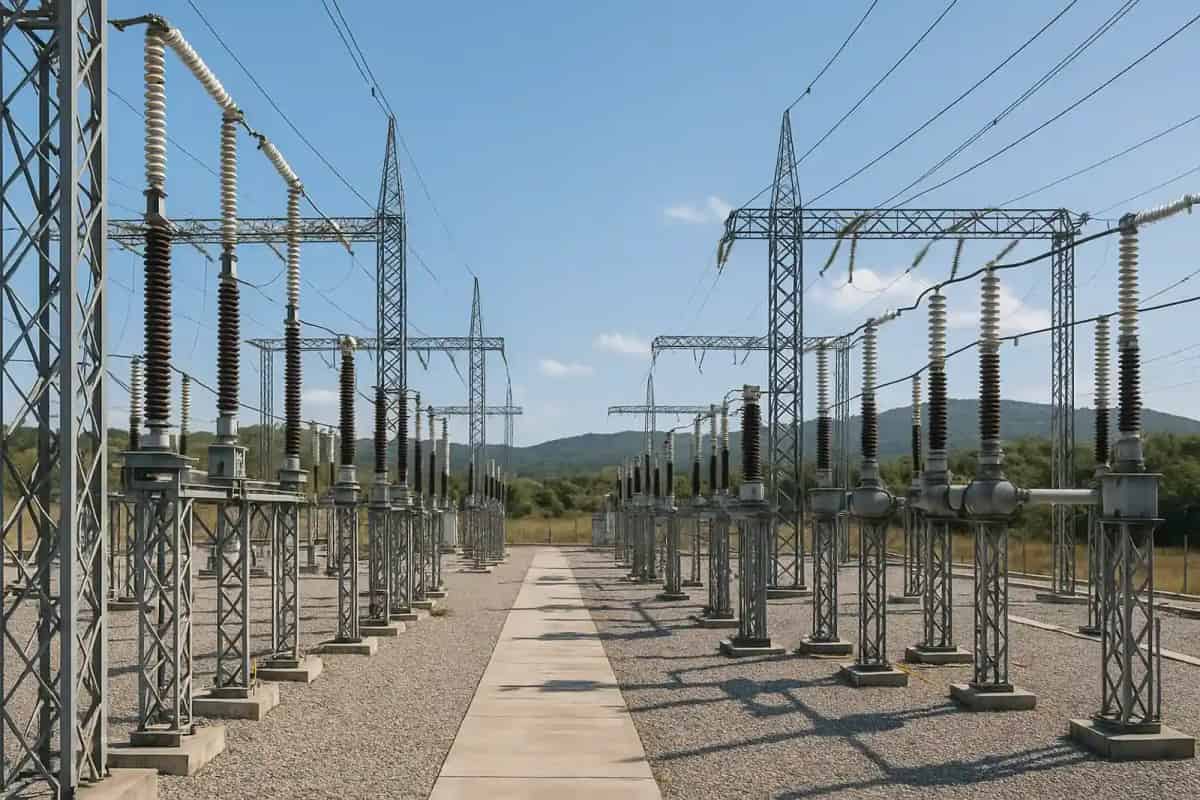
MV switchgear count and facility structure are the second determinant. As the number of medium voltage cells increases, so does the number of circuit breakers, disconnectors, protection relays and switching points to be checked; this expands both the field inspection time and the reporting scope. A compact transformer substation and a multi-cell, dispersed OIZ facility are not evaluated at the same fee. The facility's accessibility, the currency of the single-line diagram and the maintenance history also affect the scope.
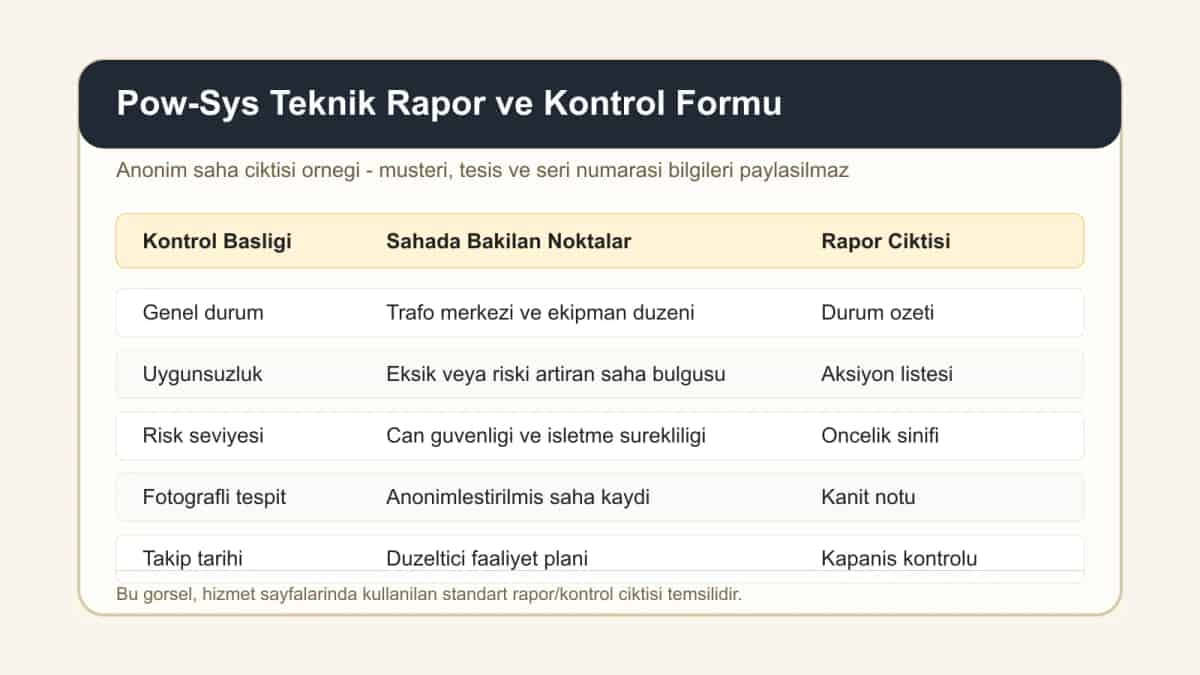
Visit frequency and reporting scope affect the proposal, but the applicable EMO minimums must be met first. For an SMM service in Türkiye, inspections are at least monthly; reporting is separately required when necessary and at intervals no longer than four months. Extra visits, separately contracted tests and emergency support can change the price. A proposal should state these items rather than implying a cheaper visit schedule can replace the legal minimum.
Extra technical services are usually planned and priced separately. Grounding measurement, relay testing, thermal imaging, transformer oil analysis or power quality measurement are generally separate line items, even if the operation responsibility report notes them as a need. When evaluating a proposal it is therefore important to see clearly which works are included and which are external. Pow-Sys proposals state this split explicitly; included and separately-plannable works are defined up front so the facility does not face a surprise cost later. Grounding measurement and reporting can be planned separately under a similar scope split.
Transformer operation responsibility fees are calculated within the same framework as the high voltage operation responsibility cost. In a facility with its own transformer, the substation falls within the above-1 kV MV/HV scope, so the responsibility is undertaken by an authorised electrical engineer; the transformer manager fee therefore rests on the same parameters (transformer power, cell count, visit frequency, EMO tariff). The service is not limited to the transformer; MV cells, switching procedures, grounding and the protection scheme are also within this fee.
A site survey is often required for a firm price. An approximate budget can be discussed from preliminary information; however, the final fee and risk level are not fixed without evaluating the transformer substation structure, MV switchgear count, maintenance history, current document status and contract scope. This approach is needed to correctly define both the client's expectation and the boundaries of technical responsibility. A correct proposal is built around a scope that reflects the facility's real needs.
When requesting a proposal, look at scope rather than the monthly figure alone. The price gap between two offers usually comes from a difference in scope: visit frequency, report format, which checks are performed, emergency support, included versus external works, the authorised engineer's credential status and compliance with the EMO tariff. The lowest price can mean the least scope. For a sound comparison, ask that proposals be detailed under these headings.
At Pow-Sys, we share competency and credential information transparently; the proposal file clearly states which checks will be performed, the visit period and the reporting scope. The EMO registry and authorisation information of the engineer undertaking the service is presented so the client can verify it; the authorisation and training certificates can also be reviewed. This way, the fee is not an abstract figure but the equivalent of a defined service scope.
If you want a clear budget and scope for your facility in Bursa and the surrounding region, sharing your transformer power, MV switchgear count, current contract status and expected visit frequency is enough. Under the Bursa high voltage operation responsibility service, we prepare a transparent proposal that considers both the EMO minimum fee tariff and your facility's real needs. For the basic framework of the subject, you can also read our article on what high voltage operation responsibility is.
Official sources: EMO operation-responsibility regulation; 2026 minimum-fee update. The Turkish appointment and service scope should be checked against the current official record.
Related Blog Posts
- Is HV Operation Responsibility Mandatory? Legal Basis, Scope and Exceptions
- Duties of a Transformer Operation Manager: Inspection, Switching, Maintenance and Records
- YGTIS Certificate and Operation Manager Verification: Authority, Validity and Checks
- What Is High Voltage Operation Responsibility? Why Is It Necessary and What Does It Cover?
Related Services
Frequently Asked Questions
How is high voltage operation responsibility cost determined?
High voltage operation responsibility cost is calculated per facility based on transformer power (kVA), number of transformers, MV/LV switchgear count, facility size and location, planned visit frequency, the scope of tests to be performed, emergency support and reporting detail. There is no fixed price list; the fee is set for each facility's technical structure and is never below the minimum fee tariff EMO publishes each year. For accurate pricing, share transformer kVA values, transformer and MV cell counts, and the expected visit period clearly.
What is the EMO minimum fee tariff and how does it affect the price?
The EMO minimum fee tariff is the minimum fee list that the Chamber of Electrical Engineers updates each year for services such as high voltage operation responsibility. It is graded largely by transformer power, and an authorised engineer cannot sign a contract below it. This rule protects both service quality and professional responsibility. So the EMO tariff sets the floor for the operation responsibility fee; depending on the facility's characteristics, the fee sits above that floor.
What do transformer operation responsibility fees depend on?
Transformer operation responsibility fees rest on the same parameters as high voltage operation responsibility: transformer power and count, MV switchgear count, facility structure, visit frequency and the EMO minimum fee tariff. In a facility with its own transformer, the substation is within the above-1 kV MV/HV scope, so the responsibility is undertaken by an authorised electrical engineer. Because the service is not limited to the transformer, MV cells, switching procedures, grounding and the protection scheme are also within the fee.
Are grounding measurement and relay testing included in the fee?
Grounding measurement, relay testing, thermal imaging, transformer oil analysis and power quality measurement are generally planned as separate line items. Even when the operation responsibility report notes these needs, they are usually not part of the main fee; they are priced as separate test or measurement services. So when evaluating a proposal you should see clearly which works are included and which are external. Transparent proposals define included and separately-plannable works up front, so the facility faces no surprise cost.
Can a price be given without a site survey?
An approximate budget can be discussed from preliminary information; however, the firm fee and risk level are not fixed without evaluating the transformer substation structure, MV switchgear count, maintenance history, current document status and contract scope. A site survey helps define a scope suited to the facility's real needs and accurate pricing. This approach correctly sets both the client's expectation and the boundaries of technical responsibility, so the proposal reflects the facility's true condition.
Is the operation responsibility fee paid monthly or yearly?
Operation responsibility is usually undertaken with an annual contract, and the fee can often be split into monthly or periodic payments; the payment plan is set by the contract scope. Because the EMO minimum fee tariff is updated on a yearly basis, the fee is also calculated within an annual framework. When requesting a proposal, clarifying the contract term, visit period and payment plan together is important for both budgeting and service continuity.
Should I look at price alone when comparing proposals?
No. The gap between two proposals usually comes from a difference in scope: visit frequency, report format, which checks are performed, emergency support, included versus external works, the authorised engineer's credential status and compliance with the EMO tariff. The lowest price can mean the least scope. For a sound comparison, ask that proposals be detailed under these headings, and make sure the fee is the equivalent of a defined service scope.