
Summary Highlights
- What a transformer is: its basic definition, structure and operating principle based on electromagnetic induction
- Why transformers are used: voltage level conversion, loss reduction and safe power transmission
- Transformer types by purpose: power, distribution, isolation and instrument transformers for current and voltage measurement
- Transformer types by construction: oil-immersed transformers, dry-type transformers, single-phase and three-phase transformers
- Basic guidance for transformer selection and maintenance: capacity, environment, cooling, transformer formulas and periodic tests
Article Details
A transformer (known in Turkish as 'transformatör', commonly shortened to 'trafo') is an electrical machine that transfers electrical energy between two circuits through electromagnetic induction while changing voltage and current levels without changing frequency. It consists of primary and secondary windings wound on a common magnetic core and normally has no mechanical moving parts. In the shortest form, the answer to what a transformer is and what it does is this: it is the electrical machine that safely converts an AC voltage in one circuit to another voltage level and transfers energy from one circuit to another through a magnetic field.
The operating principle of a transformer is based on Faraday's law of electromagnetic induction. The alternating voltage applied to the primary winding creates a varying magnetic flux in the core. When this flux links the secondary winding on the same core, a voltage proportional to the number of winding turns is induced. In this way, energy is transferred between the primary and secondary circuits without metallic contact. The basic relationship known as the transformer formula states that the voltage ratio is approximately equal to the turns ratio: V2/V1 ~= N2/N1. For currents, the relationship I2/I1 ~= N1/N2 is used. In an ideal transformer, the input and output apparent power are approximately equal (S1 ~= S2 ~= V x I); these expressions are used in transformer power calculations and transformation ratio calculations.
The answer to the question of which current a transformer operates with is clear: conventional power transformers and distribution transformers are designed to operate only with alternating current (AC). Applying direct current (DC) to the primary winding can magnetize the core into saturation and cause very high magnetic flux and excessive current draw. This may overheat the transformer, damage winding insulation and lead to serious failures. Therefore, the practical answer to the question "is a transformer AC or DC?" is almost always AC.
The reason transformers are used is to reduce losses, adapt voltage levels and transmit electrical energy safely. When voltage is stepped up and current is reduced on transmission lines, I2R losses decrease and conductor cross-sections can be reduced. In distribution systems and inside facilities, voltage is stepped down again to levels at which equipment and people can operate safely. What would happen without transformers? Electrical energy could neither be transmitted efficiently over many kilometers between cities nor reduced to safe levels such as 230/400 V for homes and workplaces. In other words, transformers form the backbone of the modern electrical grid.
In power systems, step-up power transformers are generally used at generation plants, intermediate transformers change voltage levels along transmission lines, and distribution transformers reduce voltage to low-voltage levels in residential areas. Large industrial facilities have their own transformer substations where energy is transformed from MV to LV and where transformers and MV switchgear are installed. For field testing, maintenance and repair of these substations, Bursa HV/MV testing, maintenance and repair and transformer maintenance and testing services can be planned together.
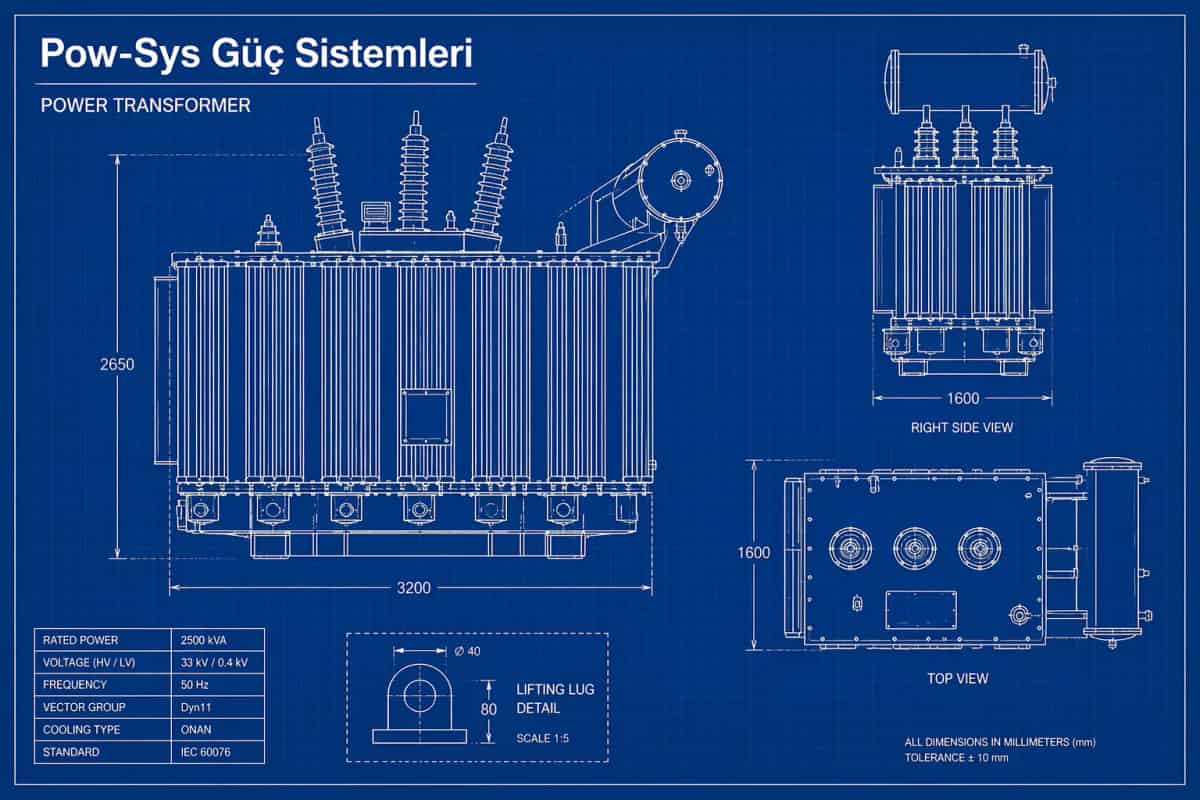
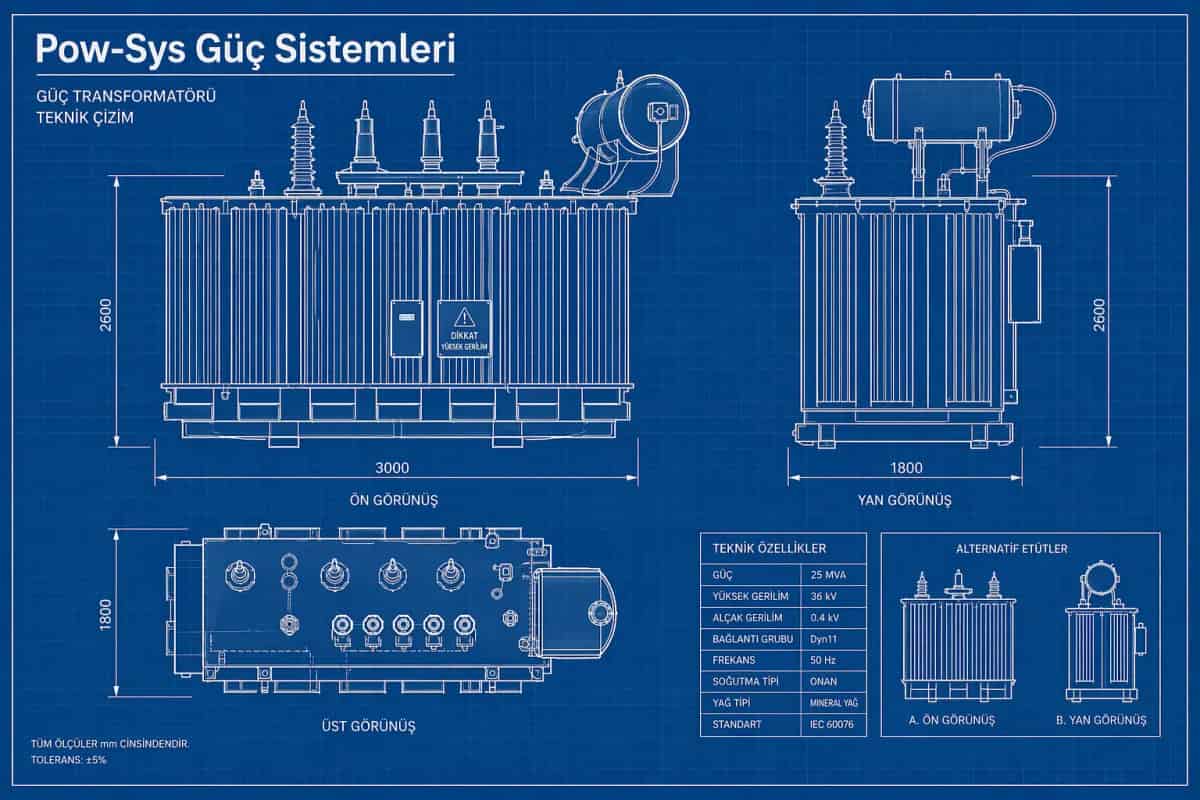
The basic components of a transformer are the magnetic core, primary winding, secondary winding, insulation materials, the tank or enclosure that protects the windings and core, and the cooling arrangements. Oil-immersed transformers use transformer oil for insulation and cooling, while dry-type transformers use epoxy resin or air cooling. This structure, represented schematically by a transformer symbol in electrical projects, is in reality a complex machine with detailed insulation, cooling and mechanical protection requirements.
Transformer types by purpose can be summarized as power and distribution transformers used in energy transmission and distribution, isolation transformers that provide galvanic isolation between the grid and the load, and instrument transformers such as current transformers and voltage transformers. Instrument transformers convert high voltage and current levels to safe values that measuring devices can read. Correct selection of transformer equivalent circuits and ratios is important for the healthy operation of protection relays and measurement systems.
By construction and cooling method, transformers are divided into two main groups: oil-immersed transformers and dry-type transformers. Oil-immersed transformers are cooled by natural or forced circulation of transformer oil, with cooling codes such as ONAN and ONAF. Dry-type transformers are generally preferred in indoor applications where fire risk is lower and maintenance demand is reduced. For this reason, the answer to "dry-type transformer or oil-immersed transformer?" is usually determined by the operating environment and fire safety requirements.
By phase number, transformers are classified as single-phase and three-phase. Because three-phase systems are widely used in the grid, transformers on transmission and distribution lines are mostly three-phase transformers. However, single-phase transformers are also used in some special applications or at small power ratings. The transformer turns calculation formula is used to calculate the required number of winding turns for the desired input and output voltages in both single-phase and three-phase transformers.
When selecting a transformer, the power rating in kVA, primary and secondary voltage levels, operating environment, indoor or outdoor installation, cooling method, short-circuit withstand capability, connection vector group and operating conditions must all be considered. An incorrectly selected transformer may cause both efficiency loss and early failures. In new transformer substation installations or power increase projects, we manage this selection and calculation process together with our LV/MV/HV project design and consultancy service.
During operation, transformer maintenance includes taking oil samples from oil-immersed transformers for laboratory analysis such as DGA, performing periodic winding resistance, TTR, insulation resistance and power factor tests, scanning hot spots with a thermal camera, and checking connections. For this type of detailed maintenance and testing, the services summarized on our Bursa transformer maintenance, testing and oil analysis page can be used.
Regular tests and maintenance extend transformer service life, reduce unexpected failures and improve operational continuity. Especially in industrial facilities, taking a transformer out of service means production loss and safety risk, so periodic transformer maintenance is critical. To manage operation and regulatory follow-up from a single point, you can work in an integrated way with our transformer operation responsibility service at your transformer substation and, when required, our general HV operation responsibility service.
On this page, we answered the questions of what a transformer is, how it works and what types it has within a general framework. For detailed engineering solutions, transformer testing and maintenance services and transformer oil analyses, you can review our Bursa transformer services page; for the operation and regulatory side, our transformer operation responsibility page; and for your HV/MV equipment, our HV/MV testing, maintenance and repair page, then contact the Pow-Sys Power Systems team.
Related Blog Posts
- What Is an Insulator? Function, Types and Selection
- What Is an MV XLPE Cable? What Does It Do, How Does It Work and What Structure Does It Have?
- What Is an MV Cable Termination? What Does It Do, How Does It Work and What Types Are There?
- What Is an RMU? What Does It Do, How Does It Work and What Parts Does It Include?
Related Services
Frequently Asked Questions
What is a transformer?
A transformer is an electrical machine that transfers electrical energy between two circuits through electromagnetic induction, changing voltage and current levels without changing the frequency. It consists of a primary winding and a secondary winding wound on a common magnetic core, and it normally has no mechanical moving parts. The alternating voltage applied to the primary winding creates a varying magnetic flux in the core; this flux induces a voltage in the secondary winding proportional to the number of turns, so energy passes between the two circuits without any metallic contact. In practical terms, a transformer is the machine that safely converts an AC voltage in one circuit to another voltage level, which is why it is found at every stage of the power system, from generation plants to distribution networks.
Why is a transformer used and what is done with a transformer?
A transformer is used to adapt voltage levels so that electrical energy can be transmitted efficiently and used safely. When voltage is stepped up on transmission lines, current decreases, so I2R losses drop and conductor cross-sections can be reduced; when the energy reaches distribution systems and facilities, voltage is stepped down again to levels at which equipment and people can operate safely, such as 230/400 V. In practice, step-up power transformers work at generation plants, intermediate transformers change voltage levels along transmission lines, and distribution transformers reduce voltage in residential areas, while large industrial facilities transform energy from MV to LV in their own transformer substations. Because the whole grid depends on this equipment, periodic maintenance and testing of power transformers, such as the Bursa transformer maintenance, testing and oil analysis service, is planned as part of normal facility operation.
What are the types of transformers?
Transformer types are usually grouped by purpose, by construction and by phase number. By purpose, the main types are power and distribution transformers used in energy transmission and distribution, isolation transformers that provide galvanic isolation between the grid and the load, instrument transformers such as current transformers and voltage transformers that convert high voltage and current levels to safe values measuring devices can read, and autotransformers. By construction and cooling method, transformers are divided into oil-immersed transformers, which use transformer oil for insulation and cooling, and dry-type transformers, which use epoxy resin or air cooling. By phase number, they are classified as single-phase and three-phase, and because three-phase systems dominate the grid, most transmission and distribution transformers are three-phase. Knowing these categories makes it easier to match the right transformer type to each application, from grid substations to indoor industrial installations.
What is the difference between a dry-type transformer and an oil-immersed transformer?
The main difference between a dry-type transformer and an oil-immersed transformer is the medium used for insulation and cooling. In oil-immersed transformers, the windings are insulated and cooled by transformer oil circulating naturally or by force, described by cooling codes such as ONAN and ONAF, and these units are generally used outdoors or in transformer substations. In dry-type transformers, the windings are insulated with epoxy resin or cooled by air, and they are preferred in indoor applications because the risk of fire and leakage is lower and the maintenance demand is reduced. In practice, the choice between the two is usually determined by the operating environment and fire safety requirements rather than by electrical function, since both types perform the same basic duty of transferring energy between circuits at different voltage levels.
What should be considered when selecting a transformer?
When selecting a transformer, the power rating in kVA, primary and secondary voltage levels, operating environment, indoor or outdoor installation, cooling method, short-circuit withstand capability, connection vector group, maintenance access and expected operating conditions must all be evaluated together. Looking at a single parameter is not enough, because a unit that suits the load electrically may still be unsuitable for its installation location or environmental conditions. An incorrectly selected transformer may cause both efficiency loss and early or frequent failures, which in an industrial facility translates directly into production loss and safety risk. For this reason, transformer selection in new transformer substation installations and power increase projects should be handled as a complete engineering calculation, for example within an LV/MV/HV project design and consultancy process, rather than as a simple catalogue choice.
Is a transformer AC or DC, and which current does it operate with?
A transformer operates with alternating current: conventional power and distribution transformers are designed to work only with AC applied to the primary winding. Their operating principle depends on a varying magnetic flux in the core, which an alternating voltage produces. If direct current is applied to the primary winding instead, the core can be magnetized into saturation, causing very high magnetic flux and excessive current draw; this may overheat the transformer, damage the winding insulation and lead to serious failures. For this reason, the practical answer to whether a transformer is AC or DC is almost always AC, and a standard power or distribution transformer must never be supplied with DC. This distinction is one of the most basic operating rules for anyone specifying, installing or maintaining transformers in the field.
What would happen without transformers?
Without transformers, the modern electrical grid could not function. Electrical energy generated at power plants could not be stepped up to high voltage, so I2R losses on transmission lines would remain high and transmitting power between cities over many kilometers would be neither economical nor efficient. At the other end of the system, there would be no way to reduce voltage to the safe 230/400 V levels used in homes and workplaces, so people and everyday equipment could not use grid electricity safely. Transformers make it possible to raise voltage and lower current for efficient long-distance transmission and then to bring the voltage back down in stages through distribution transformers and facility substations. This is why transformers are described as the backbone of the modern electrical grid and why their reliable operation and regular maintenance matter so much.
Is there a difference between 'trafo' and 'transformer'?
No, there is no technical difference: both words refer to the same electrical machine. In Turkish, the full term is 'transformatör', and 'trafo' is simply its everyday abbreviation, widely used in daily speech and in the field. In English, transformer is the standard term used in engineering literature and technical documentation. Whichever name is used, the equipment in question is the machine that transfers electrical energy between two circuits through electromagnetic induction while changing voltage and current levels without changing frequency. The distinction is purely linguistic, so nothing changes technically when a Turkish text says trafo and an English text says transformer. Knowing this equivalence is useful when reading Turkish technical documents or comparing them with English sources, because terms such as trafo maintenance correspond exactly to transformer maintenance in English usage.
What is the transformer formula and how is the transformation ratio calculated?
The basic transformer formula states that in an ideal transformer the voltage ratio is approximately equal to the turns ratio: V2/V1 ~= N2/N1. Currents behave in the opposite way, following I2/I1 ~= N1/N2, which means that when voltage is stepped up, current is stepped down in the same proportion. For apparent power, the relationship S = V x I is used, and in an ideal transformer the input and output apparent power are approximately equal, so S1 ~= S2. These relationships form the basis of transformation ratio calculations, winding turns calculations and transformer power calculations. In practice, the turns calculation formula is used to determine the required number of winding turns for the desired input and output voltages in both single-phase and three-phase transformers, and the same ratios help verify that a selected transformer matches its intended application.