
Summary Highlights
- What YGTIS (High Voltage Facility Operation Responsibility authorisation) is and what it proves
- How the certificate is obtained through EMO MISEM training and who can apply
- Check current certificate validity and renewal requirements through EMO
- How to verify an engineer's certificate and chamber registration through EMO
- How requesting a copy of the certificate at the proposal stage protects you from an unauthorised contract
Article Details
YGTİS is the Turkish Chamber of Electrical Engineers’ authorization for operation responsibility in high-voltage installations above 1 kV. A facility manager should verify the engineer’s EMO registration, authorization scope and current status before establishing the appointment. EMO/MİSEM training authorization and the SMM-BT record are distinct checks. This article explains which records to request and how the authorization relates to the written service scope.
What does the YGTIS certificate prove? It documents that the engineer who will sign an operation responsibility contract at a facility with an above-1 kV transformer is authorised to inspect and operate high voltage installations. Responsibility taken on with an unauthorised or expired certificate makes both the validity of the contract and the legal position in a possible accident questionable. The certificate is therefore the basic entry requirement for the operation responsibility service.
YGTİS authorization is issued under EMO's current membership, professional-scope and training requirements. Article 13 distinguishes electrical-engineering qualifications and the applicable scope for electrical-electronics-engineering diplomas. Before appointment, verify the engineer's actual authorization through EMO/MİSEM; a degree title or a training copy alone does not establish the current appointment scope.
Check the certificate validity date, scope and renewal requirements through the current EMO/MİSEM record and the relevant EMO branch. Training authorisation and the annual SMM-BT document are separate records and should be verified separately.
Why should you verify the operation manager? The responsibility contract directly concerns the high voltage safety of the facility. An agreement made with someone who is unauthorised or whose certificate has expired can put the facility owner in a difficult position during inspections and possible accident investigations. Choosing the right engineer is a decision that includes not only price but also certificate and authorisation verification.
How is the operation manager verified? The soundest way is to confirm the engineer's chamber registration and authorisation status through EMO. At the proposal stage, ask the engineer for a copy of the YGTIS certificate, EMO registry information and, where applicable, the SMM (Independent Consulting Engineer) certificate; this makes verification easier. Checking the issue and validity dates on the certificate lets you see whether it is current.
What other qualifications are expected of an operation manager? Alongside a current YGTIS certificate, the engineer is expected to have an active EMO membership and to be in a position to take on professional responsibility. For self-employed engineers, the SMM certificate is another indicator of this competence. Together, these documents show that the engineer is suitable, both technically and administratively, to undertake the responsibility.
YGTİS authorization and appointment are separate checks. Article 6 distinguishes an eligible full-time engineer's appointment from an external SMM service under an EMO-approved contract and also sets other appointment conditions. For a proposed external service, confirm authorization, the applicable SMM record, installation boundary and written contract together.
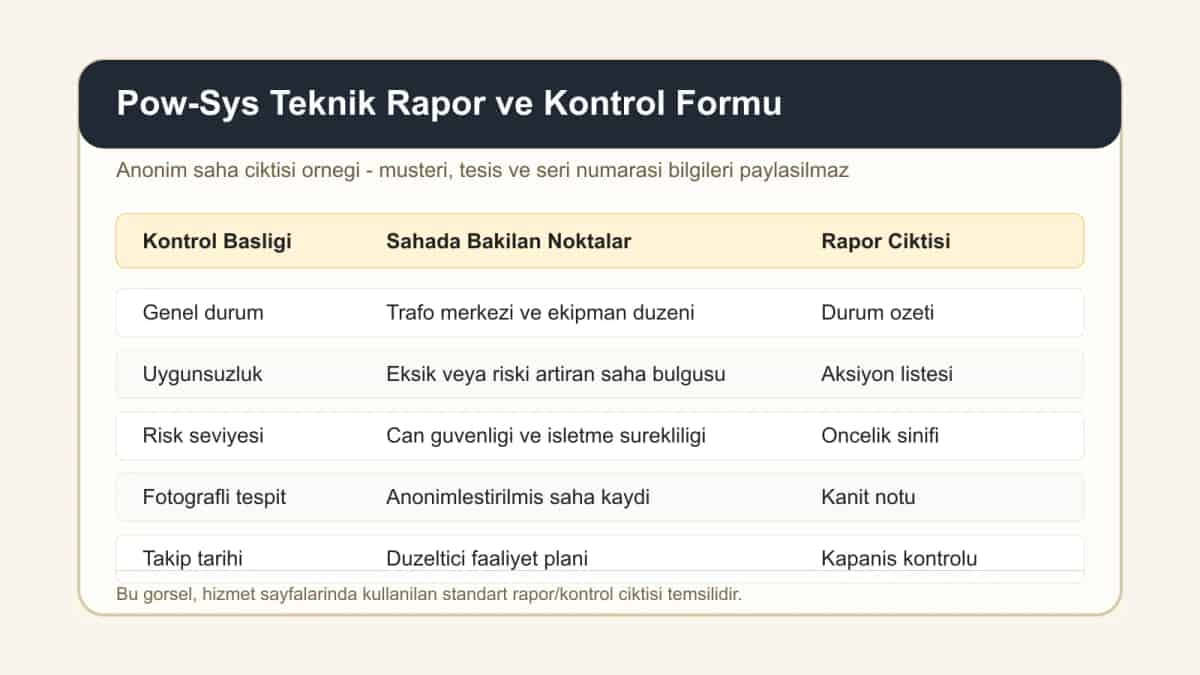
At Pow-Sys, we share our certificate and authorisation information up front. In the proposal file, the YGTIS certificate status and EMO registry information of the engineer who will undertake the service are presented so the client can verify them. Reviewing the authorisation and training certificates places the operation responsibility service on a sound footing. The aim is to base the facility's safety on a verifiable authorisation.
If you want to work with a certified operation manager for your facility in Bursa and the surrounding region, sharing your facility type and transformer details is enough. We proceed with a process that includes certificate verification. You can find the cost side of the subject in our article on high voltage operation responsibility cost, and the scope and obligation side in our related blog posts.
Official sources: EMO operation-responsibility regulation. The Turkish appointment and service scope should be checked against the current official record.
Related Blog Posts
- Is HV Operation Responsibility Mandatory? Legal Basis, Scope and Exceptions
- Duties of a Transformer Operation Manager: Inspection, Switching, Maintenance and Records
- HV Operation Responsibility Cost: Pricing Factors and the EMO Fee Tariff
- What Is High Voltage Operation Responsibility? Why Is It Necessary and What Does It Cover?
Related Services
Frequently Asked Questions
What is the YGTIS certificate?
The YGTIS certificate is the High Voltage Facility Operation Responsibility authorisation. It shows that an electrical engineer is authorised to undertake operation responsibility at facilities with an above-1 kV transformer. The certificate is issued after the 'Operation Responsibility in HV Facilities' training given by the Continuing Professional Education Centre (MISEM) of the Chamber of Electrical Engineers (EMO), and it is the basic entry requirement for the service.
How is the YGTIS certificate obtained?
EMO issues YGTİS authorization under its current professional-scope, membership and training requirements. Eligibility depends on the engineer's diploma and applicable authorization scope, including the conditions for electrical-electronics-engineering qualifications. Confirm the current record through EMO/MİSEM rather than assuming any related engineering degree is sufficient.
How many years is the YGTIS certificate valid?
Check the certificate validity date, scope and renewal requirements through the current EMO/MİSEM record and the relevant EMO branch. Training authorisation and the annual SMM-BT document are separate records and should be verified separately.
How do I verify an operation manager's certificate?
Confirm the engineer's EMO registration, current YGTİS authorization and relevant appointment scope through EMO/MİSEM or the relevant branch. For an external SMM service, also check the applicable SMM record and EMO-approved contract. Copies help identify the documents to verify; receiving a copy does not remove every authorization or contractual risk.
Can someone without a YGTIS certificate take on operation responsibility?
No. Operation responsibility at high voltage facilities can only be undertaken by electrical engineers who hold the relevant authorisation certificate and an EMO registration. An agreement made without a certificate, or with an expired one, makes the validity of the contract and the legal position in a possible accident questionable. Certificate verification is therefore an inseparable part of choosing the service.
Must the operation manager be registered with EMO?
Yes. The engineer undertaking operation responsibility is expected to have an active EMO membership and a current YGTIS certificate. For self-employed engineers, the SMM (Independent Consulting Engineer) certificate is another indicator of this competence. Together, this registration and these documents show that the engineer is suitable to take on the responsibility both technically and administratively.
What happens if the certificate expires?
If a certificate has expired, current authorisation and renewal requirements should be confirmed through EMO/MİSEM before new work is undertaken. Facility owners can also confirm the authorisation supporting an ongoing contract with the relevant EMO branch.