
Last updated: September 9, 2026
Reviewed by Hüseyin ÇOKAL, Electrical and Electronics Engineer. Updated: September 9, 2026.
What changed: Service scope, report outputs, official sources, pre-proposal information and technical transparency notes were reviewed for the current period.
Electrical Contracting Services Summary
- Electrical contracting solutions for factories, businesses, warehouses, commercial buildings and industrial facilities: one accountable team from survey to delivery
- Project design, installation, assembly and commissioning support for LV, MV and HV infrastructures: design intent carried through to the field without gaps
- Single-source management of panel assembly, field cabling, cable trays, busbar and distribution infrastructure: fewer coordination losses, faster fault tracing later
- Engineering-focused implementation for new investments, capacity increases, revision and modernization projects: staged plans keep production running during revision
- Electrical systems that are regulation-compliant, safe, long-lasting and planned according to operational needs: an infrastructure built for operation and future expansion
Technically reviewed by
Electrical Contracting Services Scope
What is electrical contracting service
Electrical contracting services cover the installation, field implementation, testing and commissioning processes of energy infrastructure in businesses of different scales, from industrial facilities to commercial buildings. This service should not be considered only as assembly work. A correctly planned electrical contracting process ensures that the system becomes safe, orderly, efficient and suitable for operation.
Correct installation of electrical infrastructure in factories, production facilities, warehouses, shopping centers, hospitals, hotels, business centers and similar buildings is critical for both operational continuity and occupational safety. Mistakes made in electrical contracting applications can lead to problems such as energy interruptions, equipment failures, inefficient operation and high revision costs in the future.
Electrical contracting scope and the Pow-Sys delivery model
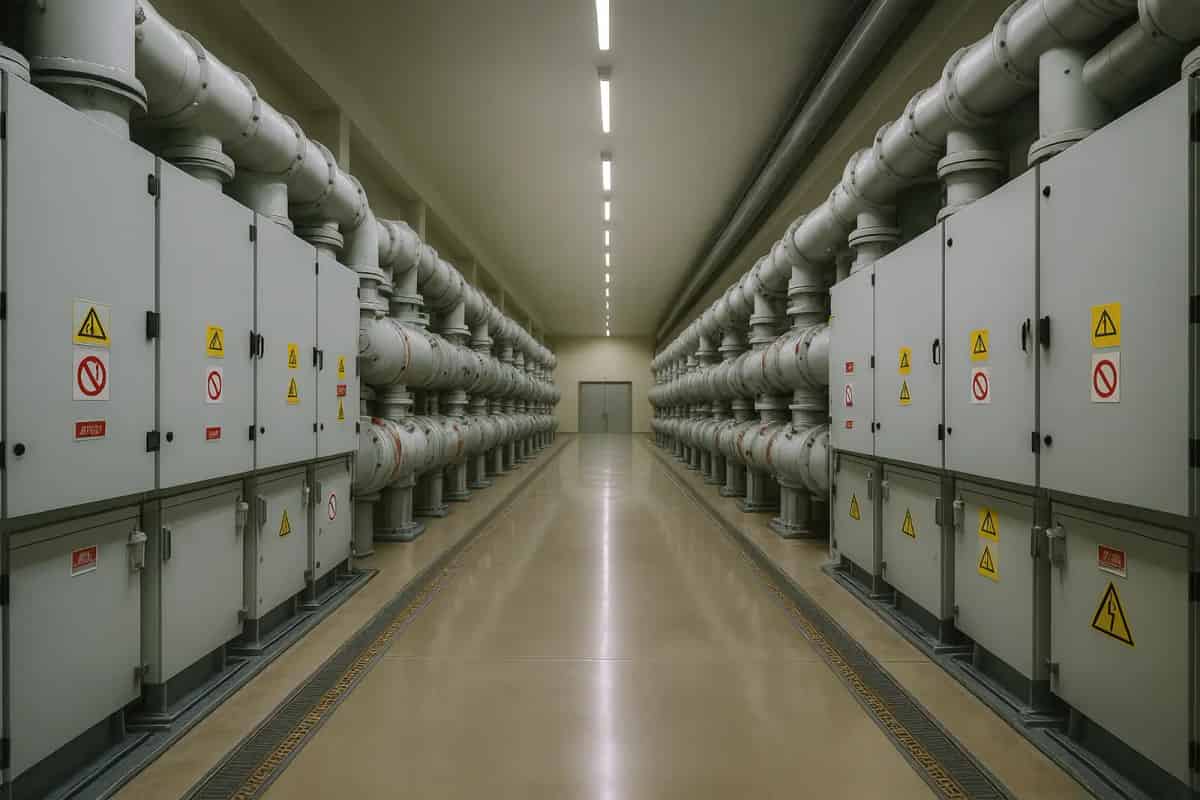
An electrical contracting job brings together facility installation on the low voltage (LV), medium voltage (MV) and, where required, high voltage (HV) side under a single work package. In most projects the scope includes the manufacturing and assembly of power distribution and power factor correction panels, field cabling, cable tray and busbar infrastructure, lighting and socket installation, grounding applications, protection and automation connections, and finally testing and commissioning. Carrying out these steps with the same team removes responsibility gaps and coordination losses from the electrical contracting process.
Pow-Sys Power Systems starts electrical contracting jobs with a site survey and load analysis, clarifies the scope in writing and plans the implementation in line with occupational safety rules. Because the transitions between LV, MV and HV infrastructure, the power factor correction and panel layouts and the commissioning tests are all handled within a single plan from the outset, the installed system is not only operational but also measured, reported and delivered ready for future expansion.
Site survey, load analysis and project compatibility
As Pow-Sys Power Systems, we handle site survey, needs analysis, load assessment, implementation plan, field assembly, testing and commissioning steps with an integrated approach in electrical contracting projects. During the technical preparation stage before the project, we contribute to establishing the system on the right foundations with LV/MV/HV project design and consultancy service.
Panel assembly, cabling and field implementation
Within the scope of electrical contracting service, power distribution panels, power factor correction panels, MCC panels, control systems, field feeder lines, lighting and socket installations, cable trays, busbar infrastructures, grounding applications and auxiliary power systems can be included in the project. The installed infrastructure can also be supported, when required, by electrical installation periodic inspection and technical inspection processes.
Engineering approach and capacity planning
In a successful electrical contracting application, not only material selection but also the engineering approach is decisive. Cable cross-sections must be determined correctly, panel locations must be planned in an orderly way, protection equipment must be selected appropriately and the system must be planned to allow future expansion. Especially in production facilities, this planning directly affects operational efficiency.
Revision and expansion in operating facilities
Electrical revision and expansion projects carried out in operating facilities require separate expertise. Because when the existing system cannot be completely stopped, power interruptions must be planned in a controlled way, critical loads must be identified and the transition process must be managed carefully. Therefore, electrical contracting service means not only installation but also proper field organization.
LV, MV and transformer-related works
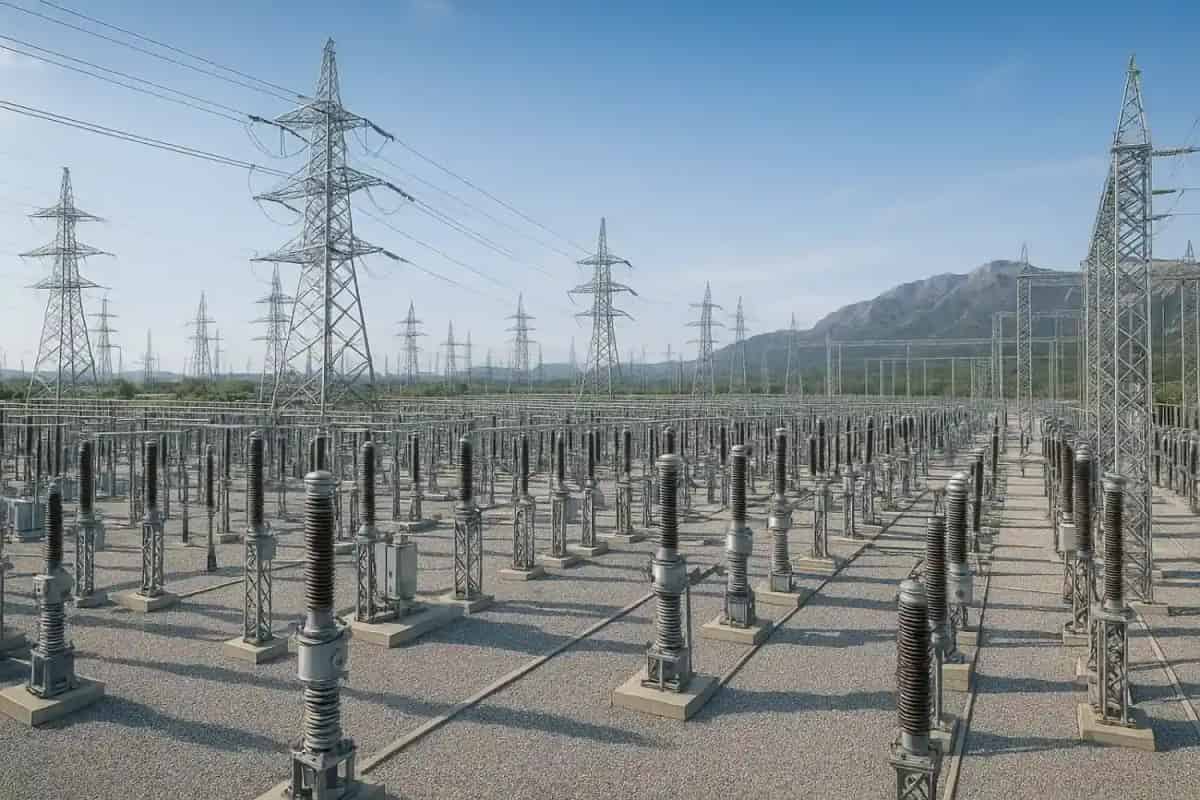
In some projects, the implementation scope does not remain only on the LV side; MV switchgear, transformer connections, power supply infrastructure and protection systems may also be included in the process. For such needs, we can plan our services in an integrated manner with high-voltage maintenance and testing, high-voltage operation responsibility, transformer operation responsibility and transformer services.
Workmanship quality, labelling and maintenance accessibility
The quality of field workmanship in electrical contracting projects plays a major role in the long service life of the system. Orderly panel internal wiring, proper planning of cable routes, complete labelling and correct implementation of connection points both facilitate maintenance and shorten fault intervention time.
Testing, measurement and commissioning
After installation is completed, the testing and measurement stage must be carried out completely. Energizing the system before insulation checks, phase sequence verification, grounding continuity, protection equipment function tests and panel checks are completed can create serious risks. Therefore, technical verification before commissioning is an indispensable part of the electrical contracting process.
Protection coordination and safe operation
Correct operation of protection systems is another subject that should not be neglected in electrical contracting projects. Especially when selectivity and tripping coordination are not designed correctly, a small fault can affect a wider area. At this point, relay and selectivity studies provide a significant advantage for system safety.
Electrical infrastructure suitable for expansion
When receiving electrical contracting service, future needs must also be taken into account. Businesses may invest in new machines, increase production capacity or make changes in field layout over time. Therefore, reserve capacity, spare outgoing feeders, additional panel areas and infrastructure solutions suitable for expansion should be considered during the initial installation phase.
Auxiliary systems and grounding
In some facilities, energy infrastructure must be evaluated together with generators, UPS systems, fire systems and lightning protection solutions. In this case, subjects such as generator inspection services, fire systems periodic inspection and lightning protection periodic inspection can also be included in the overall planning.
Grounding infrastructure is one of the most important safety subjects in electrical contracting applications. An unsuitable or insufficiently designed grounding system can create serious risks for both equipment safety and human health. Therefore, grounding inspection should be considered during system design and verification.
Pow-Sys electrical contracting approach
As Pow-Sys Power Systems, we provide electrical contracting services with an engineering perspective, orderly field implementation, technical inspection, a testing-measurement approach and a solution model shaped according to the need. Our goal is to create an electrical infrastructure for your business that is not only operational, but also safe, sustainable and manageable.
Proposal and site survey process
If you would like to receive detailed information about electrical contracting service, request a site survey for your new investment or revision project, or create a technical proposal specific to your business, you can contact us by sharing your facility type, the approximate project scope, your power requirement and existing infrastructure information. Scope is clarified from this information, and before signing you see in writing what is included and what is planned as a separate service.
Reporting, Inspection and Proposal Preparation
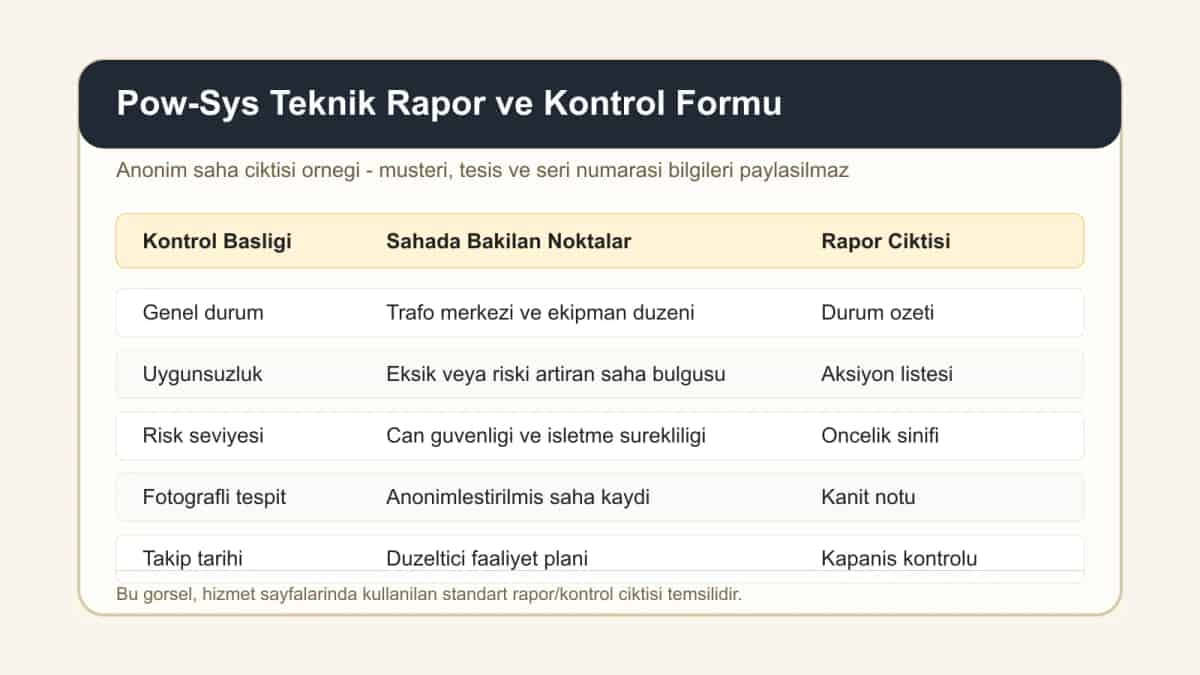
Sample Inspection Table
This table summarizes which headings are evaluated on site and which outputs may appear in the report.
| Inspected area | Checked criterion | Report output |
|---|---|---|
| Site and equipment condition | Existing equipment structure, access conditions, visible risks and operating conditions | Site inspection note and prioritized findings list |
| Document and project conformity | Single-line diagram, current project, labeling, reports and conformity with site implementation | Document conformity assessment and missing record list |
| Safety and operational risk | Life safety, equipment safety, energy continuity and maintenance access risk headings | Risk classification and corrective action recommendations |
| Measurement, test or inspection need | Measurement, test, visual inspection and technical review items required by the service scope | Measurement/test plan or inspection scope note |
| Reporting and follow-up | Nonconformity priority, follow-up date, responsibility allocation and next steps | Photo-supported report, action list and follow-up recommendation |
Contracted Installation and Additional Work
The electrical installation and commissioning work specified in the proposal belongs to this service. Changes beyond that agreed scope are evaluated separately.
| Work item | Relationship to the service | Scope decision |
|---|---|---|
| Agreed electrical installation and commissioning | Panel assembly, cabling and completion tests follow the agreed project and work scope. | Installation work and test records are delivered within the contracted scope. |
| Additional circuits, equipment or project changes | Changes may affect materials, labour and the planned outage. | Scope, cost and schedule are clarified before additional work begins. |
| Separate statutory periodic inspection | A completed installation or commissioning test does not replace statutory inspection. | Where required, authorization, contract and inspection reporting are planned separately. |
Official Regulatory Sources
- EMO certificate verification portal
Claim supported on this page: EMO registration, SMM and certificate verification transparency.
- TEDAŞ official website
Claim supported on this page: Distribution infrastructure, project/acceptance processes and technical specification context.
- TEİAŞ official website
Claim supported on this page: Transmission system, connection and high-voltage infrastructure context.
- Electrical High Current Installations Regulation
Claim supported on this page: Installation, operation, maintenance and safety of high-current electrical installations.
Frequently Asked Questions
What exactly does electrical contracting service cover?
Electrical contracting service covers site survey, needs analysis, project assessment, panel installation, field cabling, power distribution infrastructure, grounding, auxiliary system connections, testing, measurement and commissioning processes. Depending on the project, the scope may also include LV, MV and different auxiliary systems.
For which facilities is electrical contracting service suitable?
Electrical contracting service is suitable for factories, production facilities, warehouses, shopping centers, hospitals, hotels, business centers, commercial buildings and all other facilities where energy infrastructure needs to be installed. It is frequently preferred for new investment, expansion, revision and modernization projects.
What is the difference between electrical contracting and project design service?
Project design service covers the calculation, drawing, technical design and planning stage. Electrical contracting includes the field implementation, assembly, testing and commissioning of these plans. In many projects, these two processes are carried out together with project design and consultancy support.
What determines electrical contracting prices?
Pricing is determined according to facility size, number of panels, cable quantities, site conditions, assembly difficulty, material quality to be used, MV/LV scope and testing-commissioning needs. For a clear proposal, the technical scope and implementation details must first be determined.
Can electrical revision be carried out in an operating facility?
Yes, it can be done. However, in such projects, the power interruption plan, critical loads, production schedule and safety conditions must be considered. With a staged work model, revision can be implemented in a way that affects the existing operation as little as possible.
Why are testing and measurement necessary in electrical contracting projects?
Testing and measurement are necessary to verify that the installed system operates safely and correctly. Energizing the system without insulation, phase sequence, grounding, panel and protection function tests can create fault and safety risks.
Why is grounding important in electrical contracting projects?
The grounding system is critical for safely discharging leakage currents, protecting equipment and ensuring personnel safety. Therefore, after correct design and implementation, grounding inspections are also important.
Can electrical contracting service include the MV and transformer side?
Yes. Depending on the scope of the project, MV switchgear, transformer connections, protection systems and high-voltage infrastructure can also be included in the process. In such cases, integrated work can be carried out with high-voltage services and transformer services.
What does turnkey electrical contracting mean?
Turnkey electrical contracting means that site survey, planning, material supply, assembly, testing, commissioning and delivery processes are carried out within a single organization. This approach reduces coordination losses and allows the process to proceed in a more controlled way.
Is a site survey required before electrical contracting work begins?
Yes. A site survey is required to understand the facility's existing condition, power demand, panel and cable routes, working conditions, production continuity needs and safety risks. A scope and quotation prepared without a proper survey may create missing items or revision needs later.
Can panel assembly, cabling, testing and commissioning be handled within the same scope?
Yes. Depending on the project need, panel assembly, field cabling, cable tray installation, grounding, connection checks, testing, measurement and commissioning can be planned under one scope. This allows implementation and pre-delivery technical verification to be managed in the same process.
How can I get a proposal for electrical contracting service?
To receive a proposal, it is sufficient to share basic information about the facility type, approximate project scope, power requirement and existing infrastructure. After site survey and technical assessment, the scope suitable for the need is clarified and a proposal is prepared accordingly.
Is VAT withholding applied to electrical contracting works?
Whether VAT withholding applies to an electrical contracting job depends on current tax legislation, the nature of the work and the status of the parties involved, and these rules change over time. Because the answer can differ between a pure installation job, a combined supply-and-installation project and different customer types, this page deliberately avoids giving binding tax guidance. The reliable approach is to have your accountant or financial advisor evaluate the specific contract and confirm the current withholding treatment before invoicing. On the technical side, a clearly written scope — covering material supply, field works, testing and commissioning — makes the financial classification of the project easier, so we recommend clarifying both the technical and the invoicing structure at the proposal stage.
What should an electrical contracting agreement cover?
A well-prepared electrical contracting agreement should define the technical scope clearly: the systems to be installed, panel and cabling works, material quality and standards, testing-measurement and commissioning steps, and the documentation to be delivered at handover. It should also address the practical side of the work — site schedule, staged power interruptions in operating facilities, occupational safety arrangements, coordination with other disciplines and the conditions for scope changes or additional work. Acceptance criteria deserve particular attention: the agreement should state which tests will be completed before energization and how results will be reported. Finally, post-delivery matters such as warranty conditions and technical support expectations should be written down. A clear agreement protects both parties and prevents disputes that usually arise from undefined scope boundaries.